Water running now

Shut it off first, then call. Two minutes with the valve saves the drywall.

Zammit Plumbing Lic. Master Plumber · Detroit

What a job looks like

The trouble with plumbing is that the moment it is finished it is behind a wall, so you are asked to judge work you will never see. Here are three of the jobs we do most, drawn stage by stage, with what the price is actually buying at each one.

Replacing a gas water heater

The most common big job we do, and the one most often quoted without a permit in the price.

$1,650–$2,150 flat, out of the book

The water heater you have nowA gas water heater drawn in elevation with its flue, cold inlet, hot outlet, gas line, temperature and pressure relief valve and drain valve all labeled.flue, to the chimneyCold inwith its own valveHot outT&P valveto 6″ off the floorgas, with a drip legdrain valve40 to 50 gal · atmospheric vent

The water heater you have now

Six connections and a flue. Before anything comes apart we check the vent, the gas pressure and whether the old tank was even the right size for the house — because fitting the same wrong thing again is not a service.

Isolated, drained and disconnectedThe same heater with the gas valve and the cold water valve both shown closed, and a hose run from the drain valve to a floor drain.Cold: shutGas: shutto the floor drainForty gallonstakes about twenty minutes to run out

Isolated, drained and disconnected

Gas off at the valve, water off at the cold inlet, hose to the floor drain. Forty gallons takes about twenty minutes, and there is no way to hurry it that does not end up on your floor.

Old one out, new one inA new tank in place of the old one with new copper flex connectors, a new gas drip leg, and a thermal expansion tank fitted on the cold line.New flex connectorsnot the old ones, everExpansion tankcharged to your static pressuredrip leg

Old one out, new one in

New tank, new flex connectors, new drip leg on the gas. The expansion tank goes on because Detroit water pressure and a closed system will otherwise open your T&P valve every night at three in the morning.

Lit, vented and signed offThe finished installation with an arrow showing the flue drawing correctly and a permit tag hanging from the gas line.Draft testeddoor shut, dryer runningPERMITINSPECTEDTwelve year tankone year on our labor, in writing

Lit, vented and signed off

Lit, and the flue draft tested with the door shut and the dryer running — the state a real house is actually in. Permit closed, inspection passed, one year on our labor in writing.
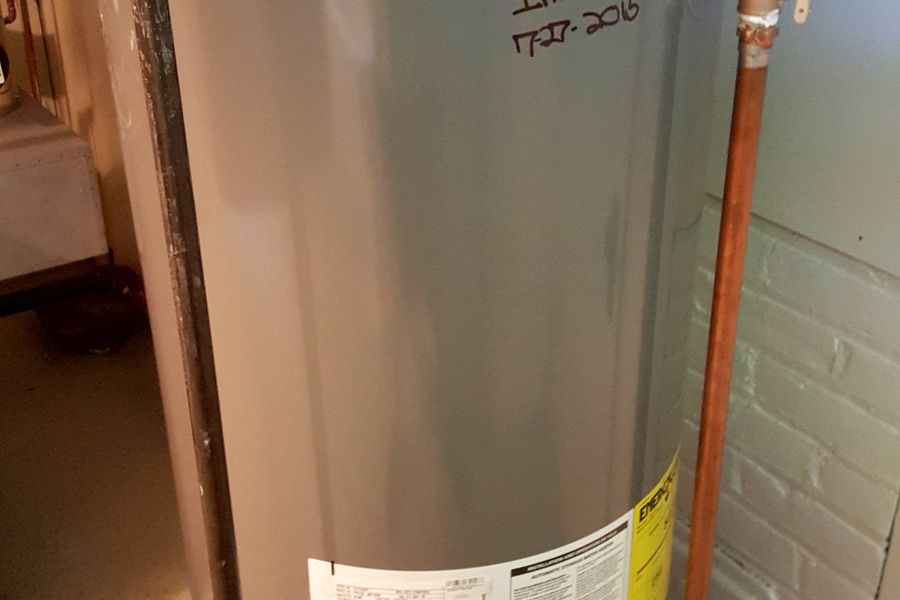
A newly installed gas water heater with copper flex connectors at the top of the tank.
The real thingA finished swap. New flex connectors, a drip leg on the gas, and the old tank on the truck rather than left in your basement.

Clearing a main line

Every drain in the house is slow and the floor drain is backing up. This is the sequence.

$340–$690 flat, out of the book

Every fixture in the house is slowA section through a house showing the sink, tub and toilet all draining into one main line, with water standing over the basement floor drain.sinktubtoiletBacking up here firstthe lowest opening in the houseto the city sewer

Every fixture in the house is slow

One slow fixture is a branch. Every slow fixture is the main line, and the floor drain shows it first because it is the lowest opening in the house.

Find a way into the lineThe same section with the outside cleanout marked at the front of the house, and the alternative of pulling the toilet shown inside.The cleanouta capped stub at the frontOr we pull the toileta lot of pre-war houses have no cleanout

Find a way into the line

If the house has an outside cleanout this is a $340 to $525 job. If it does not — and a great many pre-war Detroit houses do not — we pull a toilet to get in, which is why that version of the price is higher.

Cable it, all the way outA drain machine on the basement floor feeding cable along the main line to a mass of roots at a pipe joint under the front yard.the machineRoots, at a jointclay pipe under a treeup to 100 ft of cable

Cable it, all the way out

Up to a hundred feet of cable out to the city connection. What stops it is almost always roots at a clay joint, under whatever tree was planted in the tree lawn in 1955.

Then look at it, before anybody sells you anythingA camera on the same cable reaching the defect, with a locator marking the depth and position of it in the front yard.what the camera seesLocated and measuredany dig lands on the defectthe recording is yours to keep

Then look at it, before anybody sells you anything

Then we camera it, and you watch. A blockage is a $340 job; a broken line is a $5,000 job, and you should never take one company’s word for which of those you have without seeing the picture.

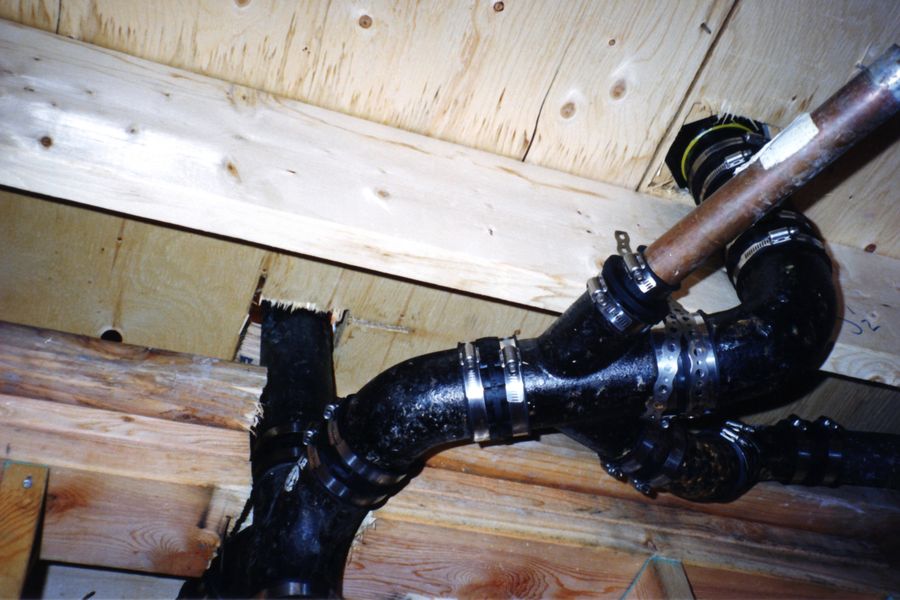
Black cast-iron drain, waste and vent piping running beside copper supply lines under a wood floor.
The real thingThe drain side of a pre-war house: cast iron, hub-and-spigot joints, and eighty years of everything that has gone down it.

Fitting a backwater valve

The Detroit basement job. It is not cheap and it is not glamorous, and it is the only thing that actually stops a combined-sewer backup.

$2,400–$4,200 flat, out of the book

What happens in a heavy rainA basement floor with the sewer line running under the slab and the flow arrow reversed, pushing water back up through the floor drain.The sewer is pushing backstorm water and sewage share one pipeYour floor drain is thelowest opening on the streetso it comes up here, not in the yard

What happens in a heavy rain

This is not your plumbing failing. It is the street’s combined sewer surcharging in a heavy rain and finding the lowest opening on the block, which is your floor drain.

Break the floor over the lineA saw cut in the basement slab with the concrete removed and the sewer line exposed in the trench beneath.A saw cut, not a hammerabout thirty inches wide, spoil bagged out4″ line, about 18″ downpermit pulled before this cut

Break the floor over the line

Permit first, then a saw cut about thirty inches wide, then the concrete out through the same door we came in. This is the part that takes the day.

Cut the valve inThe backwater valve fitted into the exposed line with its flapper shown, and an access box set above it flush with the floor.The flapperout yes, back in noAn access box on topone you cannot open is one that fails silently

Cut the valve in

The valve goes in the line with an access box on top of it. A backwater valve you cannot open and clean is one that fails silently, and you find out during the next storm.

Patch it, and prove it worksThe slab patched flush with the access lid visible in it, the inspector signed off, and a test flow shown running out through the valve.Flow tested, out onlyINSPECTEDCITY OF DETROITlid stays visible · hose the flapper once a year

Patch it, and prove it works

Patched flush, lid visible, inspected, and flow tested. Then you clean the flapper once a year with a garden hose and it does its job for thirty years.

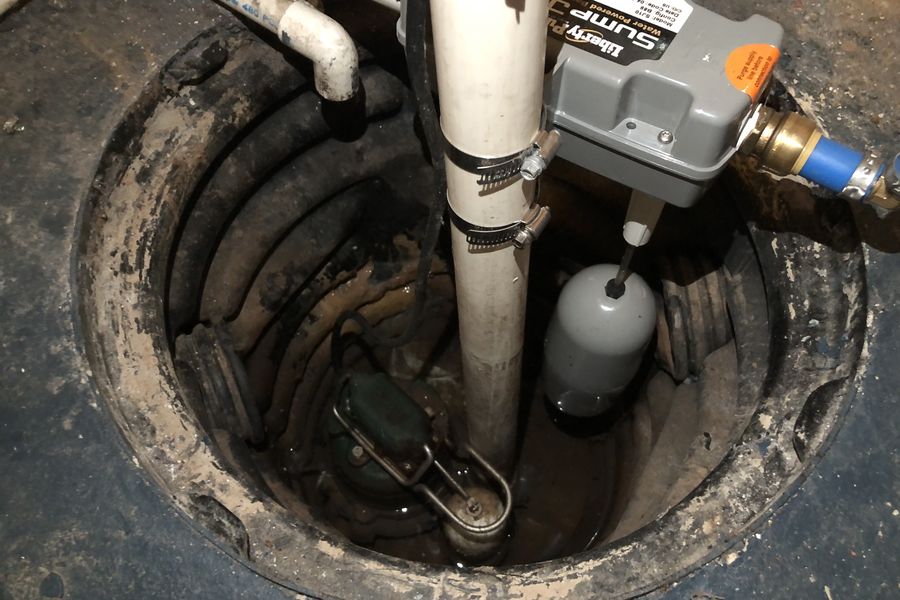
A newly installed sump pump sitting in an open basement pit with its discharge pipe and check valve.
The real thingA sump pump handles ground water; a backwater valve handles the sewer. Most Detroit basements that flood need to be honest about which one is happening.

Why we draw these instead of photographing them

A finished plumbing job photographs badly and proves nothing. A tidy picture of a new tank tells you nothing about whether the flue drafts, whether the gas line is sized, or whether anybody pulled a permit — and those are the three things that decide whether the work was any good.

So the drawings carry the argument and the photographs carry the reality. Both are on this page, and neither is a stock image of somebody in a clean polo shirt giving you a thumbs up.