Swapping a light fixture
Same location, same box, same weight class. Breaker off, tester on the wires before you touch them, ground to ground, white to white, black to black.
Caveat: if the box is only holding the old fixture by faith, stopEvery electrician’s website says call an electrician for everything. That is not true, we all know it is not true, and saying it just means you stop reading.
So here is the honest version: what is fine, what needs a permit even though it is easy, and the short list where the failure mode is not a blown fuse.
Not a real electrician. Not a real technique. Not a real stool.
If you can turn off the right breaker and confirm it is off with a $15 non-contact tester, these are within reach of a careful adult. Nobody in this trade wants to drive across town for them, whatever the ads say.
Same location, same box, same weight class. Breaker off, tester on the wires before you touch them, ground to ground, white to white, black to black.
Caveat: if the box is only holding the old fixture by faith, stopA like-for-like swap is four screws and a photograph of the old one before you take the wires off. Take the photograph. Everyone who did not take the photograph regrets it.
Caveat: two cables in the box means it is not a simple swap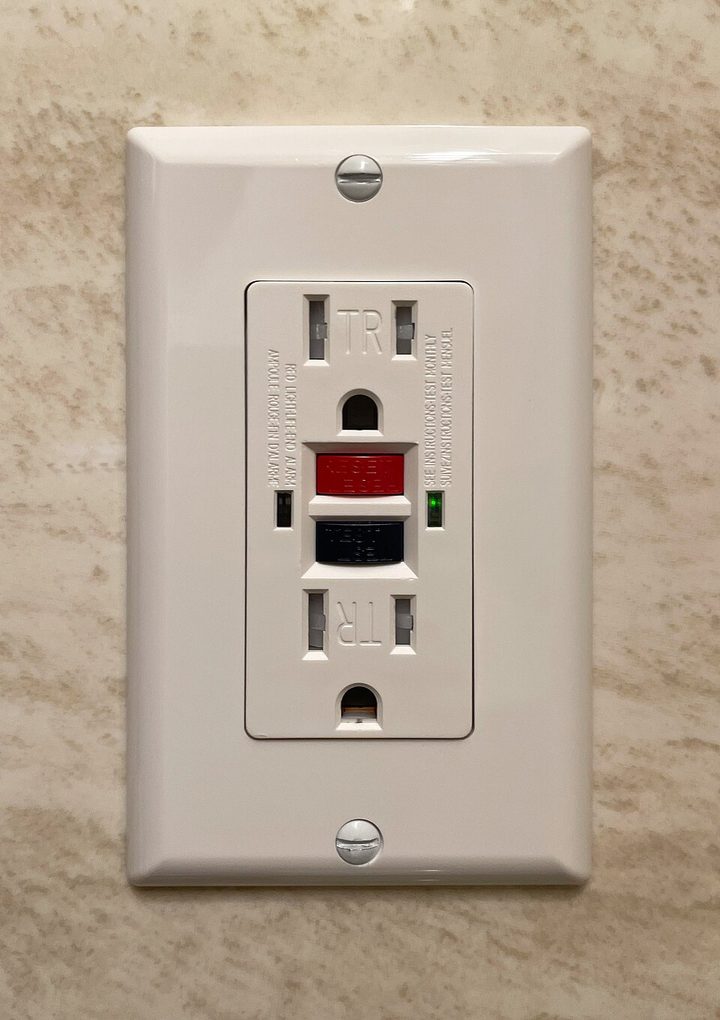
Press test, press reset, once a month. If it will not reset, or it trips again immediately, that is the device doing its job and telling you something. Then call.
Caveat: a GFCI that never trips on test is a dead safety deviceMichigan lets a homeowner pull an electrical permit for a single-family home they own and occupy. That is a real right and we are not going to pretend otherwise. It also means the inspector is coming, which is the part people skip and then regret at closing.
A new run from the panel to anywhere — a garage outlet, a basement finish, a bathroom. New wiring is new wiring, and it is inspected whether a contractor or a homeowner installs it.
Relocating a switch during a remodel, adding recessed lights, running a new fixture where there was not one. The fishing is the hard part; the permit is the part people forget.
Landscape lighting on a dedicated circuit, a receptacle on the deck, a feed to a shed. Burial depth, conduit type and GFCI protection are all inspected items and all easy to get wrong.
A 40 or 50 amp circuit running continuously for hours is a different animal from a receptacle. It is also the job most likely to reveal that the service cannot carry it, which is better to learn before the charger arrives than after.
Everything above fails safely. You get it wrong, a breaker trips, you feel foolish and you try again. These two do not fail that way, and the reason is the same in both cases: there is no breaker upstream of you.
The service conductors between the meter and the main breaker are energized from the street. Switching off the main does not de-energize them. There is nothing you can turn off inside the house that makes that space safe.
This includes the job people most want to do themselves: adding one more breaker to a full panel. The lugs you would be working next to are live the entire time.
If you want a circuit added and the panel is full, that is a subpanel conversation, and it starts with a phone call rather than a screwdriver.
The mast, the weatherhead, the drop from the pole, the meter socket itself. That equipment belongs to the utility or sits ahead of every protective device you own.
People go up there because a tree limb pulled the mast loose in a storm and the house has half power. Half power in a storm is a classic sign of a lost neutral, and a lost neutral is exactly the condition that makes touching the mast lethal.
Storm damage to the mast is a call to the utility first and an electrician second, in that order, from inside the house.
A non-contact voltage tester is about fifteen dollars and it is the difference between believing the breaker is off and knowing it. Label on the panel, breaker off, tester against the wires, and only then the screwdriver.
Test the tester on a circuit you know is live first. They fail, and they fail silently, in the one direction that matters.
Two circuits sharing a box is ordinary in a house of this age. You kill the one you are working on, and the other one is still there, six inches away, behind the same plate.
This is the single most common way a careful person gets hurt doing work that was genuinely within their ability. Not ignorance — an accurate assumption about the wrong cable.
If you find more cables in a box than you expected, that is the moment to stop, not the moment to work more carefully.