100A to 200A, overhead
New panel, new mast and meter socket, new grounding, permit, inspection, utility coordination. One day.
$3,200 – $5,200Every circuit in the building runs back to it. If it is undersized, obsolete or full, that is not a nuisance you work around — it is the ceiling on everything else you were planning.
Get these and any electrician in the state can quote you over the phone. Without them the first visit is somebody standing in your basement writing down what you could have read yourself.
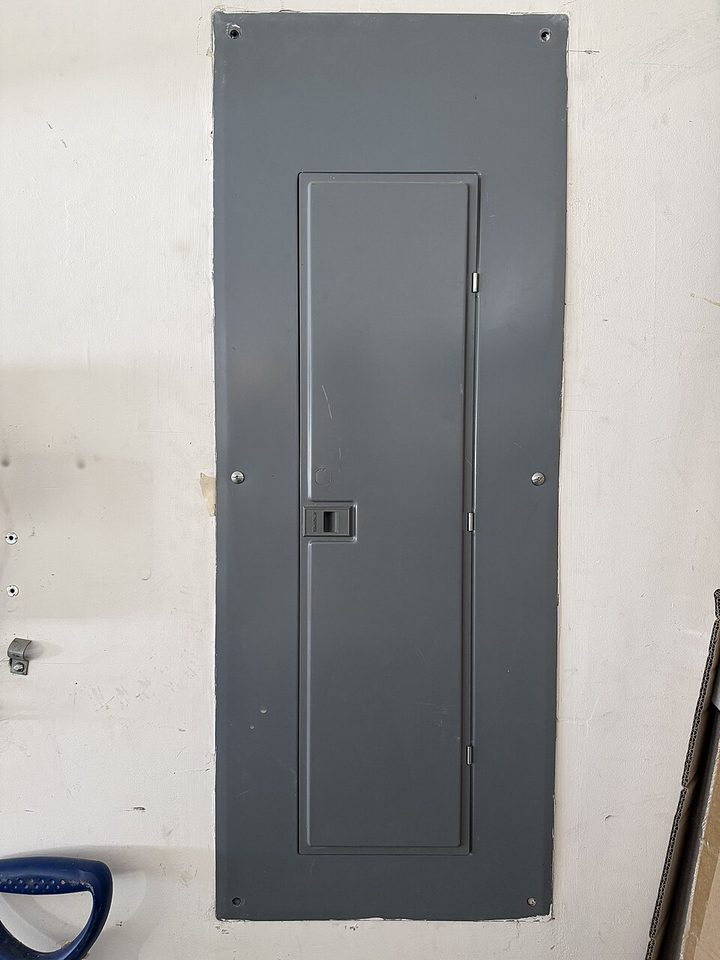
Open the panel door — the door, not the cover. The largest breaker, usually at the top and usually with two handles joined together, has a number stamped on it. 60, 100, 150 or 200. That is how many amps the utility feeds the house.
60A means the house has not been touched since it was built. 100A is the common answer in this area and is frequently the thing holding up everything else. 200A is what a modern house with air conditioning, an electric range and a car in the driveway wants.
It is printed on the door or on a label inside it. Square D, Siemens, Eaton, Cutler Hammer, General Electric, Murray, Federal Pacific, Zinsco, Challenger, Pushmatic.
Most of those are ordinary. A couple of them change the conversation, and not because anybody recalled them — see below.
The door swings open and shows you the breaker handles. That is all you need and it is safe.
The cover is the screwed-on panel behind the door. Removing it exposes the service conductors, and those are energized from the street. They are live with every breaker in the house switched off, including the main. There is no homeowner reason to be behind that cover.
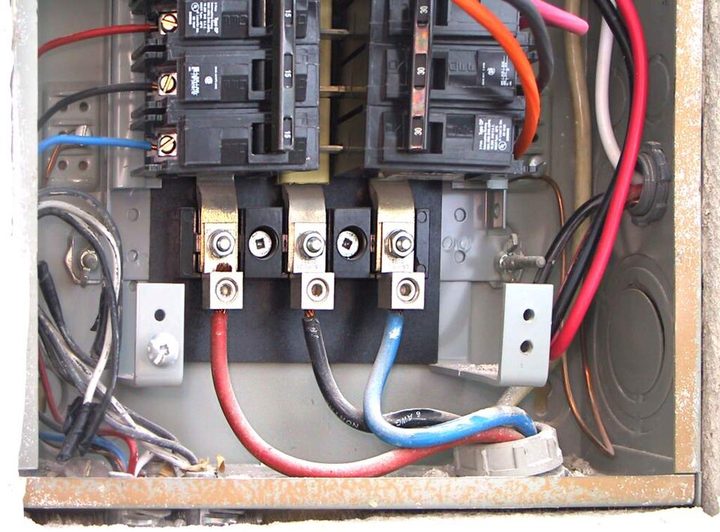
If you search these panels you will find pages with the word “recall” in the headline. There is no recall. The Consumer Product Safety Commission spent two years on it and then closed the file in 1983 without deciding either way.
Which means nobody is obligated to do anything, and nobody is going to pay for it. What actually happens is that a home inspector notes it during your sale, or an insurer asks about it at renewal, and the cost lands on whoever owns the house that week.
So we are not going to tell you your panel is a fire waiting to happen. We will tell you it is a line item that shows up at the worst possible time, and that replacing it on a Tuesday you picked is cheaper than replacing it during a closing.
The Commission closed its investigation because the data available to it did not establish a serious risk — and because gathering data that would settle the question would have cost, in its own words, several million dollars.
In 2011 it revised the release to make the limit of that decision explicit.
U.S. Consumer Product Safety Commission, release of March 3, 1983, revised February 18, 2011: “the Commission closed the matter without making a determination as to the safety of FPE circuit breakers or the accuracy of the manufacturer’s position on the matter.” Read the release →This is a one-day job on a house with an accessible panel and a mast that does not need relocating. Here is where the day goes, so you can plan around the part that matters: the power being off.
We pull the electrical permit and file the service change with the utility. They have to schedule a disconnect and a reconnect at the weatherhead, and that scheduling — not the work itself — is what sets your date.
The utility pulls the meter. From here until the reconnect there is no electricity in the building. If you work from home, work somewhere else that day. If you have a freezer worth saving, leave it shut.
Every branch circuit gets labeled before it is disconnected. That is the part that takes the time, and the part that pays you back every time you flip a breaker for the next thirty years. New panel, new grounding electrode conductor, new ground rods.
The overhead mast and meter socket are usually original and usually undersized for 200A, so they get replaced along with the panel. On an underground service this step is shorter and the price drops accordingly.
The municipal inspector looks at the work before the utility will reconnect. Not a formality, and not something anyone can skip to make your day shorter. If something needs correcting we correct it and call the inspector back.
Meter back in, power on, every circuit tested, and we walk the panel with you so the labels mean something to the person who lives here. You get the permit number and the inspection record.
Ranges for a single-family house in Ferndale and the neighboring communities, permit and inspection included. A number over the phone stays an estimate until somebody has looked at your mast and your basement.
New panel, new mast and meter socket, new grounding, permit, inspection, utility coordination. One day.
$3,200 – $5,200The service is already adequate; the panel itself is obsolete or full. No mast work and no waiting on a utility disconnect.
$2,400 – $3,400Garage, addition, or a basement finish that needs its own circuits. Priced by the run, not by the box.
$900 – $2,100