140 Detroit businesses
Your landfill bill is mostly things that aren't waste.
We audit what actually goes in your bins, separate what has a buyer, and haul it. Across 140 businesses the average landfill weight fell 61% — and the total bill fell with it.
How it runs
Four weeks, and you can stop at any point.
No contract until after the audit, because until the audit neither of us knows whether we can help you.
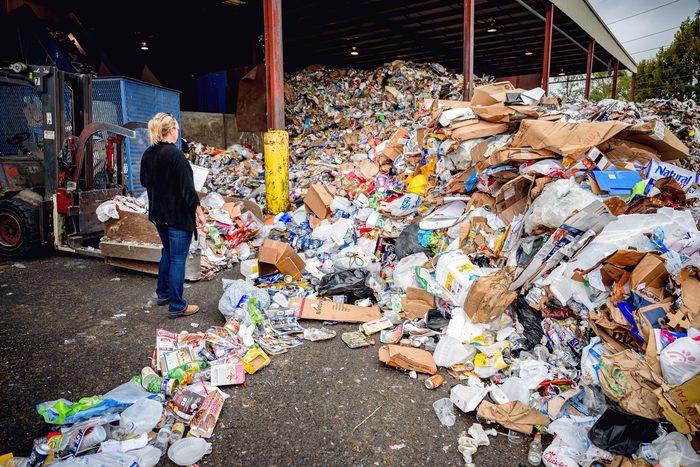
Literally. Two people, one morning, sorting a representative day of your waste by material and weighing each stream. You get the photographs whether or not you hire us.
What you are throwing away, what it weighs, what it costs you, and what a buyer would pay for the parts of it that have one. Written, itemised, and yours to take to another hauler if you want.
New containers where the waste is actually produced, not where the old bins happened to be. Twenty minutes of training per shift, on shift, in the room.
On your schedule, with a monthly statement of tonnage by stream. If the numbers stop working for you, thirty days' notice and no exit fee.
Who this suits
Four kinds of business, and one that we send elsewhere.
Restaurants & cafés
Where the wins are largest and fastest: glass, cardboard, oil and food waste are four streams that all have somewhere better to go, and together they are usually three quarters of the bin by weight. Sixty-one of our hundred and forty.
Retail
Cardboard, plastic film and returns. The film is the one nobody else takes.
Small manufacturing
Offcuts, swarf, pallets and packaging. Often the material has real resale value and nobody had checked.
Offices & studios
Smaller volumes, so we usually put several buildings on one round to make it worth the truck.
Not us: anything generating regulated medical, chemical or construction waste. Those need a licensed hazardous hauler, and we will give you two names rather than take the work.
One example
A twelve-table restaurant in Eastern Market.
Four bins, all going to landfill, collected six times a week. The audit found that 71% of the weight was glass and food waste. Both had buyers within nine miles.
Landfill collections went from six a week to two. The glass now goes to an aggregate plant in Melvindale and the food waste to a digester in River Rouge. Their total waste bill fell by a third.
That restaurant
- Before
- 6 hauls / week
- After
- 2 hauls / week
- Diverted
- 71% by weight
- Bill
- −34%
Start with the audit
One morning, and you keep the findings either way.
There is no charge for the audit and no obligation after it. If the numbers say we cannot save you anything, we will say so in writing — that has happened nineteen times and we would rather it kept happening than not.