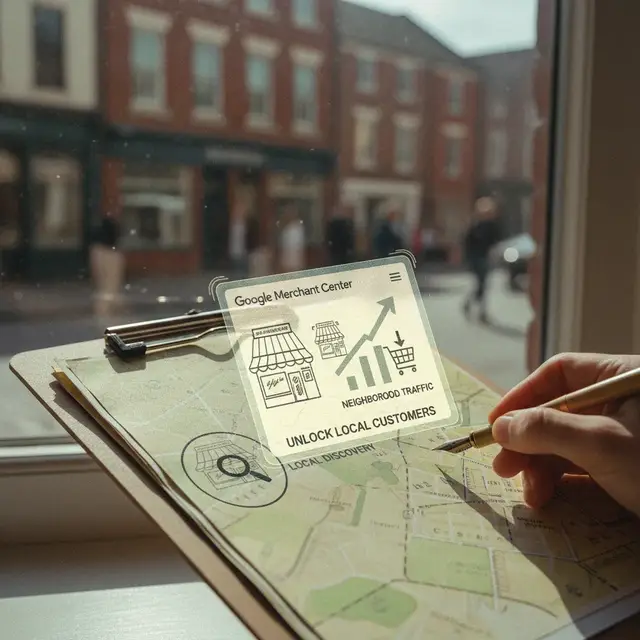
Most local businesses treat their Google Business Profile as an afterthought—a digital yellow pages entry they update once a year. Meanwhile, national competitors are pouring millions into aggressive domain authority tactics. If you try to out-spend them on broad keywords, you will lose. The win condition for a local business isn't national dominance; it's total control of the map pack within your specific service radius.
Key Takeaways
- Local businesses win by controlling the map pack within their service radius — not by outspending national brands on broad keywords.
- JSON-LD schema that explicitly defines your GeoCoordinates and AreaServed tells Google exactly where you are and who you serve.
- Every physical location needs its own dedicated landing page with local testimonials, embedded maps, and service-specific schema.
- Identical name, address, and phone (NAP) data across your website, Facebook, and Google Business Profile builds the algorithmic confidence Google rewards with high-intent traffic.
Local SEO isn't just about reviews or citations. It is about how clearly you signal your physical reality to search engines. If Google isn't certain about your coordinates, service areas, and business hours, it won't feature you in the top three results. You need to anchor your digital presence with technical precision.
Beyond Citations: The Architecture of Local Trust
You need to move past standard directory listings. Google’s algorithms prioritize sites that prove their local context through structured data. By implementing JSON-LD schema markup, you speak directly to the search engine. We often see firms ignoring the technical architecture required for local discovery, effectively hiding their location in plain sight. If your Schema doesn't explicitly define your GeoCoordinates and your AreaServed, you are leaving ranking potential on the table.

JSON-LD schema acts as the translation layer between your physical shop and Google’s ranking engine.
Weaponizing Structured Data
Your website should reflect your Google Business Profile perfectly. Every physical location you have needs a dedicated, highly optimized landing page. This page shouldn't just contain contact info; it should host local testimonials, embedded maps, and service-specific schema.
When you align your technical SEO with your business profile, you stop guessing why your rankings fluctuate. You start treating your site like a high-performance engine. As discussed in our guide on why generic web templates fail local SEO, a custom build allows you to control how this data is injected, ensuring your business stays lean and fast while out-ranking bloated, templated national rivals.
The Competitive Edge
The "Local First" approach is about consistency. If your name, address, and phone number (NAP) are displayed differently on Facebook, your website, and your GMB, the search algorithm experiences a loss of confidence. Fix the data, fix the code, and you gain the trust that Google rewards with high-intent traffic.
Frequently Asked Questions
How do I get my business into the Google map pack?
Google features businesses in the top three map results when it is certain about their coordinates, service areas, and business hours. Anchor your digital presence with technical precision: implement structured data on your site and keep it perfectly aligned with your Google Business Profile.
Is a Google Business Profile enough for local SEO on its own?
No. Your website has to mirror your profile, and every physical location needs a dedicated landing page with local testimonials, embedded maps, and service-specific schema. Treating the profile as a digital yellow pages entry you update once a year leaves ranking potential on the table.
What is JSON-LD schema and why does my local business need it?
JSON-LD schema markup is structured data that speaks directly to the search engine about your physical reality. If your schema does not explicitly define your GeoCoordinates and AreaServed, you are effectively hiding your location in plain sight and giving up local rankings.
Does it matter if my address is listed differently on Facebook and Google?
Yes. When your name, address, and phone number (NAP) appear differently on Facebook, your website, and your Google Business Profile, the algorithm experiences a loss of confidence in your data. Fix the data and the code, and Google rewards that consistency with high-intent traffic.
Need to secure your place in the top three results?
We build high-performance web systems and technical SEO foundations specifically for local businesses ready to own their market.
Elevate Your Digital Presence →