A table is six parts and one joint.
A wedged through-tenon holds the table together without glue or screws. Scroll to see the parts meet.
White oak, drawn at eight times full size. Your piece starts with a drawing.
The trestle, in the order it is built
Six parts, no hardware but four screws through slotted holes, and one joint doing all the work.
- Railroad reaches the city
- 1858
- Philadelphia Centennial
- 1876
- Berkey & Gay sold to Simmons
- 1929
- The last of it
- 1948
What is left of Furniture City
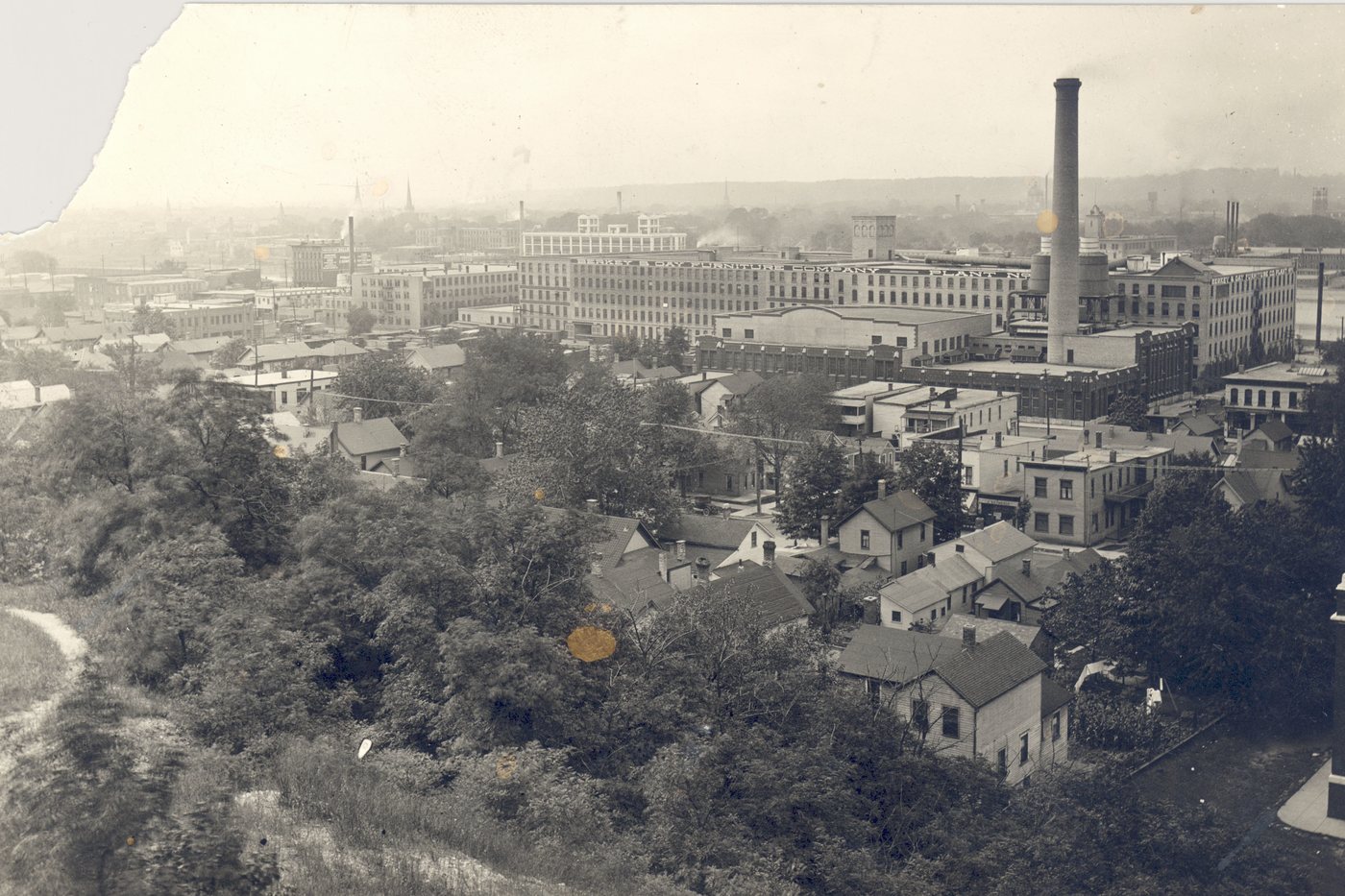
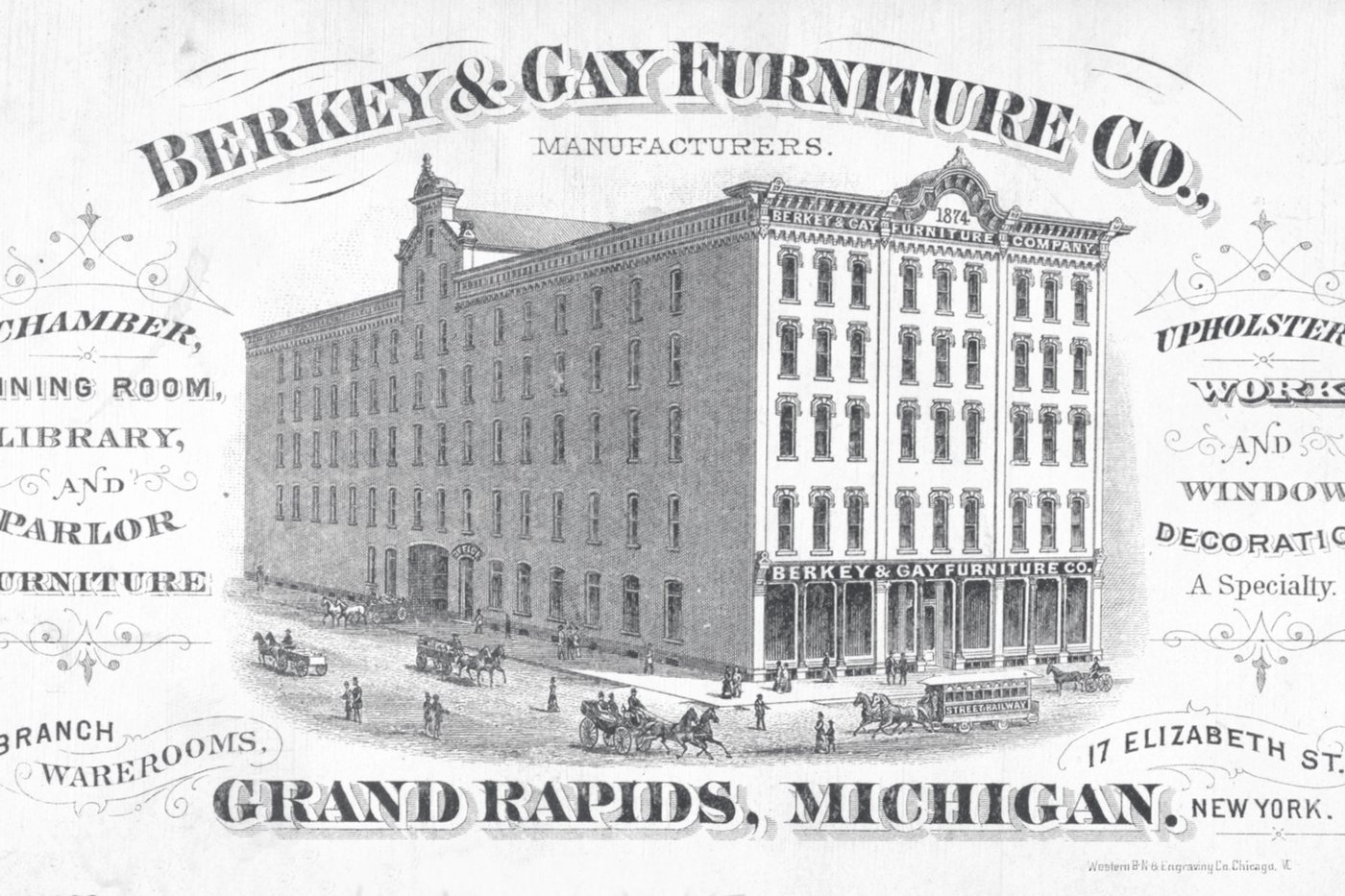
Grand Rapids made furniture for the whole country for about sixty years. The river moved the logs, the railroad moved the goods, and after Berkey & Gay took a room full of carved walnut to the Philadelphia Centennial in 1876 the city's name was worth more than any single company in it. Widdicomb, Sligh, Hekman, Phoenix, Baker — at the peak there were dozens.
Then it went. Berkey & Gay sold out to a Chicago mattress company, went bankrupt in 1931, reopened, converted to war work, and folded for good in 1948. Household furniture followed cheap labor to North Carolina and then overseas. What stayed in west Michigan was office furniture, which is a different trade with a different customer, and it is still here and still large.
So the thing this city was known for is now made the way it was made before 1870: one at a time, by somebody standing at a bench. That is not a romantic claim about craft. It is just what is left, and it turns out to be the right size for a dining table that has to fit an actual room.
Three pieces, one joint
A trestle at three sizes. It is the same construction each time, because a joint you have cut four hundred times is a joint you can cut well.
The same table, in six woods
Wood is most of the price and all of the character, and a two-inch swatch will not tell you what a six-foot top looks like. Pick one and the drawing changes.
The list for the table drawn at the top of this page, at six feet by three foot one, in white oak.
The cut list, since you are paying for it
Numbered because the order is the work: a mortise is cut before the tenon that fits it, and the wedges are fitted last of all. 41 board feet of finished part, 55 bought rough, which is where a third of the timber cost goes and why nobody quotes from finished sizes.
| # | Part | Length | Section |
|---|---|---|---|
| 1 | Top | 6′ 0″ | 37″ × 1.5″ |
| 2 | Bearer × 2 | 2′ 4″ | 3.25″ × 2.25″ |
| 3 | Post × 2 | 1′ 11½″ | 3.5″ × 3″ |
| 4 | Foot × 2 | 2′ 6″ | 3.5″ × 2.75″ |
| 5 | Stretcher | 4′ 2″ | 1.5″ × 5.5″ |
| 6 | Wedge × 4 | 5″ | 0.75″ × 1.1″ |
Come and stand next to one
The shop is open two days a week and there is usually something half-built on the bench. Nobody has ever regretted putting a hand on a table before ordering one, and several people have changed wood because of it.