Book an inspection
Bed bugs

Nobody gets bed bugs because their house is dirty.

That sentence is on this page before anything else because shame is the reason people wait three months to call, and three months is the difference between one room and the whole floor. Bed bugs are a travel problem. They arrive in luggage, in a secondhand headboard, in a moving van, through a shared wall. Spotless houses get them constantly.

The first hour

Four things to do tonight, and four not to.

Almost everything that makes a bed bug treatment expensive and slow happens in the first week, before anybody professional has seen it.

  • Do

    Confirm it, with a specimen

    Catch one with clear tape on a white index card. Bites alone are not evidence — people react very differently and plenty of things bite.

  • Do

    Keep sleeping in the same bed

    This is the one everybody gets wrong. Moving to the couch spreads them to the couch and to that room. You are the bait that keeps them where they are.

  • Do

    Bag anything that leaves the room

    Sealed bags, and stay sealed until they are washed and dried hot. The dryer does the work, not the wash.

  • Do

    Tell whoever needs telling

    A landlord, and neighbors on shared walls if you are in a multi-unit building. Treating one unit of four is money spent on a temporary result.

  • Do not

    Throw out the mattress

    Usually unnecessary, always expensive, and a bagged mattress in the hallway is how the building finds out and how the next tenant gets them. An encasement costs a fraction of a mattress and is part of the treatment anyway.

  • Do not

    Buy a bug bomb

    Total-release foggers do not reach into the seams and voids where bed bugs actually sit, and the repellent effect scatters them into the walls and the next room. This is the single most common way a one-room problem becomes a whole-floor problem.

  • Do not

    Move furniture to another room

    Or to a storage unit, or to a relative’s house.

  • Do not

    Start pulling up carpet

    They are not in the carpet. They are within a few feet of where you sleep, in seams, screw holes, headboard joints and the box spring.

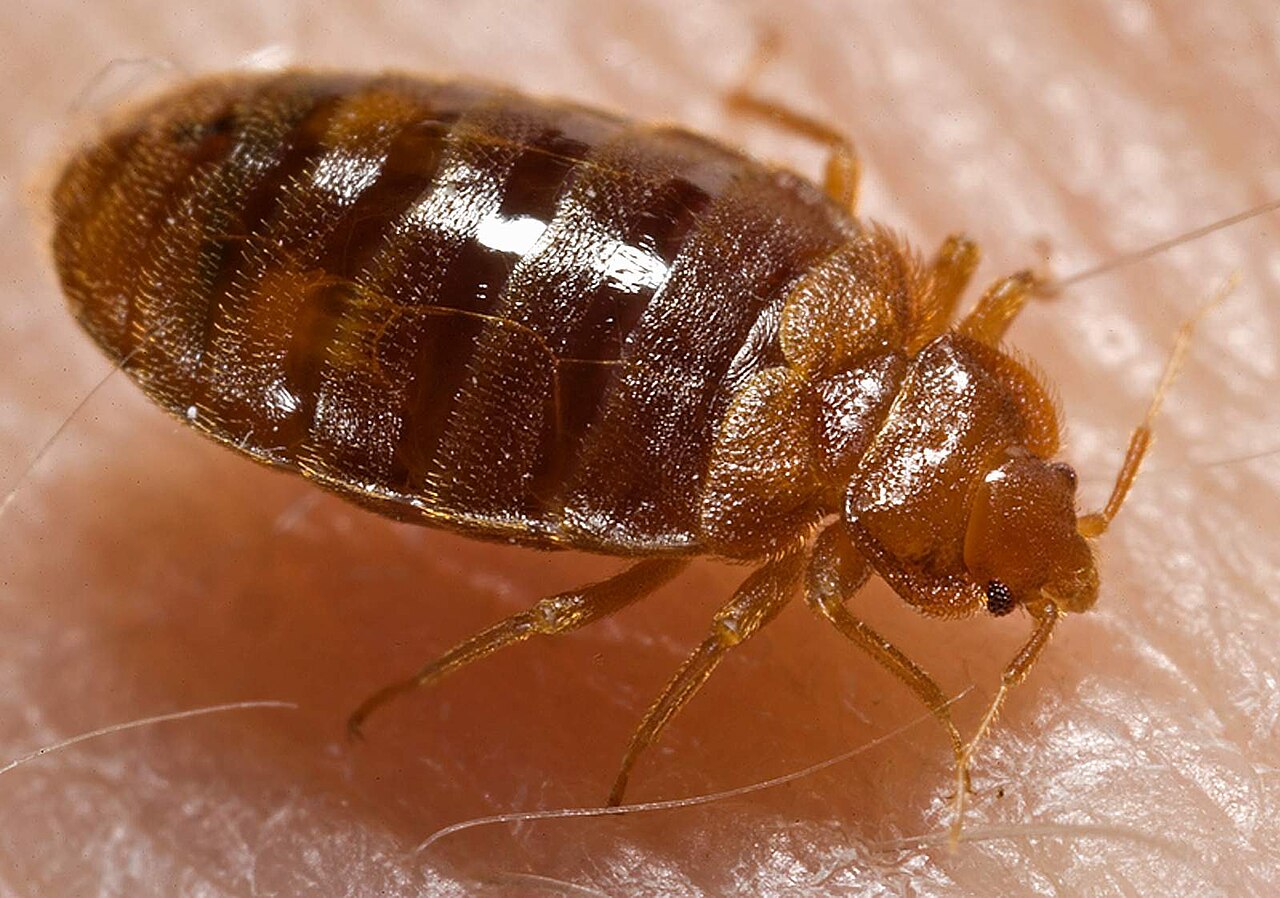
A bed bug on human skin, showing a flat oval body, six legs and no wings.
Bites, hard to clear

What you are looking for

Cimex lectularius · 4–5 mm adult

Roughly the size and color of an apple seed. Young ones are much smaller and nearly translucent, which is why a light infestation is genuinely easy to miss.

CDC / Harvard University, Dr Gary Alpert · public domain
The evidence, in order of reliability

Look at the seams, not the sheets.

  • Best

    A live insect

    Settles it. Everything else is inference.

  • Strong

    Dark specks along a seam

    Digested blood. They smear rust-colored when wiped with a damp cloth, which is how you tell them from dirt or mold specks.

  • Strong

    Shed skins and eggshells

    Pale, empty, insect-shaped husks in the box-spring corners. Evidence of breeding, not just a hitchhiker.

  • Weak

    Bites

    Between a fifth and a third of people show no reaction at all, and plenty of other things bite. Bites open the investigation; they never close it.

Treatment, honestly

What it actually takes, and what it actually costs.

There is no single visit that ends this. Anybody promising one is either using a method that does not work or is about to be back three times without saying so.

  • Method

    Heat, chemical, or both

    Whole-room heat takes the space to a lethal temperature for several hours. It kills every life stage including eggs, usually in one visit, and it leaves no residue. It is the expensive option and it needs a lot of preparation.

    Conventional treatment uses targeted residual products and growth regulators in the harborages, over two or three visits about two weeks apart, because eggs hatch after the first application. Cheaper, slower, and it works when it is done thoroughly.

  • Prep

    The preparation is most of the work, and it is yours

    Laundry bagged and dried hot, clutter reduced, furniture pulled from walls, access to every seam. We will hand you a written checklist and we would rather reschedule than treat a room that is not ready — treating an unprepared room is how you pay twice.

  • Cost

    A range, not a quote

    Conventional treatment of one bedroom: $450 – $900 across the visit series. Whole-room heat: $1,200 – $2,600 depending on the size of the space. A multi-room infestation in a whole house runs well past that, which is the reason the first paragraph of this page is about calling early.

  • After

    Monitors, and a follow-up you can hold us to

    Interceptors under the bed legs, read at each visit. We do not call it clear until the monitors have been empty for a set period, and we tell you what that period is before we start rather than after.

If you rent

Tell the landlord in writing and keep a copy with the date on it. Do not treat it yourself first — a failed self-treatment scatters the infestation and can complicate who is responsible for what afterwards.

Responsibility between landlord and tenant in Michigan depends on your lease and the circumstances, and it is a legal question rather than a pest control one. We do not give that advice and you should be wary of a pest company that does. What we can do is put in writing what we found and when, which is the document those conversations tend to turn on.

Book an inspection Call