Book an inspection
Look-alikes

Three pairs, and the difference each one makes.

These are the confusions that cost people money. One of them decides whether your house is being eaten. One decides whether you spend two hundred dollars or two thousand. The third decides whether you get sold a treatment for something that does not need one.

Pair 01 · the structural one

Carpenter ant or termite?

Both turn up as winged adults indoors in spring, which is when almost everybody first meets them. One excavates wood to nest in it. The other eats it.

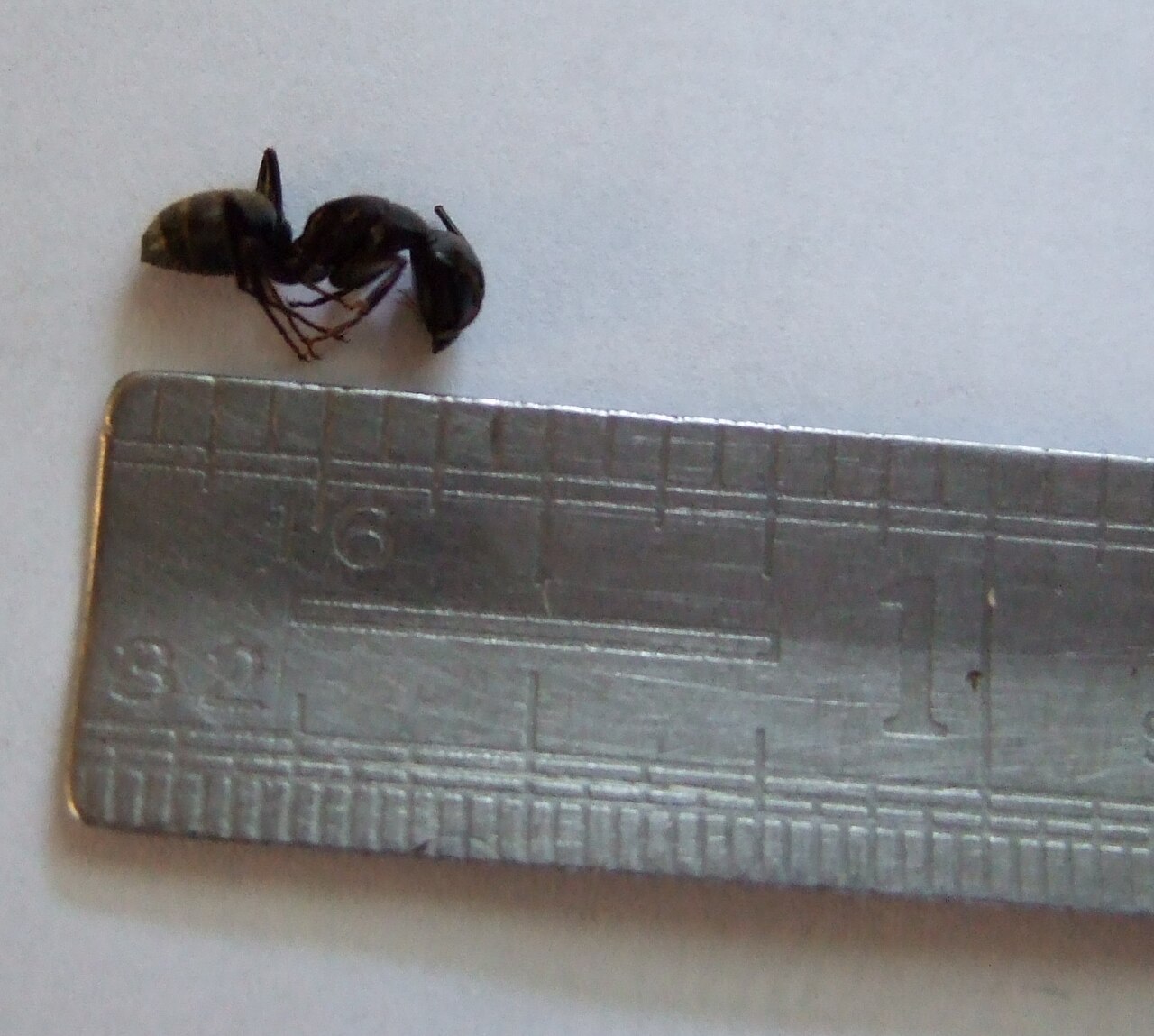
A black carpenter ant beside a ruler for scale, showing its narrow waist and bent antennae.
Damages structure

Black carpenter ant

Camponotus pennsylvanicus · 6–13 mm

Common throughout Michigan. Hollows out damp wood to nest in and pushes the shavings out — it gets nothing nutritional from the wood itself.
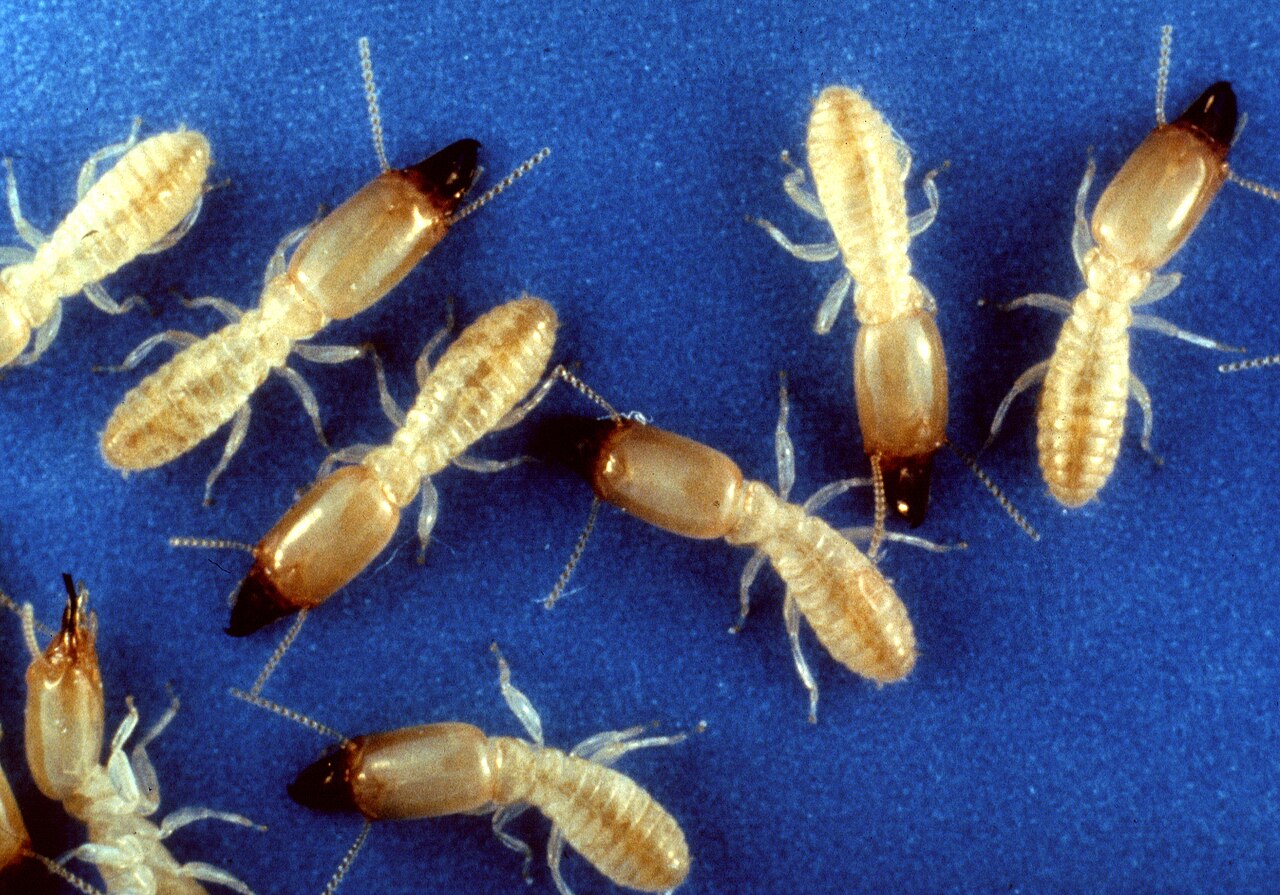
Several pale eastern subterranean termite workers, showing straight-sided bodies with no waist.
Eats structure

Eastern subterranean termite

Reticulitermes flavipes · 3–5 mm worker

Present in Michigan but much less common than carpenter ants. Pale, soft-bodied, and it genuinely consumes the wood.

  • WaistPinched. A clear narrow segment between thorax and abdomen. None. The body is one even width from front to back.
  • AntennaeElbowed — they bend part way along. Straight, and beaded like a tiny string of pearls.
  • Wings, if presentFront pair noticeably longer than the back pair. All four the same length, and much longer than the body.
  • ColorBlack or black and red. Hard-shelled. Creamy white to pale tan. Soft.
  • What it leavesCoarse shavings like pencil sharpenings, with insect parts mixed in. Mud tubes the width of a pencil running up foundation walls.
  • The damageSmooth, clean galleries. The wood is excavated, not eaten. Galleries packed with soil and waste. The wood is consumed.
  • Who can treat itMDARD category 7B — wood-destroying pests. Also 7B. A company holding only 7A cannot quote either of these.

The one-sentence version: if it has a waist, it is an ant. Ants have waists; termites do not. Everything else on that list is confirmation.

Pair 02 · the expensive one

Bed bug or carpet beetle?

Both are a few millimeters long, brown, and turn up in a bedroom. A carpet beetle problem is a vacuum cleaner and a laundry cycle. A bed bug problem is a multi-visit treatment and a very bad couple of weeks, so people arrive at this question frightened.
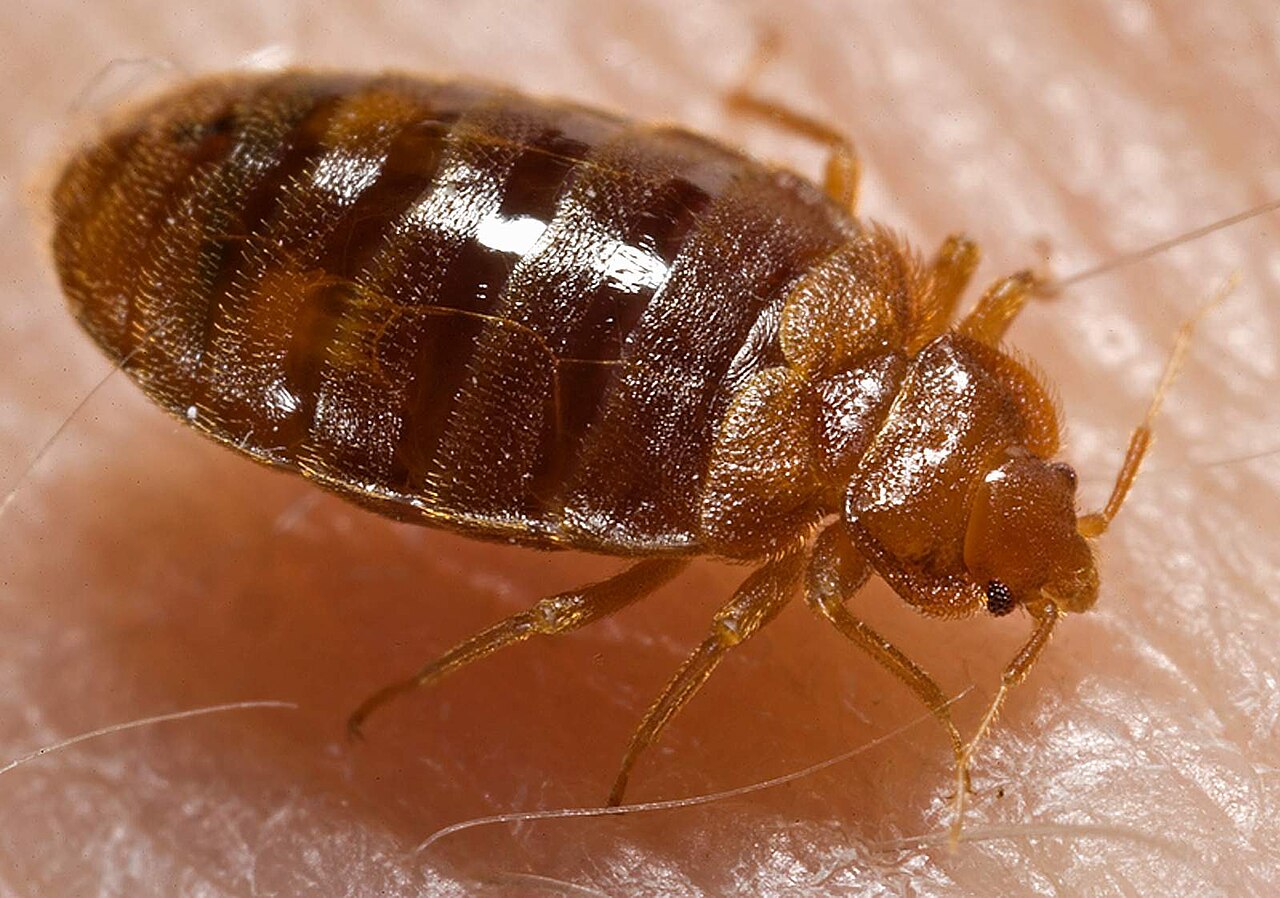
A bed bug on human skin, flat and oval with six legs and no wings.
Bites, hard to clear

Bed bug

Cimex lectularius · 4–5 mm

Six legs, no wings, no hard shell. Flat and oval before feeding, rounder and darker after. Lives in seams and joints, not loose in carpet.
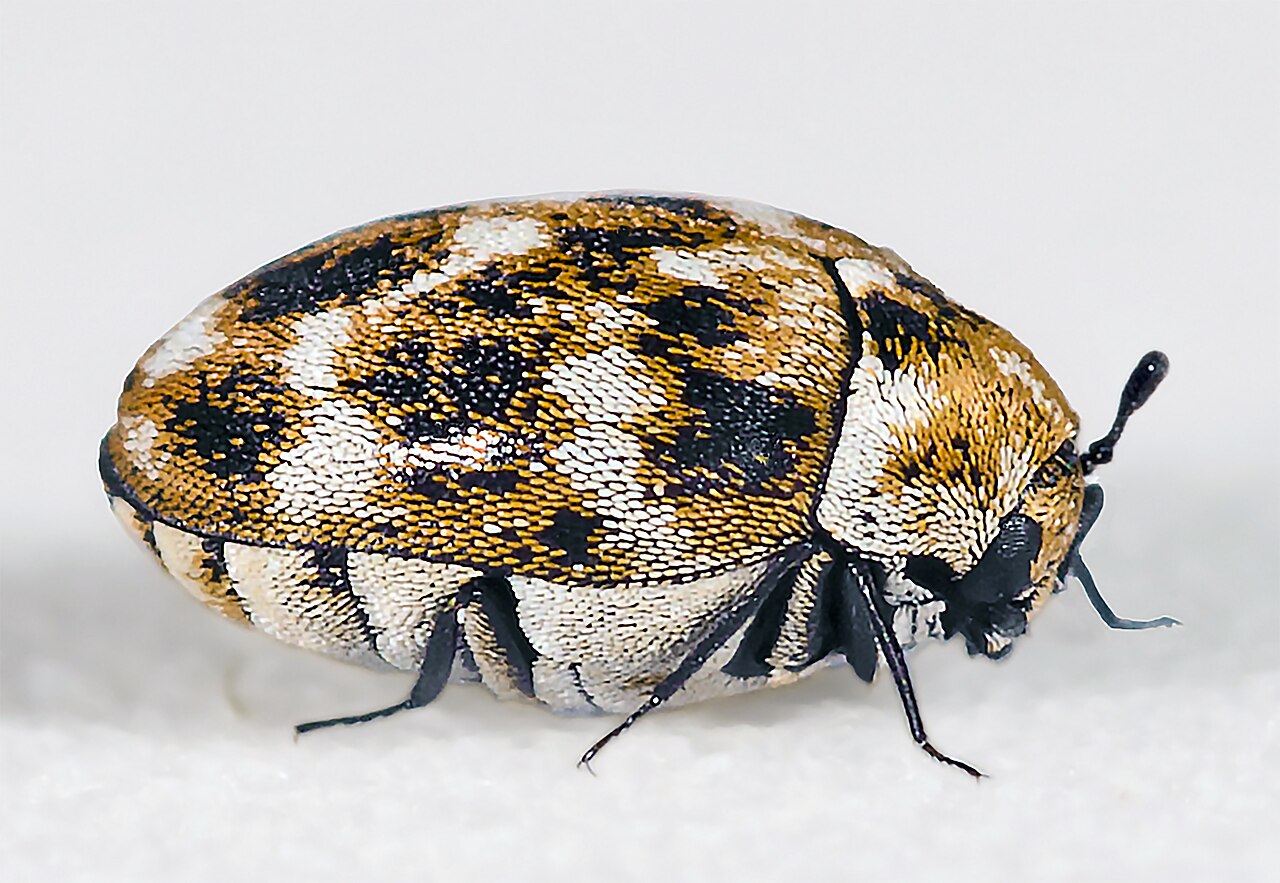
A varied carpet beetle specimen in side view, showing a domed mottled hard shell.
Nuisance

Varied carpet beetle

Anthrenus verbasci · 2–3 mm

A beetle: domed, hard-shelled, mottled cream and brown and black. It eats wool, hair and dry pantry goods. It does not bite you.

  • Shape from the sideFlat. Almost two-dimensional when unfed. Domed, like a very small ladybug.
  • ShellSoft and leathery. Squashes. Hard wing cases with a visible seam down the middle.
  • PatternPlain brown, sometimes banded across the abdomen. Mottled — irregular patches of cream, brown and black scales.
  • Where you find itMattress seams, box spring, headboard, within about eight feet of a sleeping person. Windowsills, closets, under rugs, in the back of a wool drawer.
  • Other evidenceRusty spotting on sheets and dark specks along a seam. Shed larval skins that look like tiny bristly husks.
  • BitesYes. Usually in a line or a small cluster on skin exposed overnight. No. Some people react to the larval hairs, which is itchy but is not a bite.

The one-sentence version: look at it from the side. Flat means bed bug, domed means beetle.

If it is a bed bug, start on the bed bug page and do not throw the mattress out yet.

Pair 03 · the one you get sold

Boxelder bug or stink bug? Neither needs treating.

Both appear on a sunny wall in October, both come inside to overwinter, and both are completely harmless. We have put them side by side because this is the pair most often used to sell a quarterly contract.
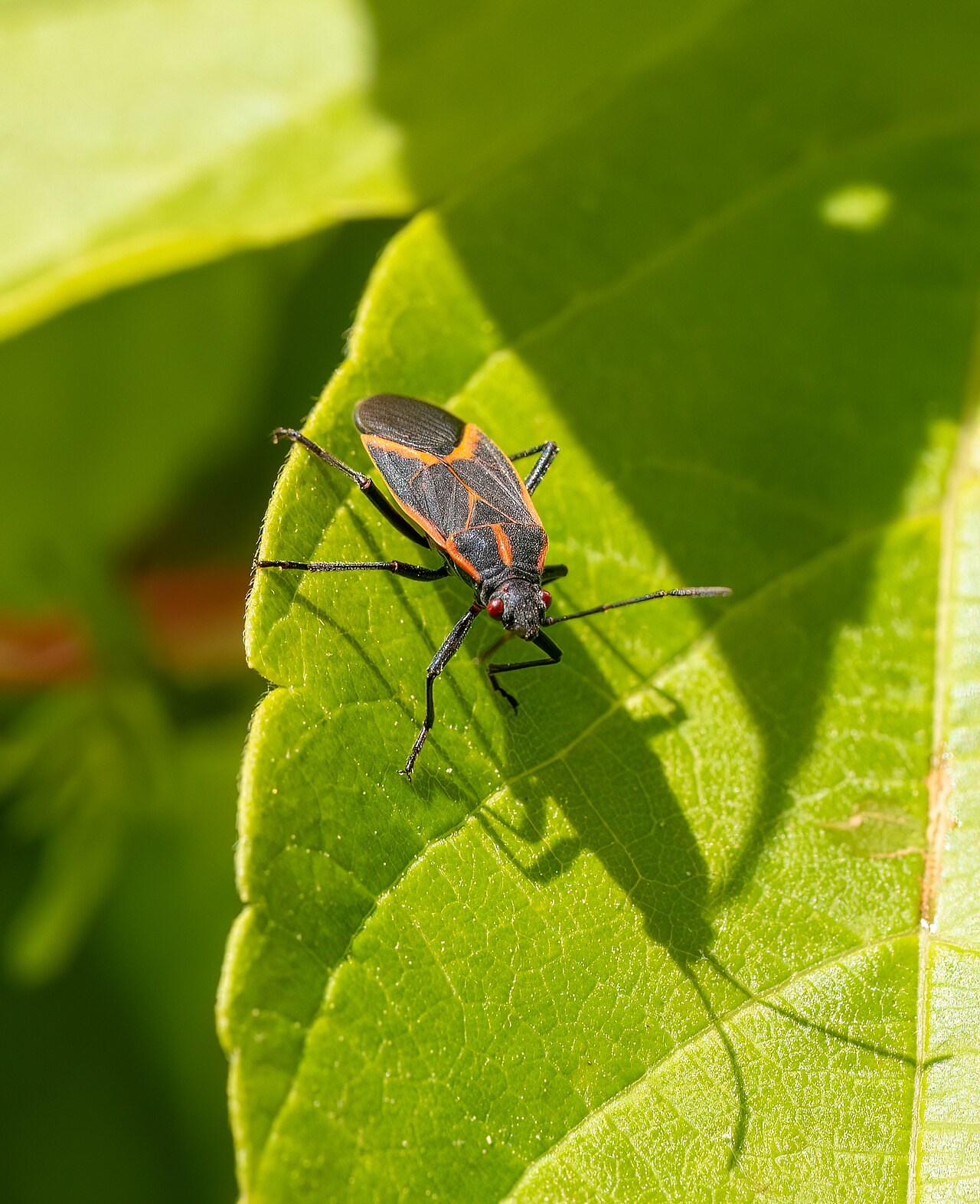
A boxelder bug on a leaf, black with red-orange markings on its back.
Harmless

Boxelder bug

Boisea trivittata · 11–14 mm

Black with red-orange lines. Feeds on boxelder and maple seeds outdoors. Indoors it does nothing at all except be present.
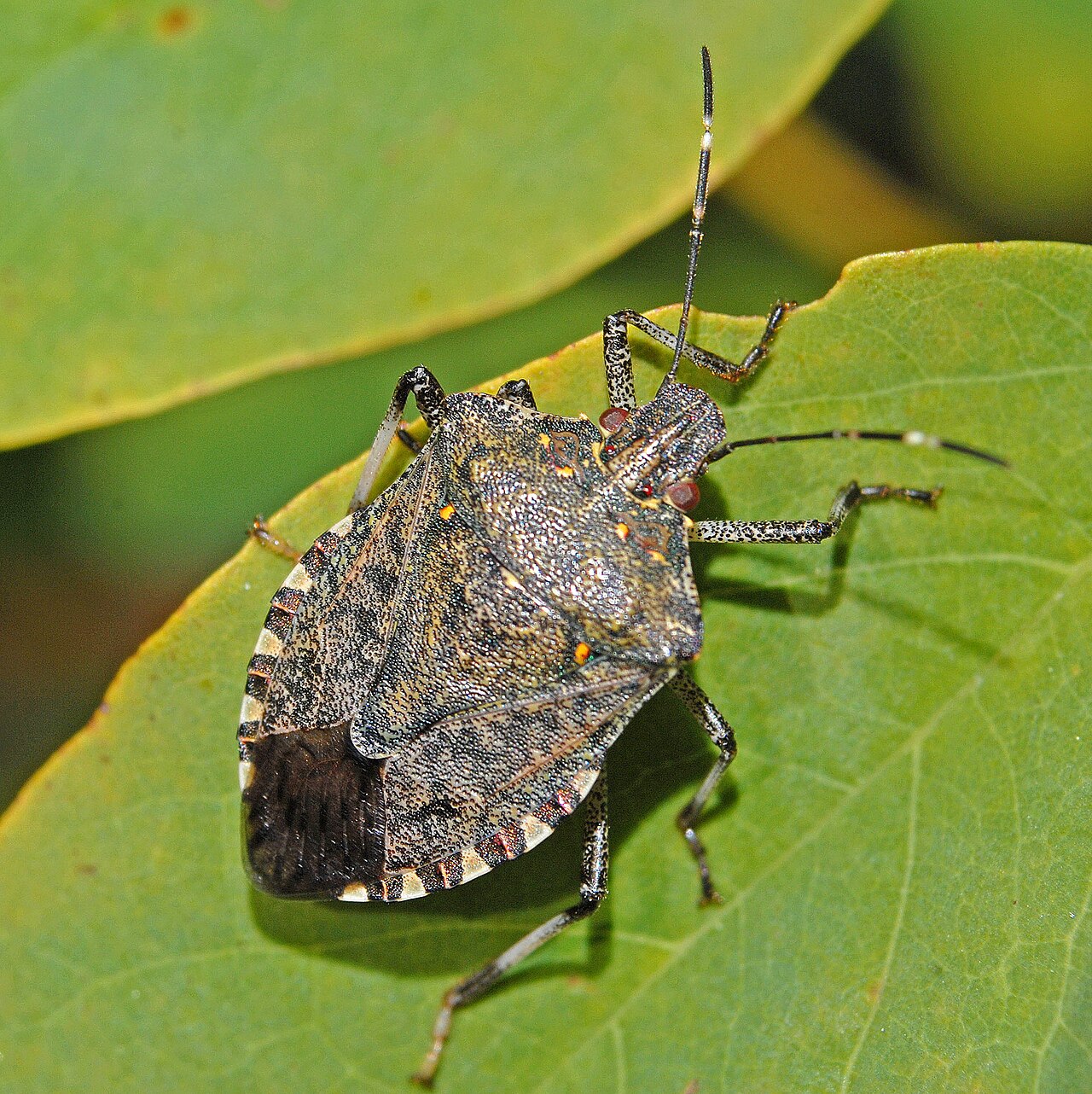
A brown marmorated stink bug on a leaf, shield-shaped and mottled brown.
Harmless

Brown marmorated stink bug

Halyomorpha halys · 12–17 mm

Shield-shaped, mottled brown, with pale bands on the antennae. An agricultural pest outdoors and a nuisance indoors. Does not bite, breed or feed in the house.

  • OutlineLong and narrow, edges roughly parallel. Broad shield. Wider than it is long at the shoulders.
  • ColorFlat black with sharp red-orange lines. Mottled gray-brown with pale bands on the antennae.
  • What to doThe same for both: vacuum them up and empty the canister outside. Do not crush the stink bug. The permanent fix is a caulk gun in September, not a spray in October.

Why we will not sell you a treatment for these. A perimeter spray in October kills the ones it lands on and does nothing about the thousands behind the siding. The fix is sealing the gaps they use, which is a morning of work, done once, and it also keeps out the things that do matter. If somebody quotes you quarterly for boxelder bugs, that is a subscription, not a solution.

Book an inspection Call