Book an inspection
The key · 17 specimens

What is it?

Sorted by where you are likely to meet it. Each plate carries the species, the adult size, what it means for the building, and the photographer — because a photograph you cannot attribute is a photograph you cannot trust.

If it is small, brown, and you found it near a bed, go straight to the look-alikes page. That one distinction is worth more than everything else here.

Specimens

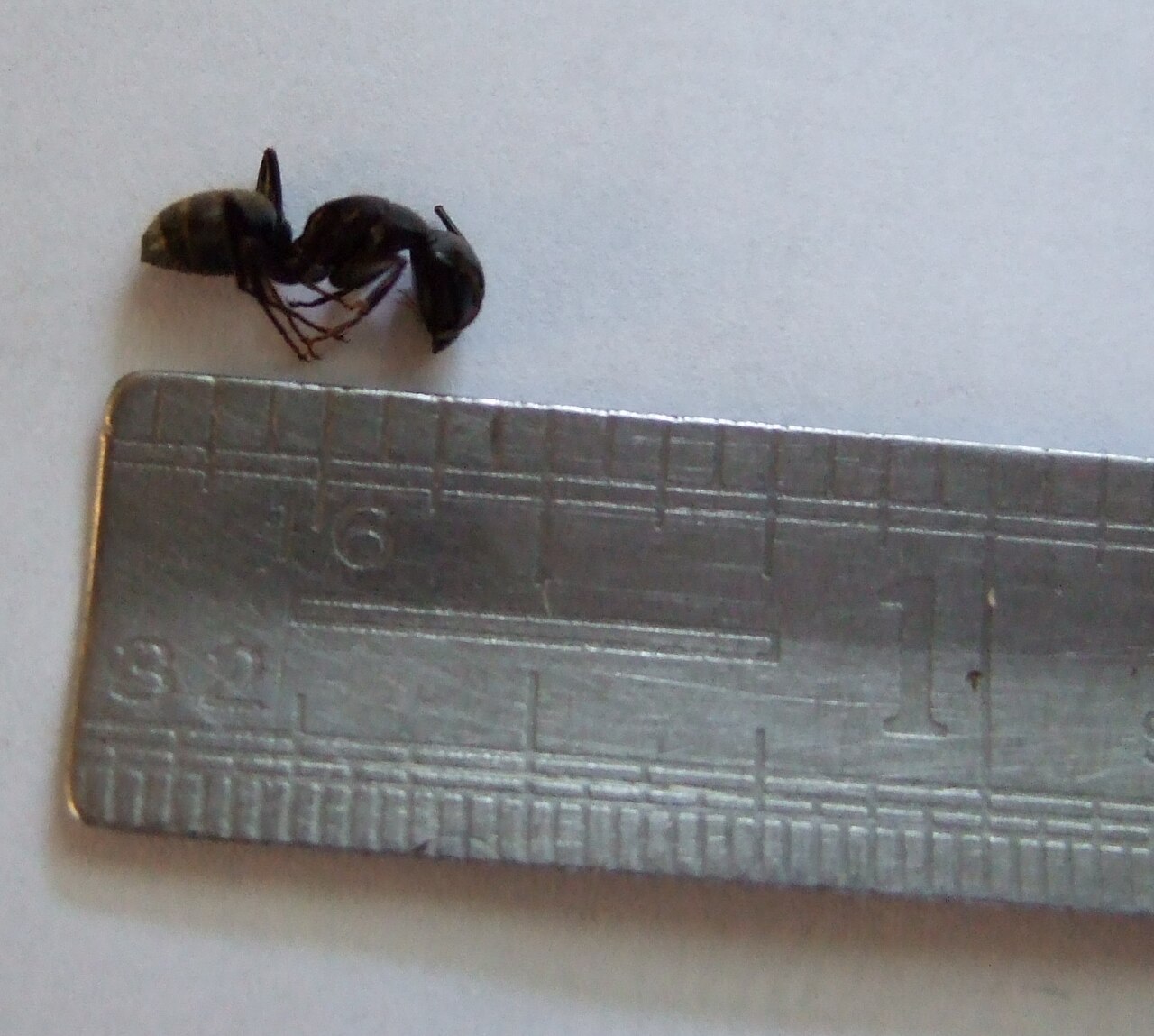
Black carpenter ant (Camponotus pennsylvanicus), photographed specimen.
Damages structure

Black carpenter ant

Camponotus pennsylvanicus · 6–13 mm

Excavates galleries in damp or previously wet wood — it does not eat it. The tell is coarse sawdust with insect parts in it under a sill or a window. Big, black, and out at night.

Original uploader was Muéro at en.wikipedia · Public domain · source
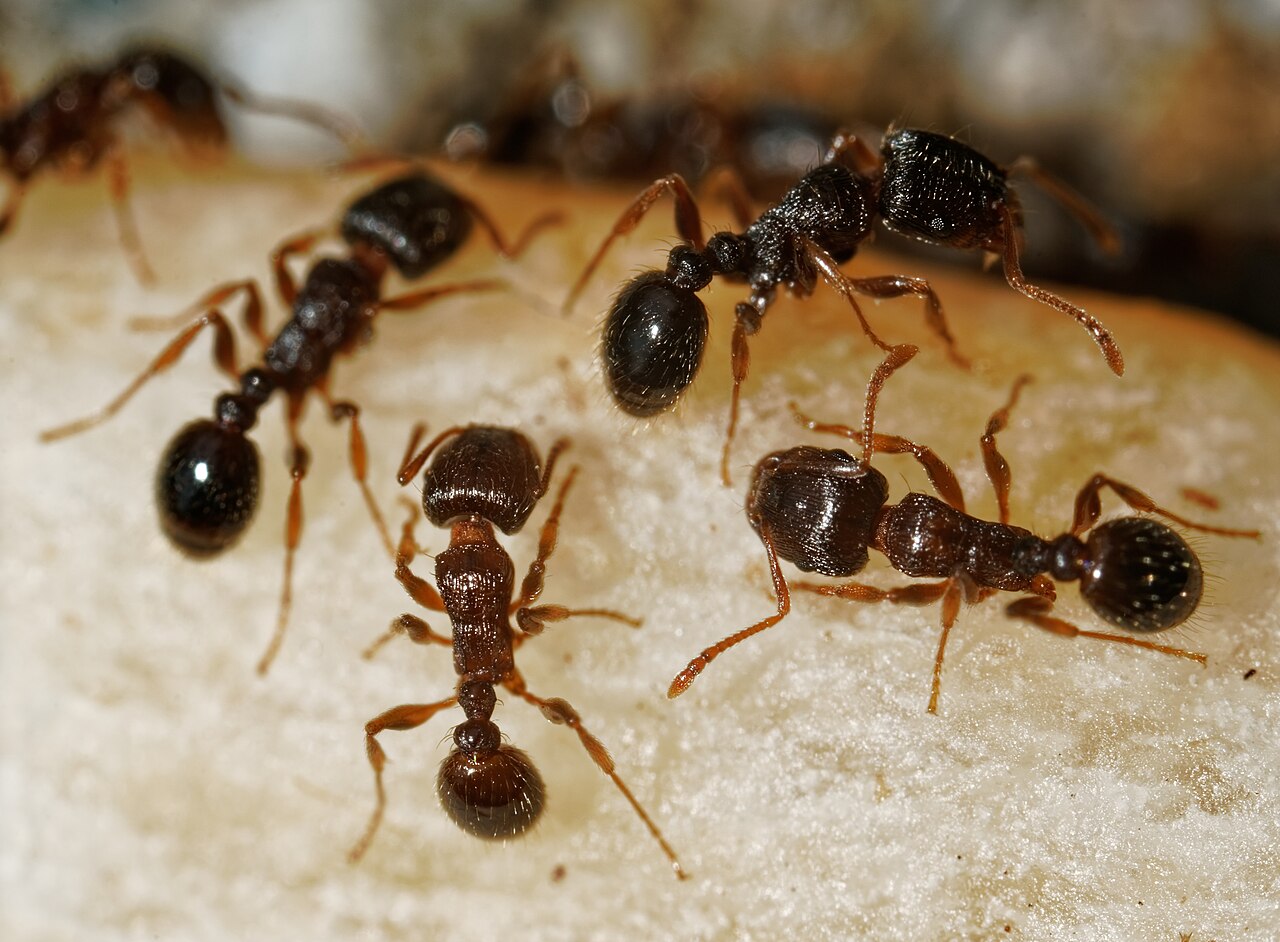
Pavement ant (Tetramorium immigrans), photographed specimen.
Nuisance

Pavement ant

Tetramorium immigrans · 2.5–4 mm

The small dark ant coming up through a crack in a slab or a driveway seam. Trails to whatever is sweet or greasy. Structurally harmless and easy to stop at the source.

Bradley Rentz · CC BY-SA 4.0 · source
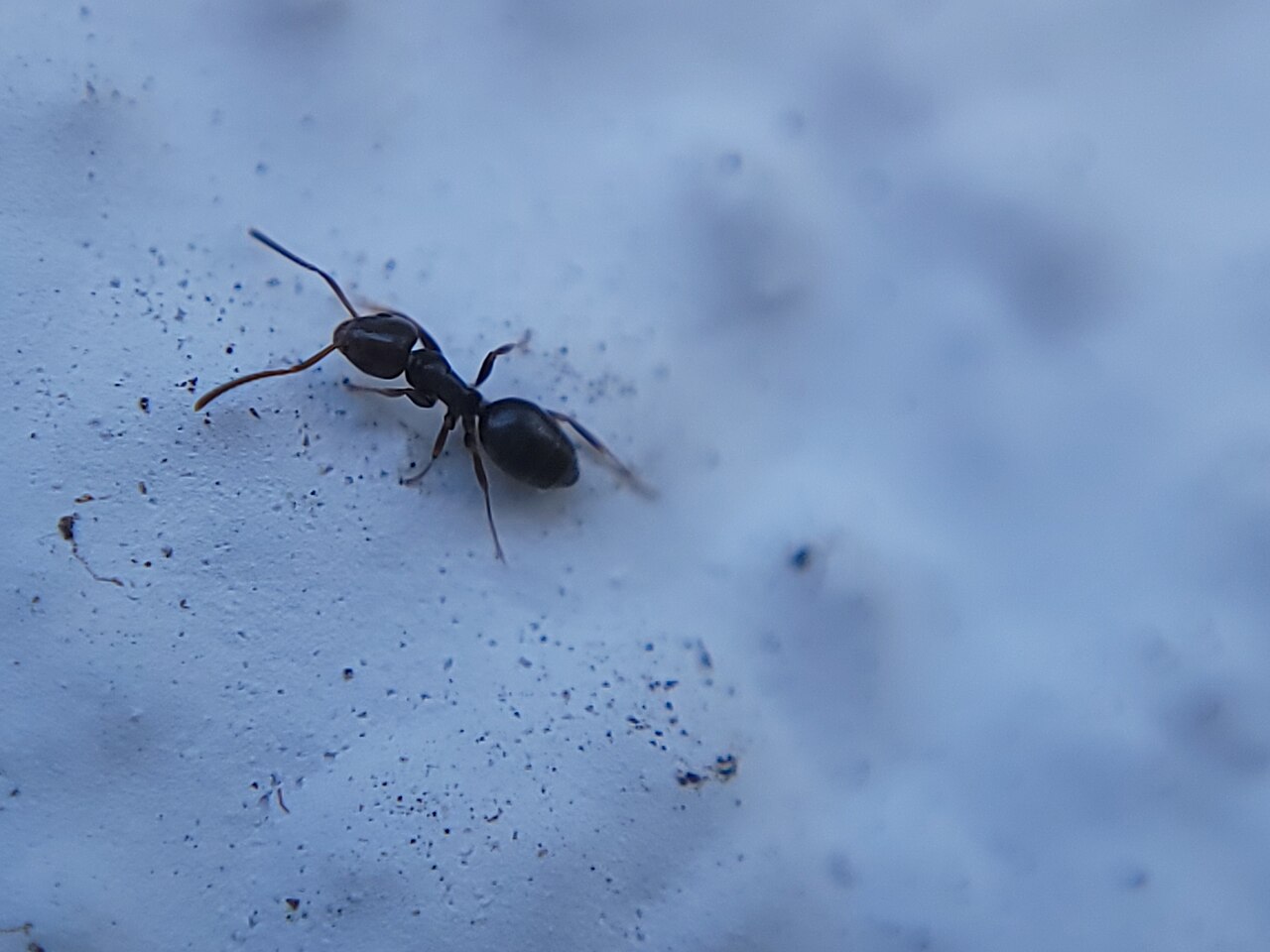
Odorous house ant (Tapinoma sessile), photographed specimen.
Nuisance

Odorous house ant

Tapinoma sessile · 2.5–3 mm

Crush one and it smells faintly of blue cheese, which is the fastest identification on this page. Nests in wall voids near moisture. Multiple queens, so sprays scatter it and make it worse.

Theo Summer · CC BY 4.0 · source
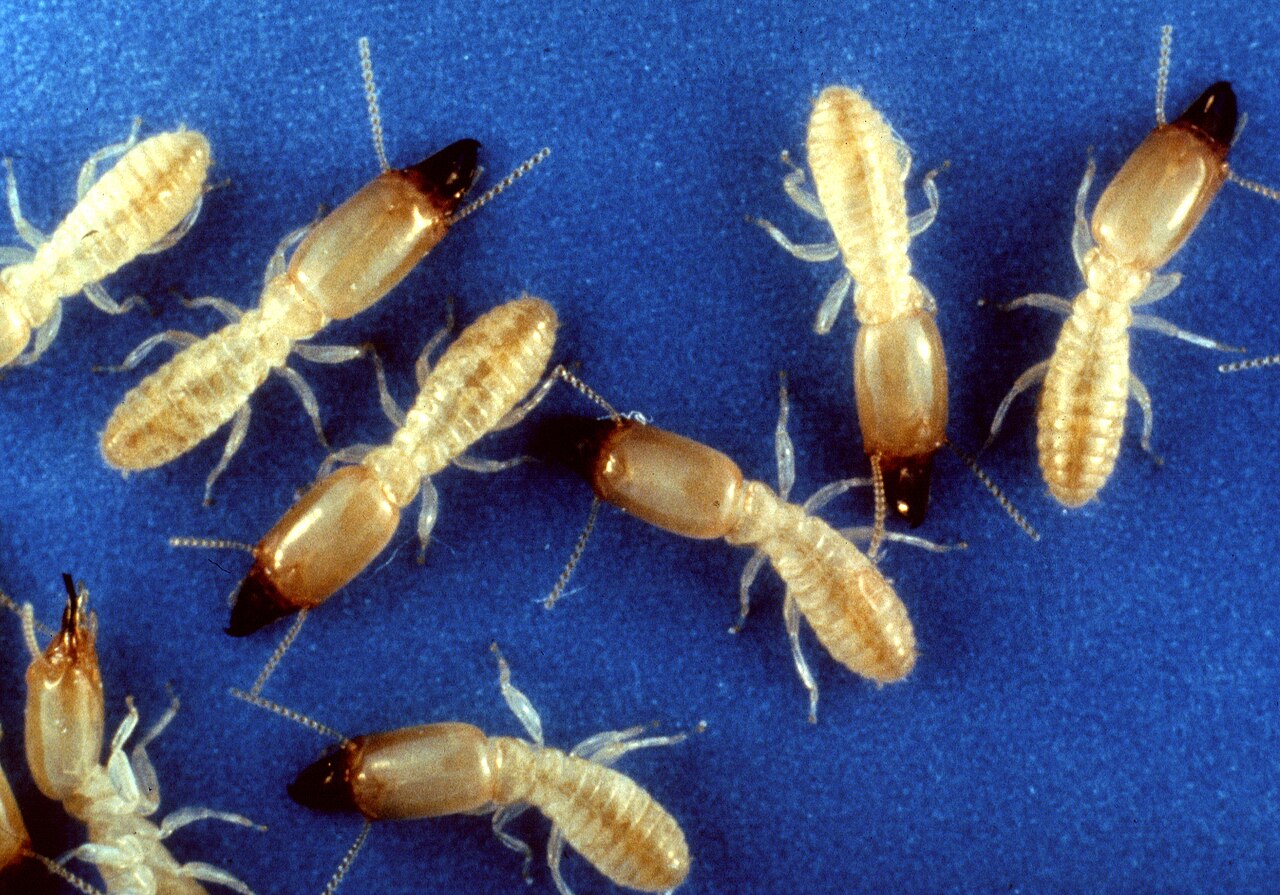
Eastern subterranean termite (Reticulitermes flavipes), photographed specimen.
Eats structure

Eastern subterranean termite

Reticulitermes flavipes · 3–5 mm worker

Pale, soft, and it genuinely eats the wood. Present in Michigan but far less common than carpenter ants — which is exactly why the two get confused. Mud tubes on a foundation wall are the giveaway.

Public domain · source
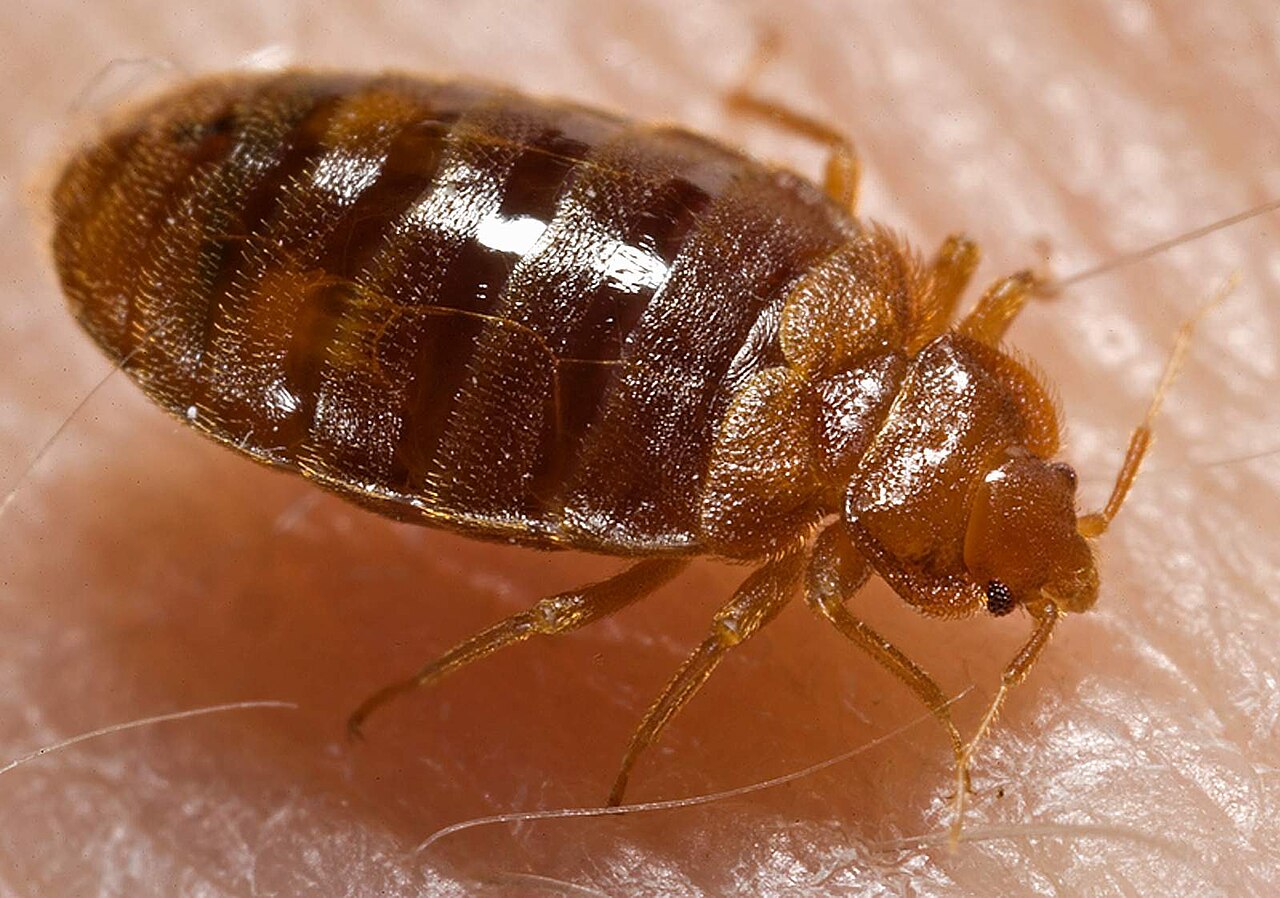
Bed bug (Cimex lectularius), photographed specimen.
Bites, hard to clear

Bed bug

Cimex lectularius · 4–5 mm adult

Flat and oval when unfed, rounder and darker after a meal. Six legs, no wings, and it does not jump or fly. Found in seams, not in carpet. Never a hygiene problem — it is a travel problem.

Content Providers(s): CDC/ Harvard University, Dr. Gary Alpert; Dr. Harold Harlan; Richard · Public domain · source
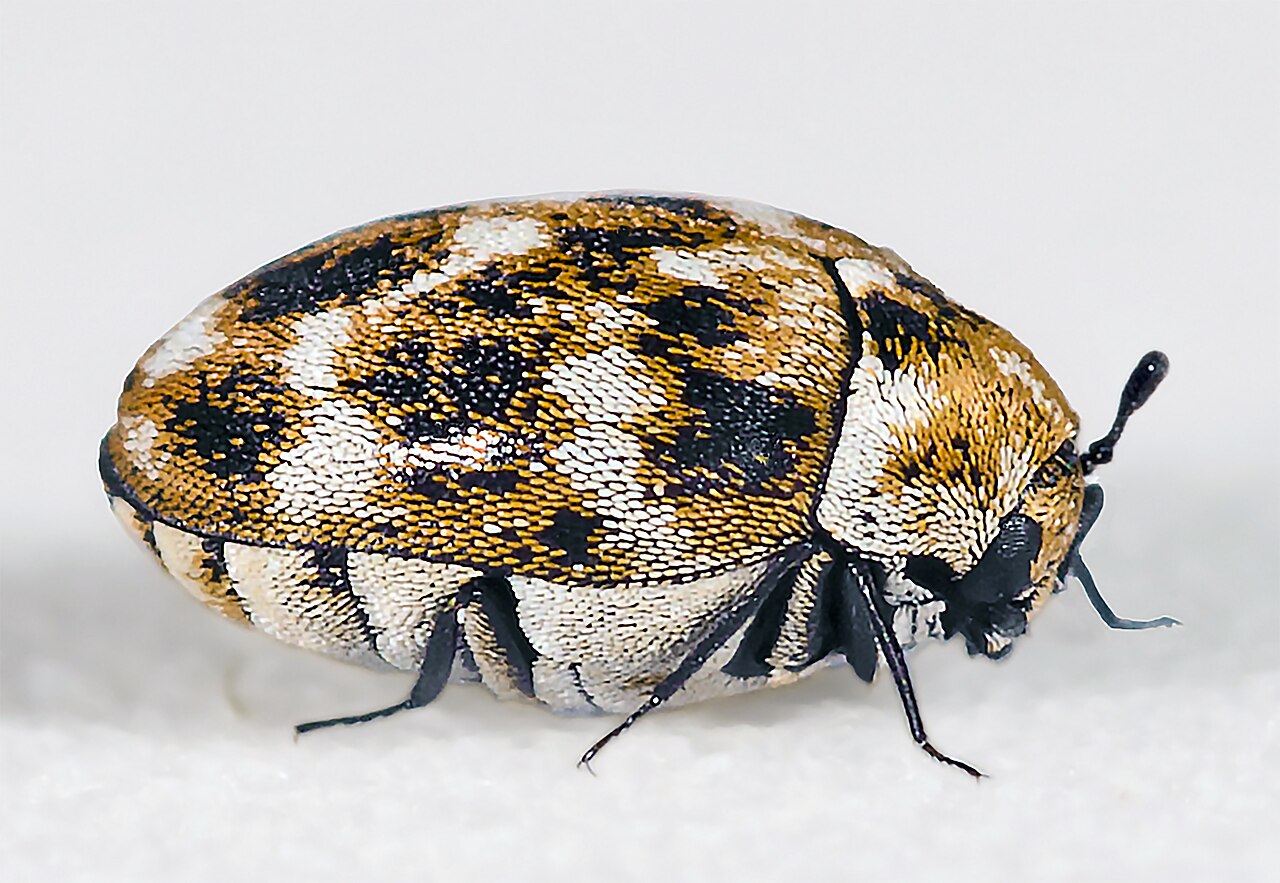
Varied carpet beetle (Anthrenus verbasci), photographed specimen.
Nuisance

Varied carpet beetle

Anthrenus verbasci · 2–3 mm

Mottled, rounded and hard-shelled, with a domed back. Mistaken for a bed bug more than anything else on this page, and the difference decides whether you spend $200 or $1,800.

Didier Descouens · CC BY-SA 4.0 · source
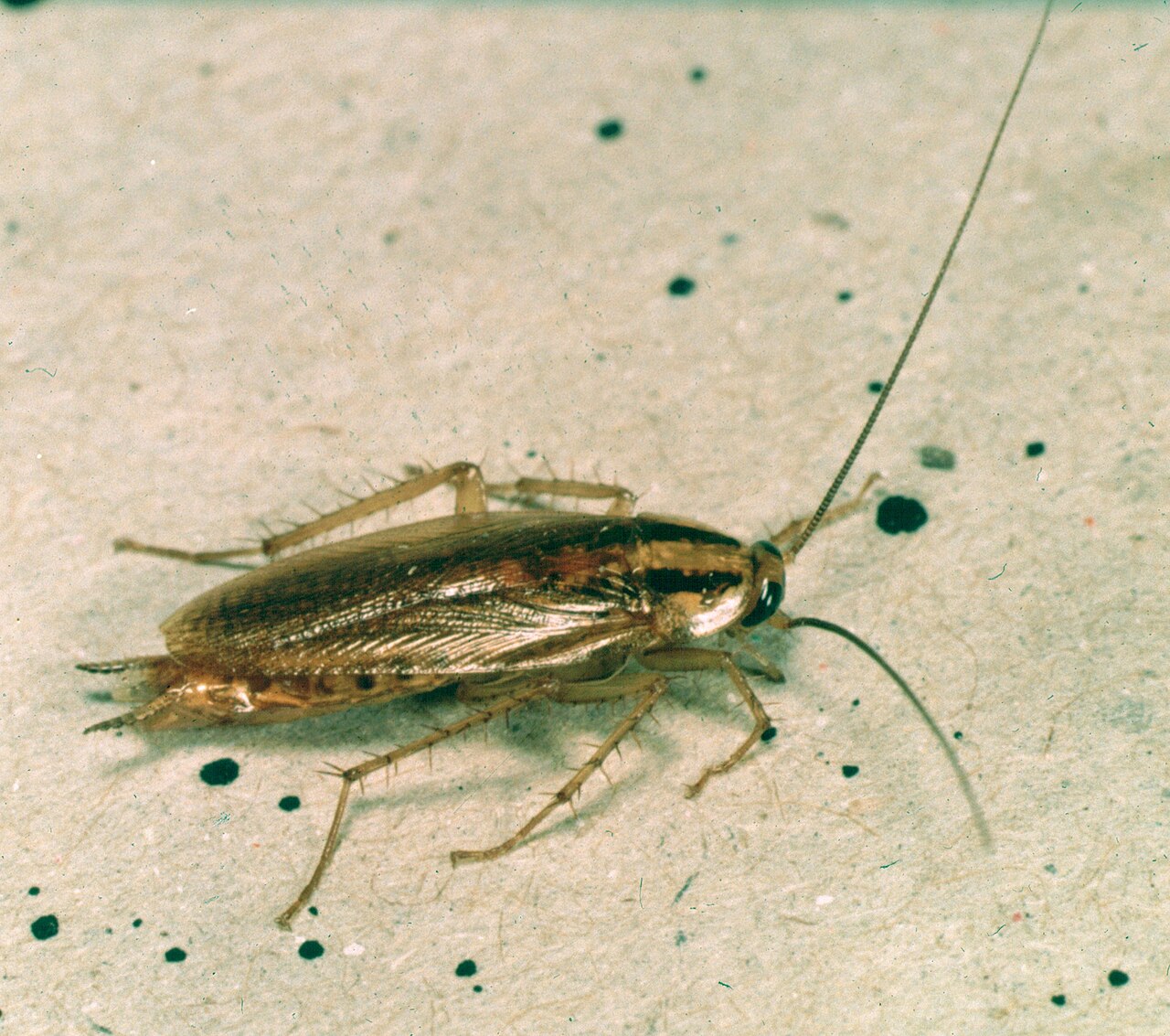
German cockroach (Blattella germanica), photographed specimen.
Health risk

German cockroach

Blattella germanica · 13–16 mm

Two dark stripes behind the head. Breeds indoors year-round and is a documented asthma trigger. Gets in on cardboard, groceries and secondhand appliances, not through the door.

Clemson University - USDA Cooperative Extension Slide Series, · CC BY 3.0 us · source
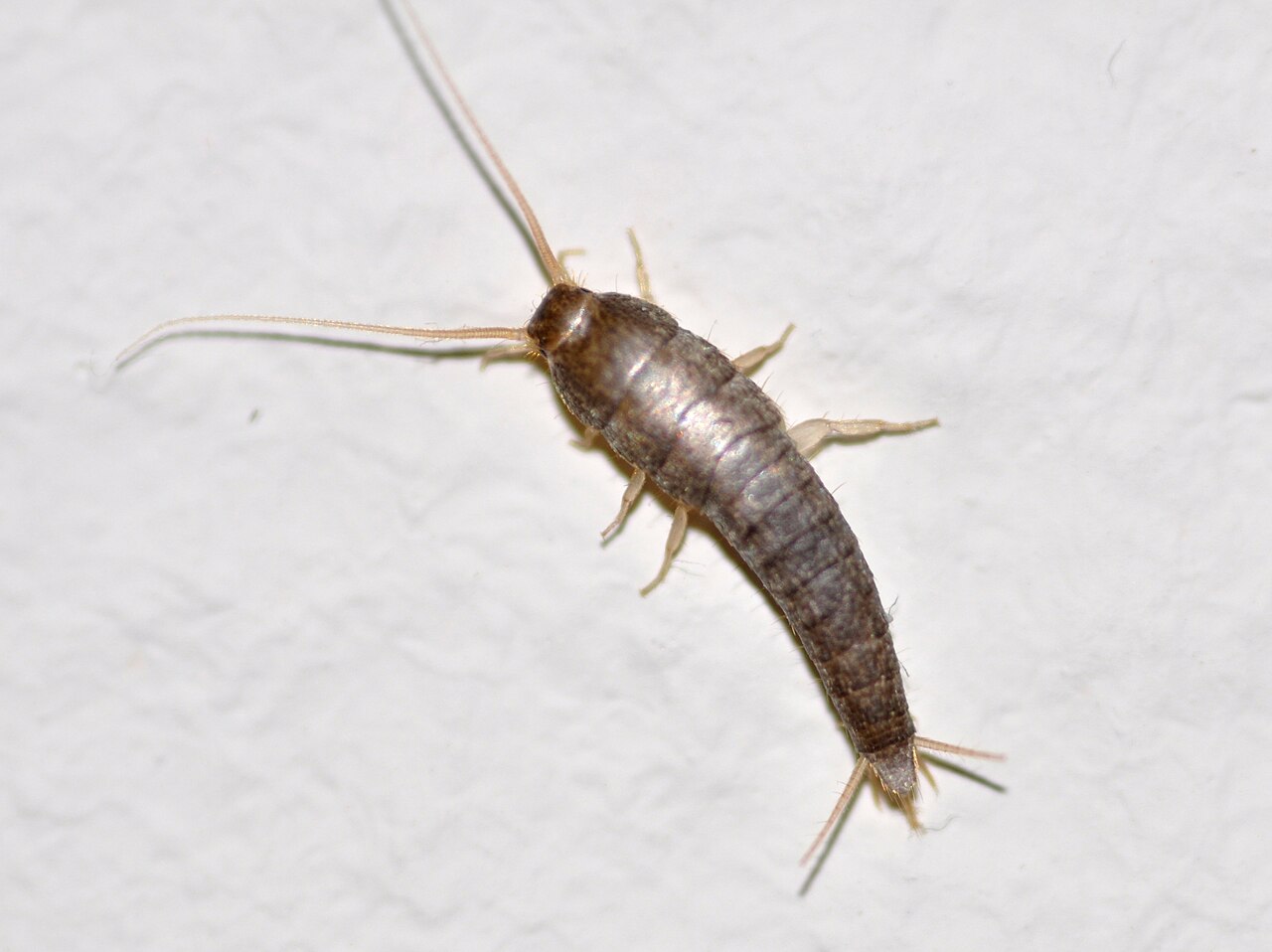
Silverfish (Lepisma saccharina), photographed specimen.
Nuisance

Silverfish

Lepisma saccharina · 12–19 mm

Teardrop, metallic, three tails, moves like a fish. Eats starch — paper, book bindings, wallpaper paste. Where it appears tells you where the humidity is, which is the actual problem.

Aiwok · CC BY-SA 3.0 · source
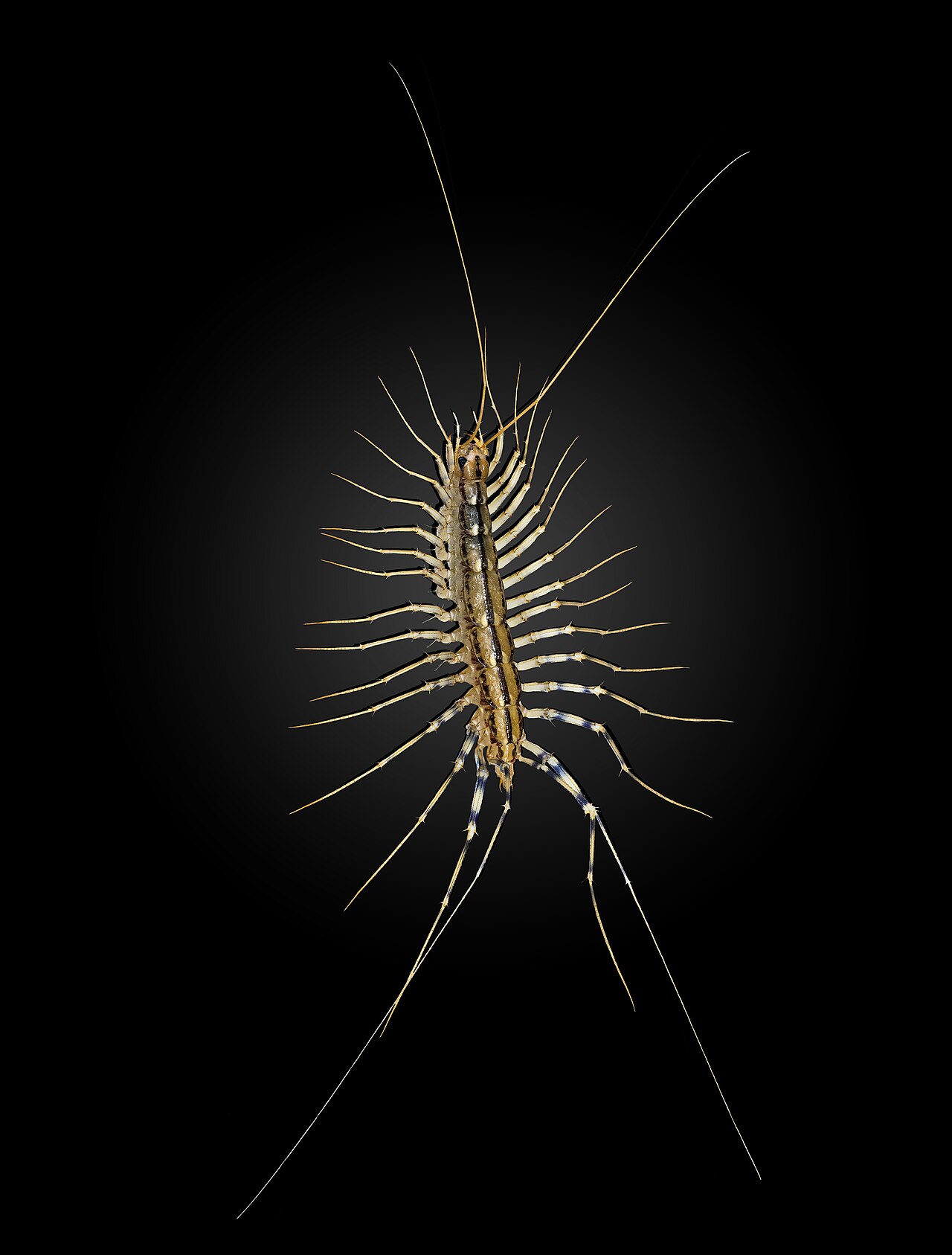
House centipede (Scutigera coleoptrata), photographed specimen.
Harmless

House centipede

Scutigera coleoptrata · 25–35 mm body

Fifteen pairs of long legs and genuine speed. The most alarming thing most people ever see indoors and one of the least harmful — it hunts the things you would rather not have. It means the basement is damp.

Didier Descouens · CC BY-SA 4.0 · source
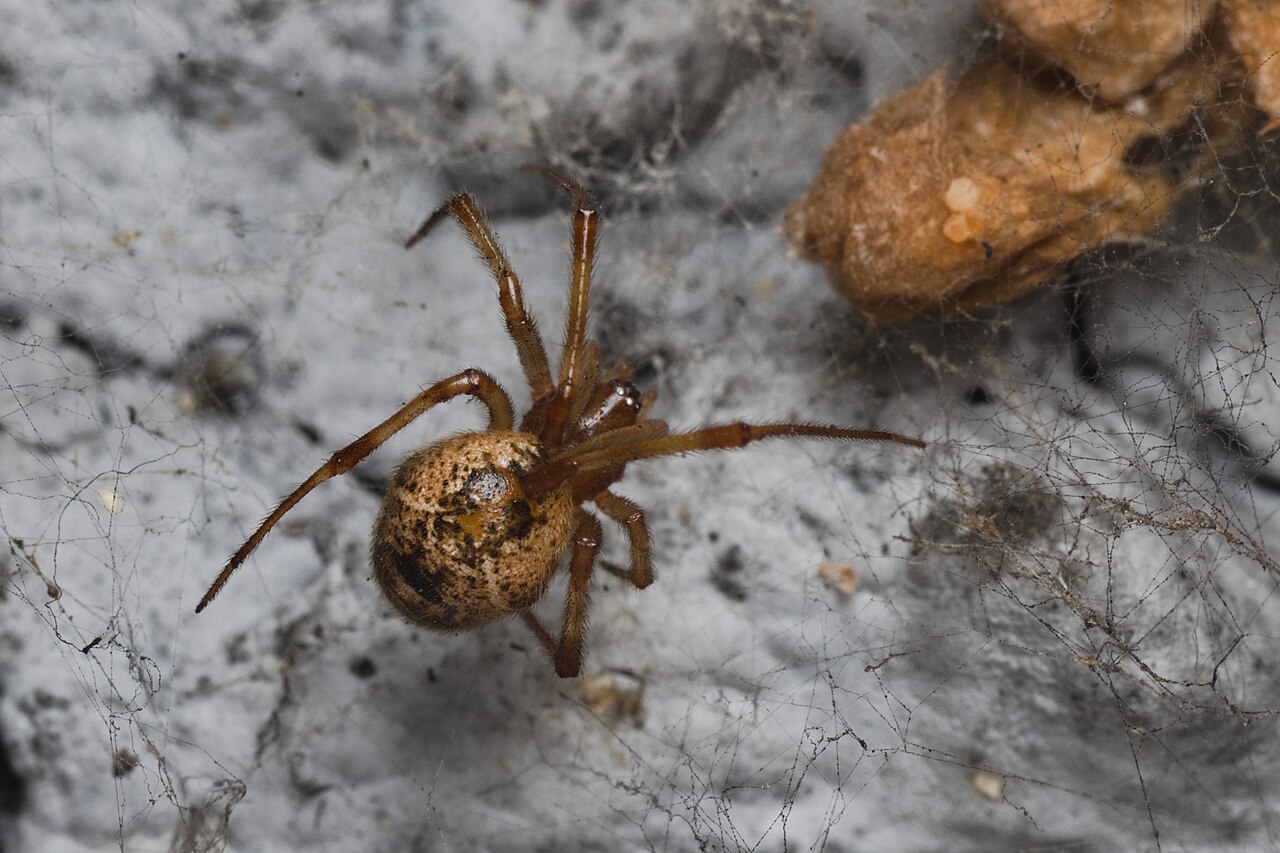
Common house spider (Parasteatoda tepidariorum), photographed specimen.
Harmless

Common house spider

Parasteatoda tepidariorum · 5–8 mm body

Tangled cobwebs in ceiling corners and window frames, with pale round egg sacs. Michigan has no aggressive house spider worth fearing. Removing the webs removes the spider.

Adrian Tync · CC BY-SA 4.0 · source
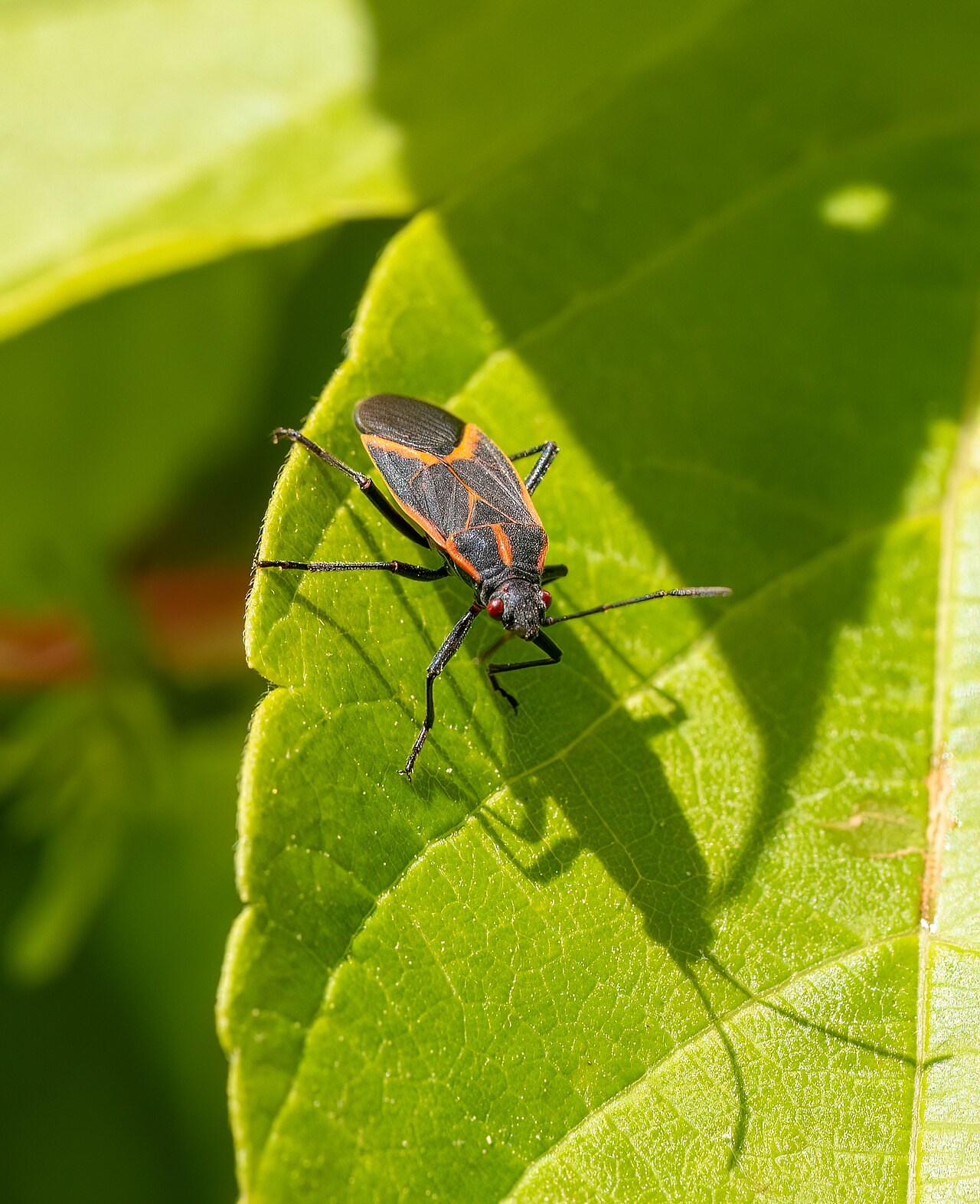
Boxelder bug (Boisea trivittata), photographed specimen.
Harmless

Boxelder bug

Boisea trivittata · 11–14 mm

Black with red-orange lines, on a sunny south or west wall in October. Comes in to overwinter, does not feed or breed indoors, and does not bite. Sealing beats spraying every time.

Rhododendrites · CC BY-SA 4.0 · source
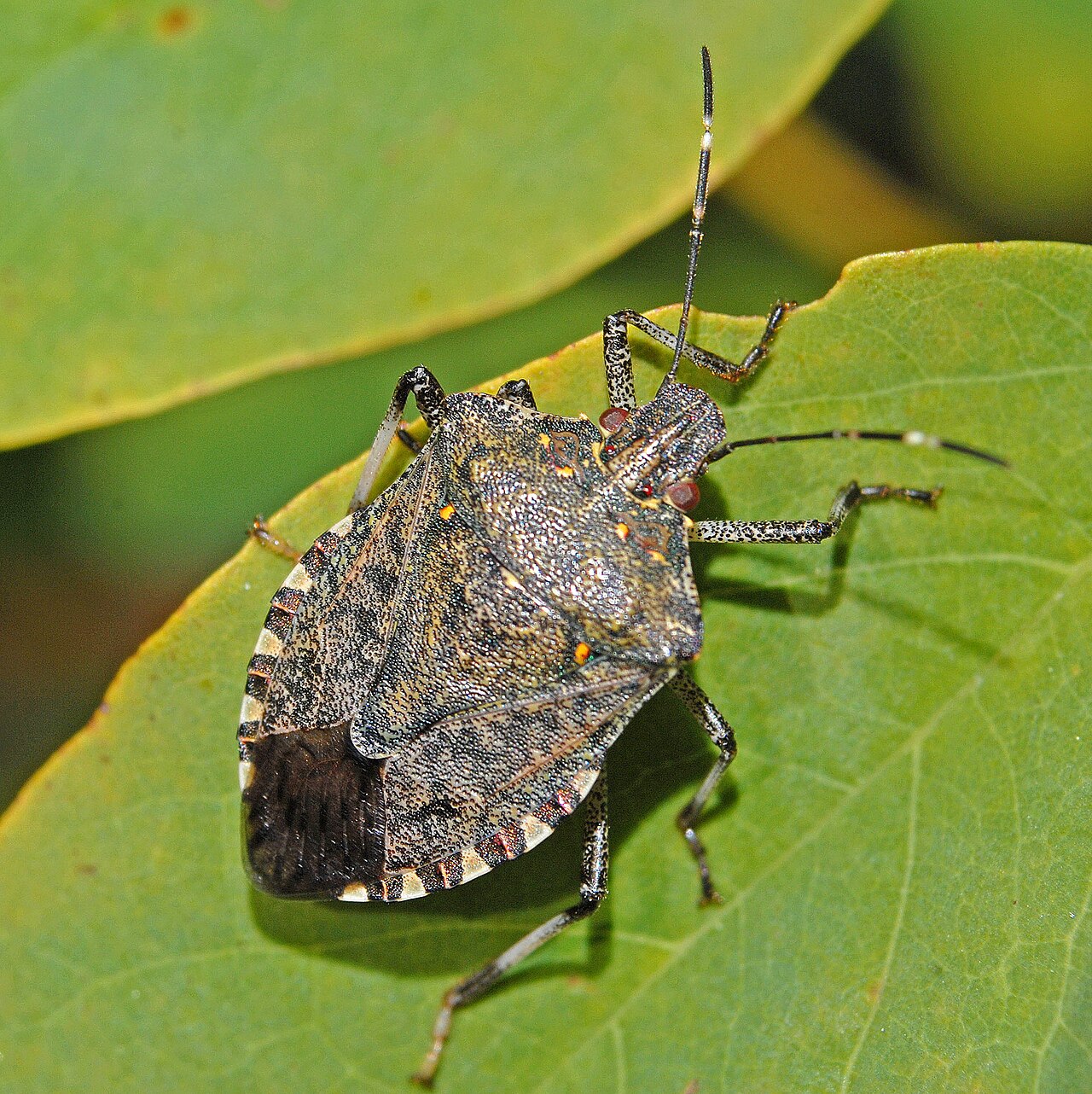
Brown marmorated stink bug (Halyomorpha halys), photographed specimen.
Harmless

Brown marmorated stink bug

Halyomorpha halys · 12–17 mm

Shield-shaped, mottled brown, with pale bands on the antennae. Same October wall, same reason. Vacuum rather than crush — the name is not decorative.

Hectonichus · CC BY-SA 4.0 · source
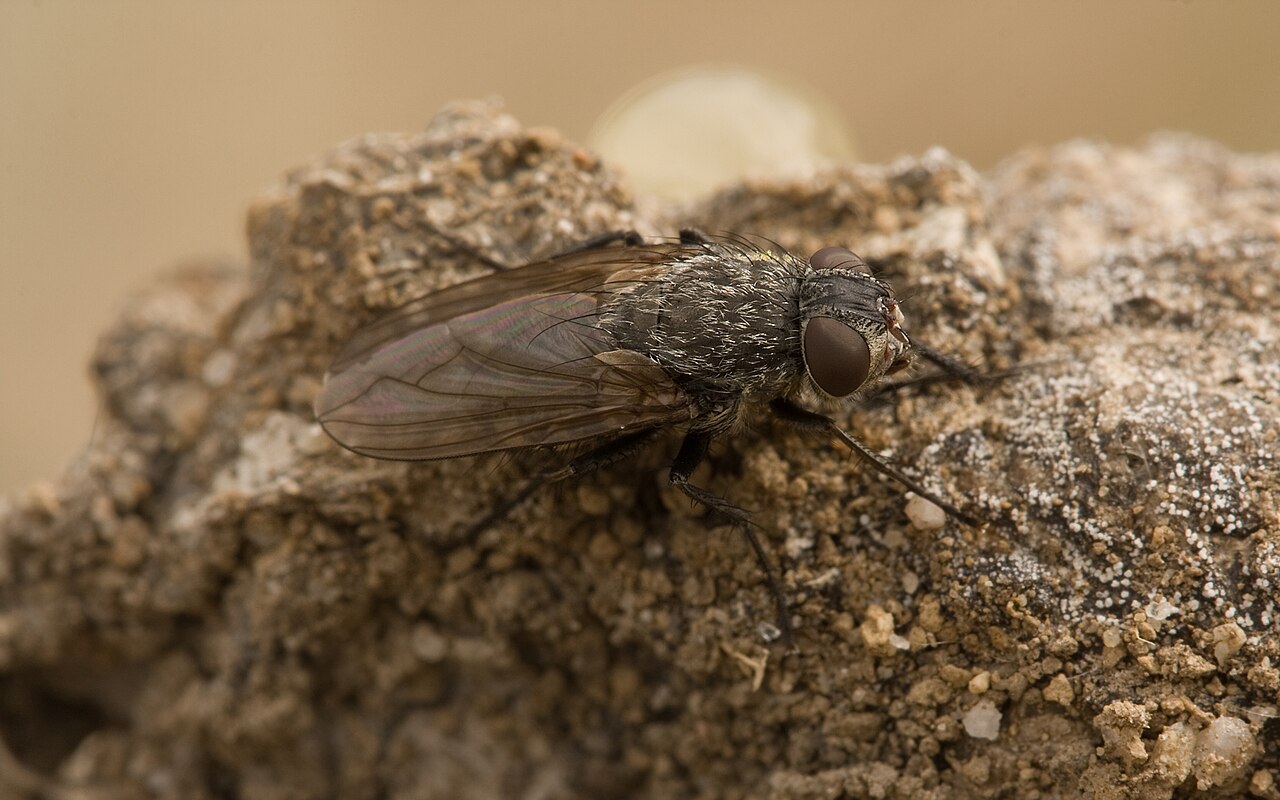
Cluster fly (Pollenia rudis), photographed specimen.
Harmless

Cluster fly

Pollenia rudis · 8–10 mm

Slow, sluggish flies at an upstairs window in the first warm week of spring. They overwintered in the attic and are trying to get out. Not a sanitation problem and not from a drain.

Richard Bartz, Munich aka Makro Freak · CC BY-SA 2.5 · source
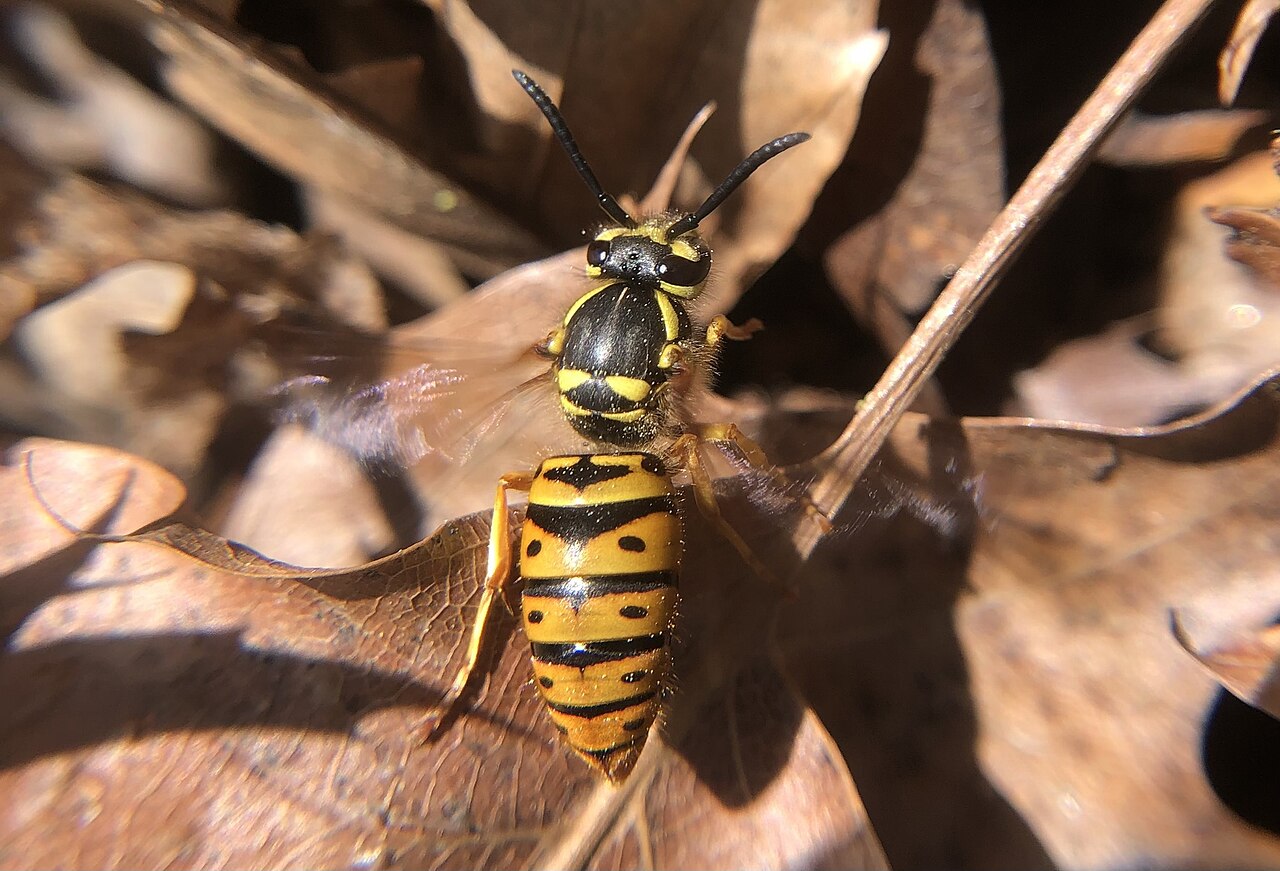
Eastern yellowjacket (Vespula maculifrons), photographed specimen.
Stings, can be severe

Eastern yellowjacket

Vespula maculifrons · 12–16 mm

Bright yellow and black, hairless, and aggressive near the nest — which is usually underground or inside a wall void. Peaks in August and September. Do not seal the entrance with the nest still active.

jonsense · CC BY 4.0 · source
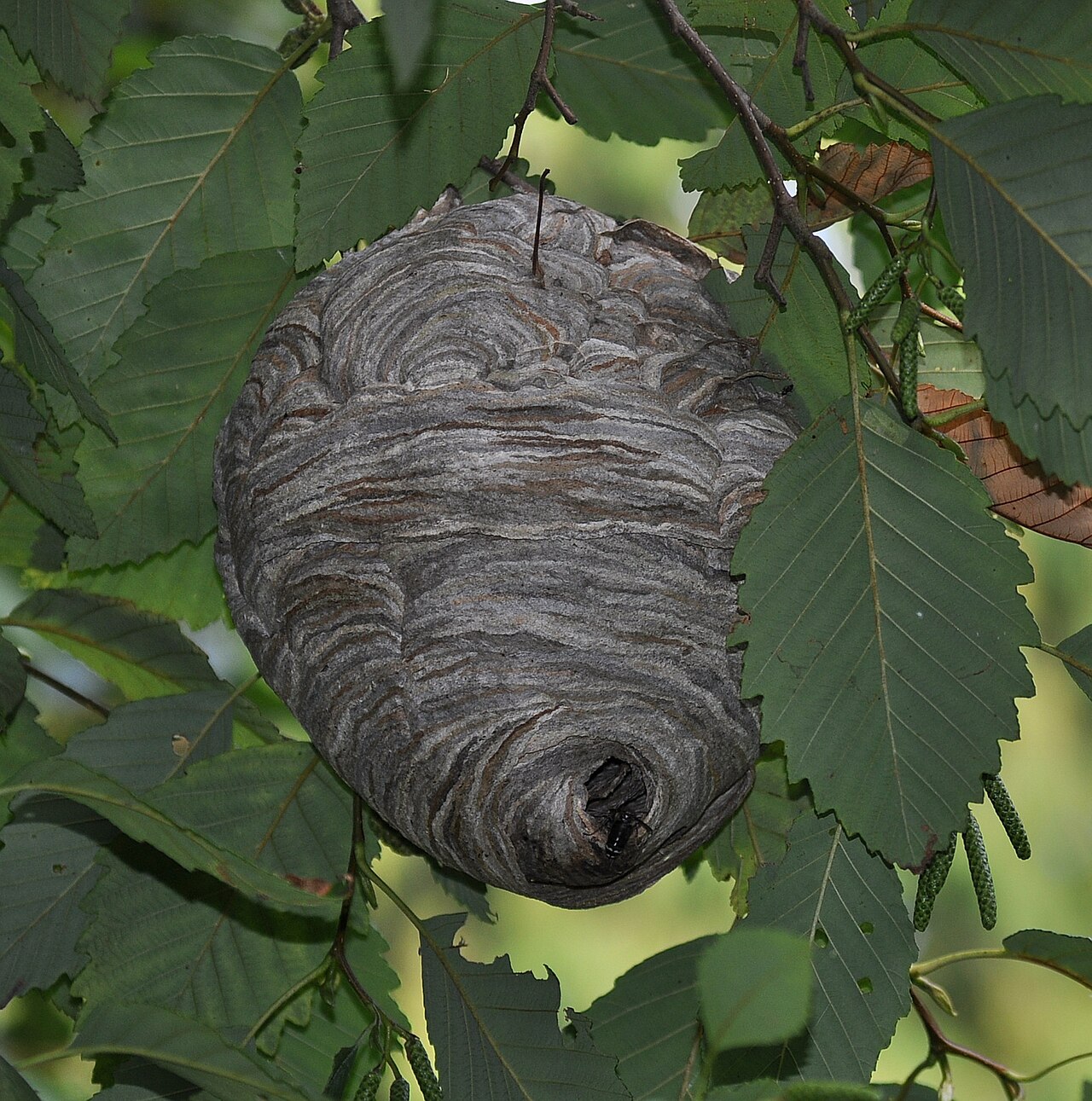
Bald-faced hornet nest (Dolichovespula maculata), photographed specimen.
Stings, can be severe

Bald-faced hornet nest

Dolichovespula maculata · To 350 mm

The gray paper football in a tree or under an eave. Defends a wide radius and does not need provocation. If it is above head height and away from the door, leaving it until the first hard frost is a legitimate option.

The High Fin Sperm Whale · CC BY-SA 3.0 · source
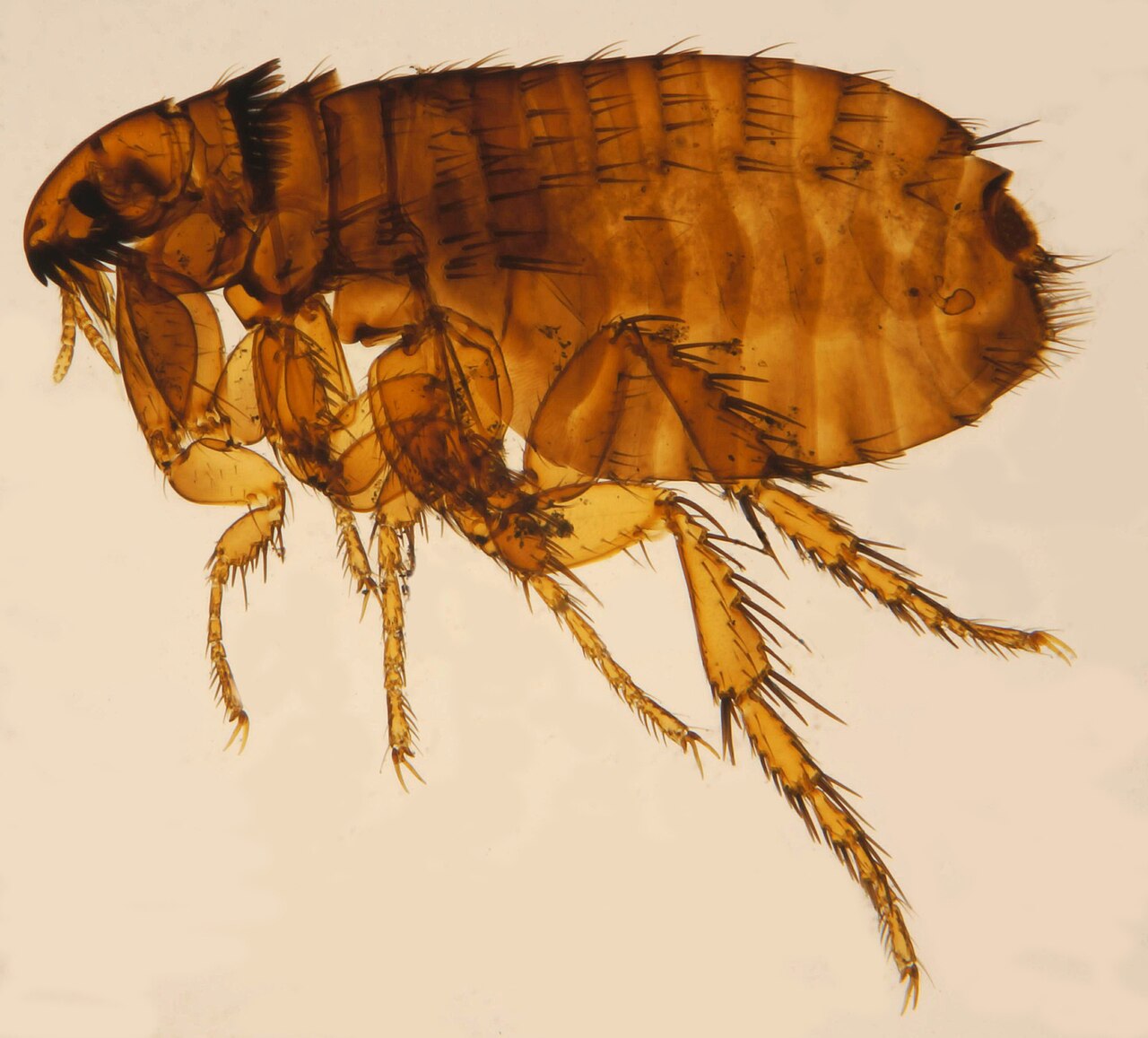
Cat flea (Ctenocephalides felis), photographed specimen.
Bites

Cat flea

Ctenocephalides felis · 1–3 mm

Flattened side to side so it moves through hair, and it jumps. Bites cluster around ankles. The animal is treated by a veterinarian and the house is treated by us — doing only one of those is why it comes back.

Katja ZSM · CC BY-SA 3.0 · source
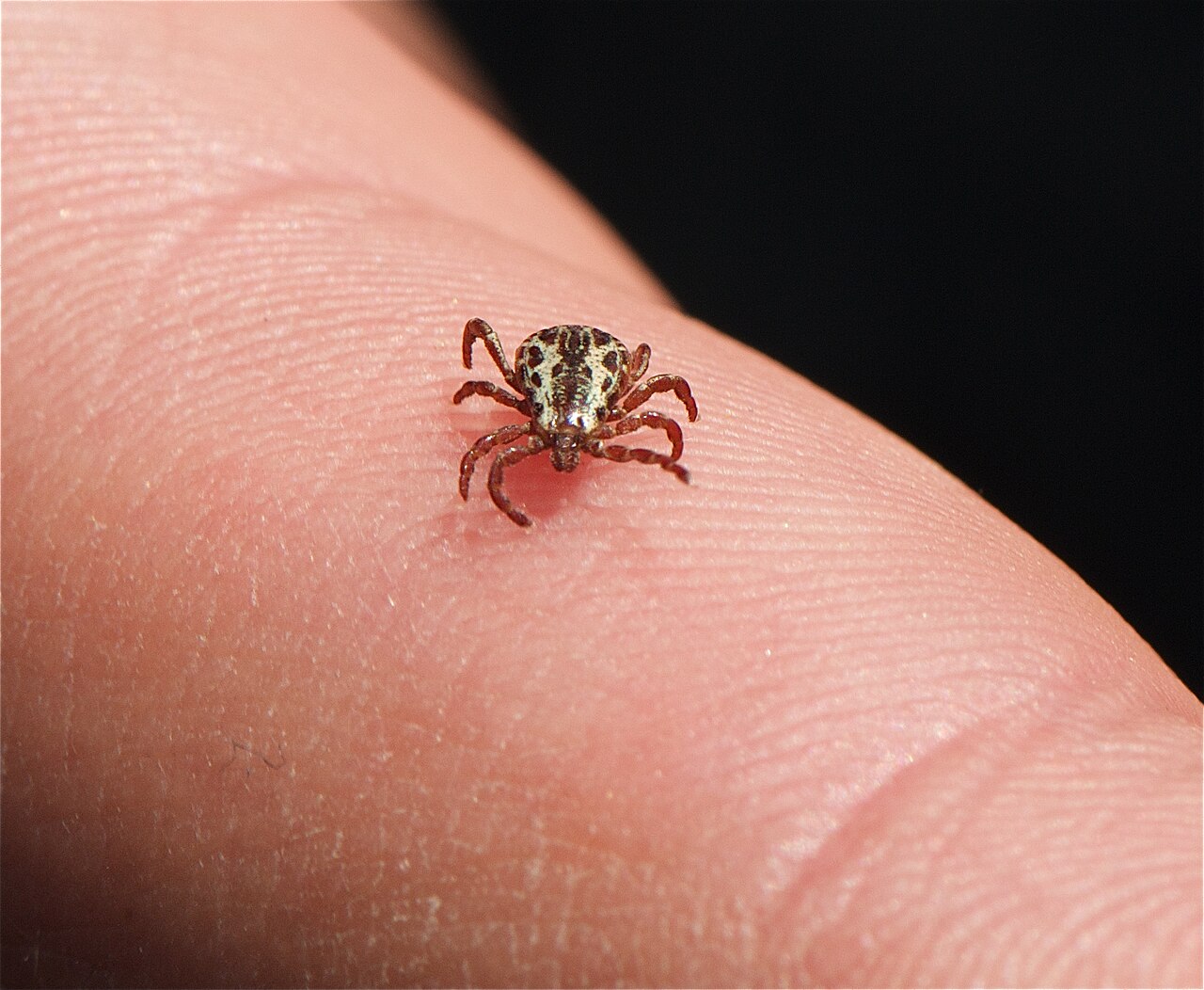
American dog tick (Dermacentor variabilis), photographed specimen.
Disease risk

American dog tick

Dermacentor variabilis · 3–5 mm unfed

Eight legs, so not an insect at all. Picked up in long grass and edges rather than indoors. Save any tick you remove in a bag — if you get sick, what it was matters to your doctor.

Jerry Kirkhart from Los Osos, Calif. · CC BY 2.0 · source

How to photograph it so somebody can actually identify it

Half the photographs we get cannot be worked with, and it is nearly always the same three problems. Two minutes of care here saves a visit.

Put something next to it for scale. A coin, a key, the tip of a pen. Size is the first thing that gets ruled in or out and a photograph has no size.

Get the light on it, not behind it. Phone flash on, from the side if you can. A silhouette is not identifiable.

Take it from directly above, then from the side. The waist, the antennae and the wing length are the diagnostic characters, and you cannot see all three from one angle.

Clear tape over the specimen on a white index card works better than almost anything else, and it keeps the animal intact if we need to see it in person.

What this page is, and what it is not.

It is general entomology written for a homeowner, and it is good enough to answer most kitchen-table arguments and to stop somebody selling you a treatment you do not need.

It is not a determination. Several of these are separated by characters you need a hand lens for, and one of them — carpenter ant against termite — is worth getting properly wrong-proofed by somebody standing in your basement.

Send us a photograph. If it is one of the easy ones we will tell you for nothing and you will not need us at all.

Image credits

Every specimen on this site is credited on its own plate.

Three are public-domain images from the CDC and USDA. The rest are Creative Commons, and the photographer’s name and the license link sit at the bottom of each plate because that is what those licenses require — not as a courtesy, as a condition of use. The credit is generated from the image metadata at build time rather than typed by hand, so it cannot quietly drift away from the picture it belongs to.

A real company replacing these with its own photographs inherits something better: pictures of the actual animals it found in actual houses in this actual county.

Book an inspection Call