Damages structure
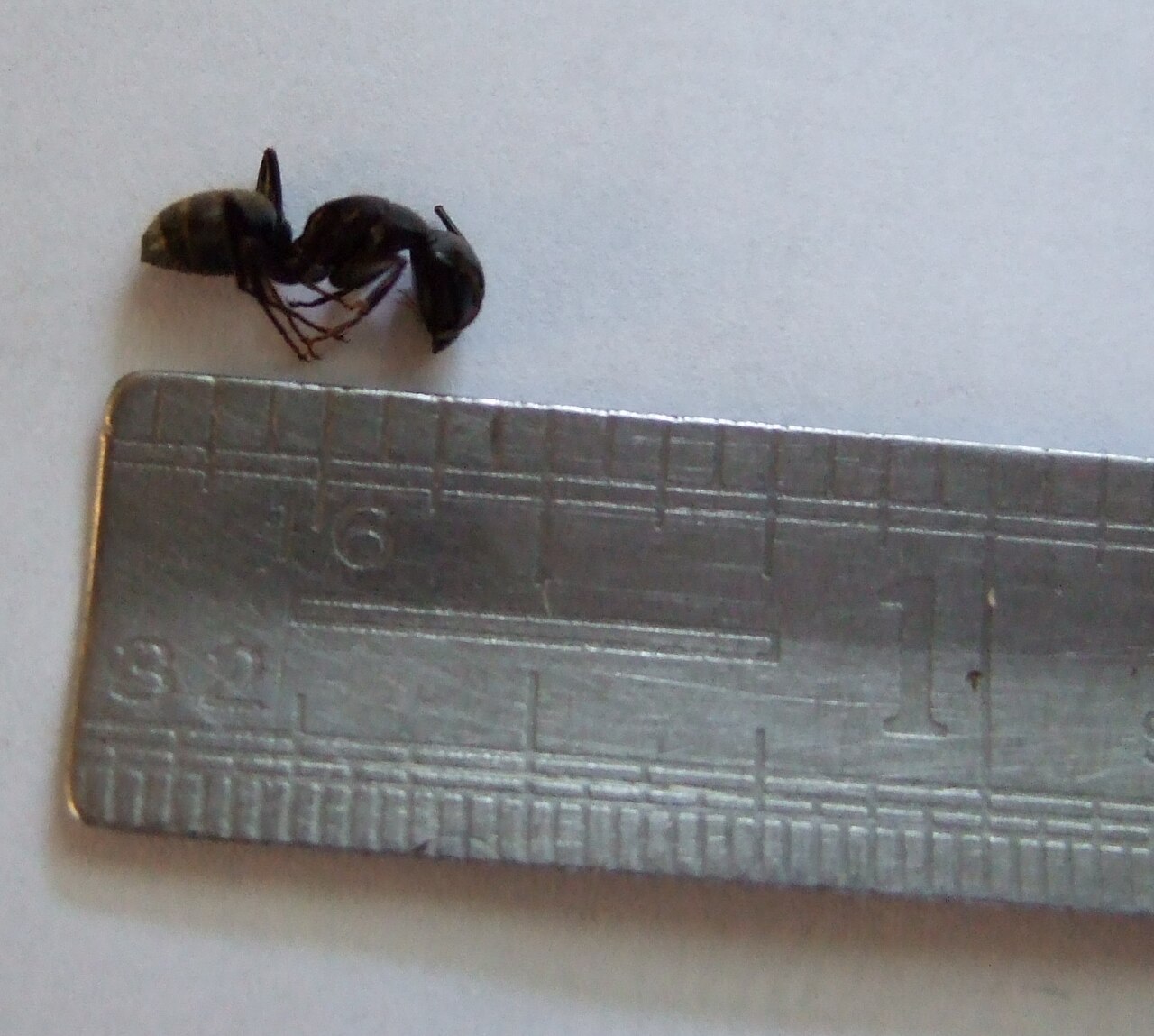
Black carpenter ant
Camponotus pennsylvanicus · 6–13 mmCommon throughout Michigan. Hollows out damp wood to nest in and pushes the shavings out — it gets nothing nutritional from the wood itself.
These are the confusions that cost people money. One of them decides whether your house is being eaten. One decides whether you spend two hundred dollars or two thousand. The third decides whether you get sold a treatment for something that does not need one.
Both turn up as winged adults indoors in spring, which is when almost everybody first meets them. One excavates wood to nest in it. The other eats it.
Common throughout Michigan. Hollows out damp wood to nest in and pushes the shavings out — it gets nothing nutritional from the wood itself.
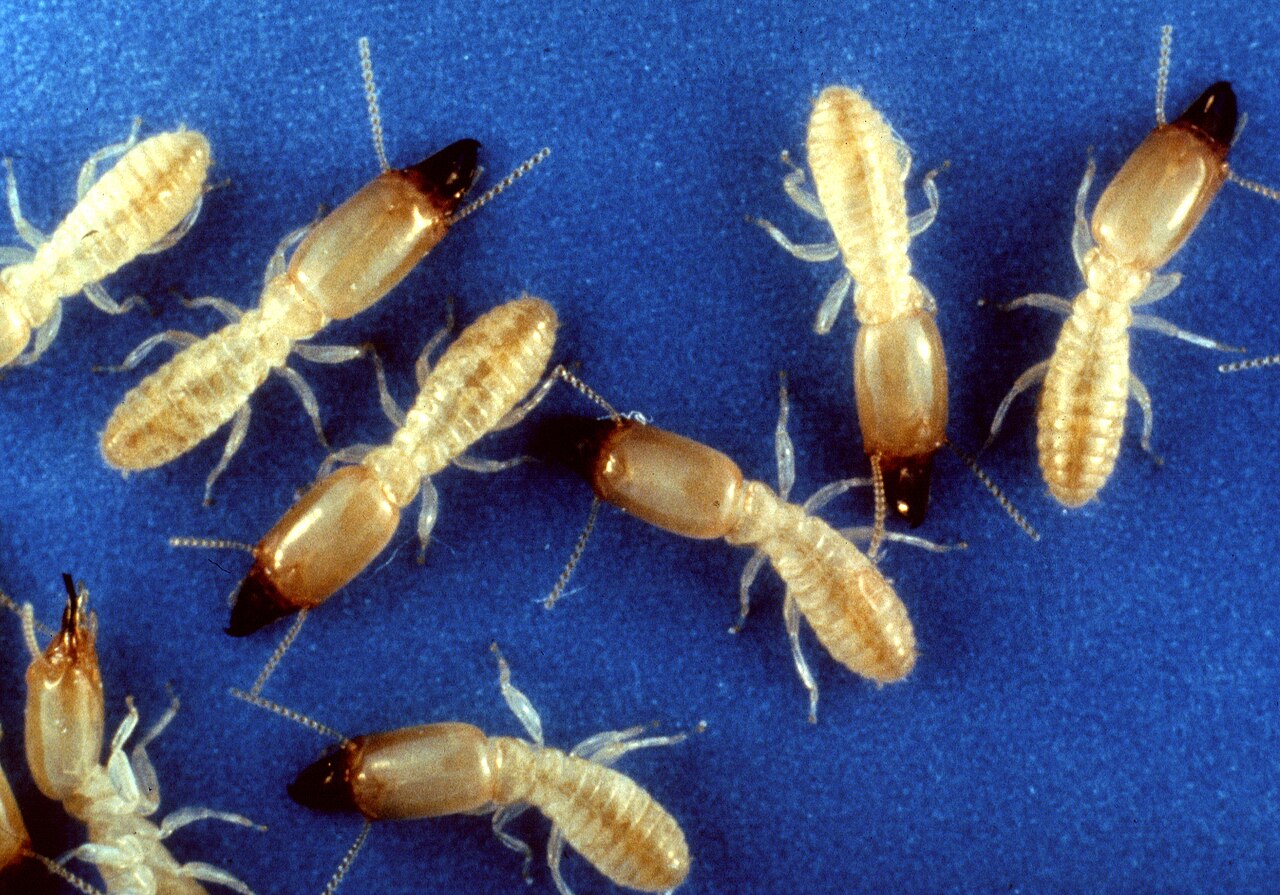
Present in Michigan but much less common than carpenter ants. Pale, soft-bodied, and it genuinely consumes the wood.
The one-sentence version: if it has a waist, it is an ant. Ants have waists; termites do not. Everything else on that list is confirmation.
Both are a few millimeters long, brown, and turn up in a bedroom. A carpet beetle problem is a vacuum cleaner and a laundry cycle. A bed bug problem is a multi-visit treatment and a very bad couple of weeks, so people arrive at this question frightened.
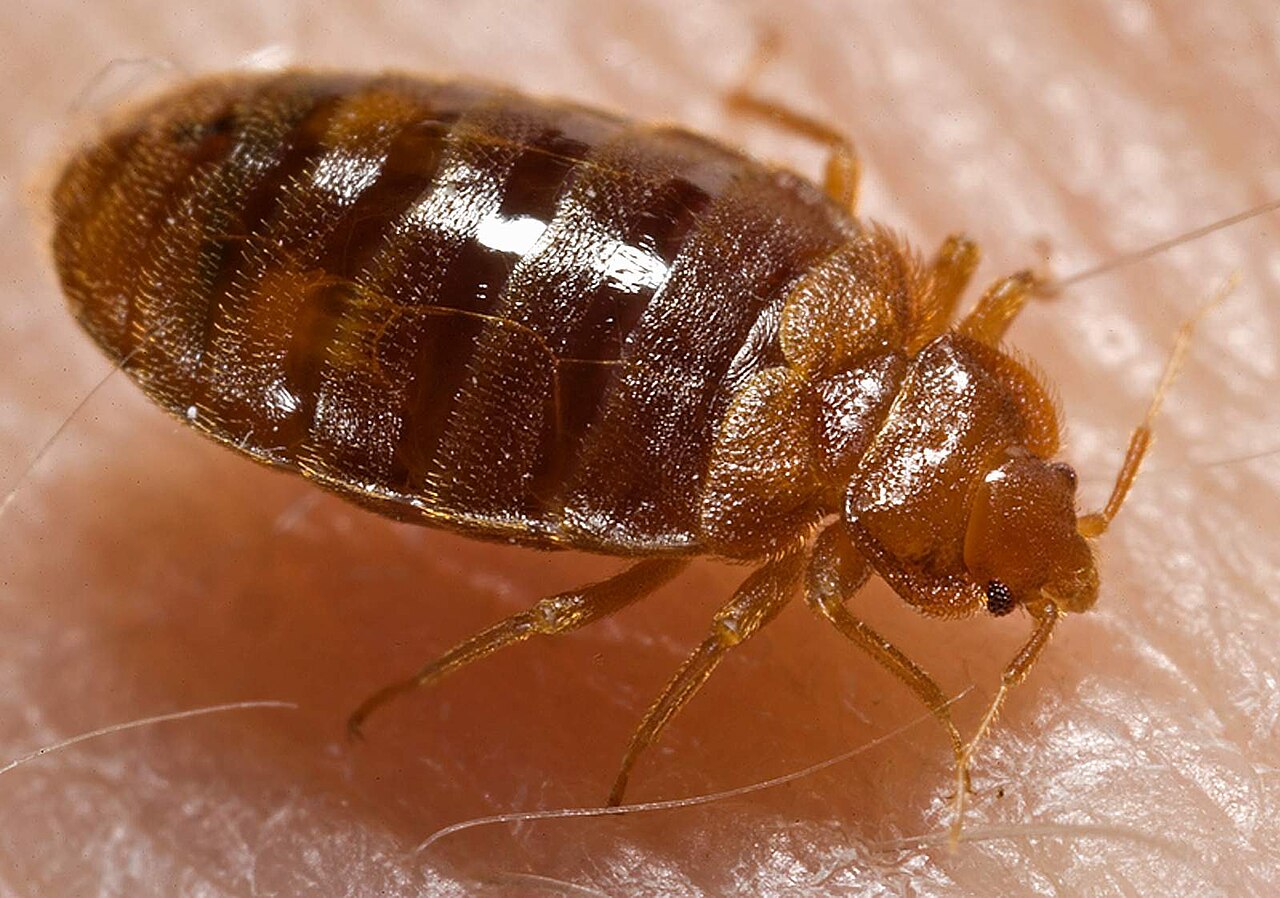
Six legs, no wings, no hard shell. Flat and oval before feeding, rounder and darker after. Lives in seams and joints, not loose in carpet.
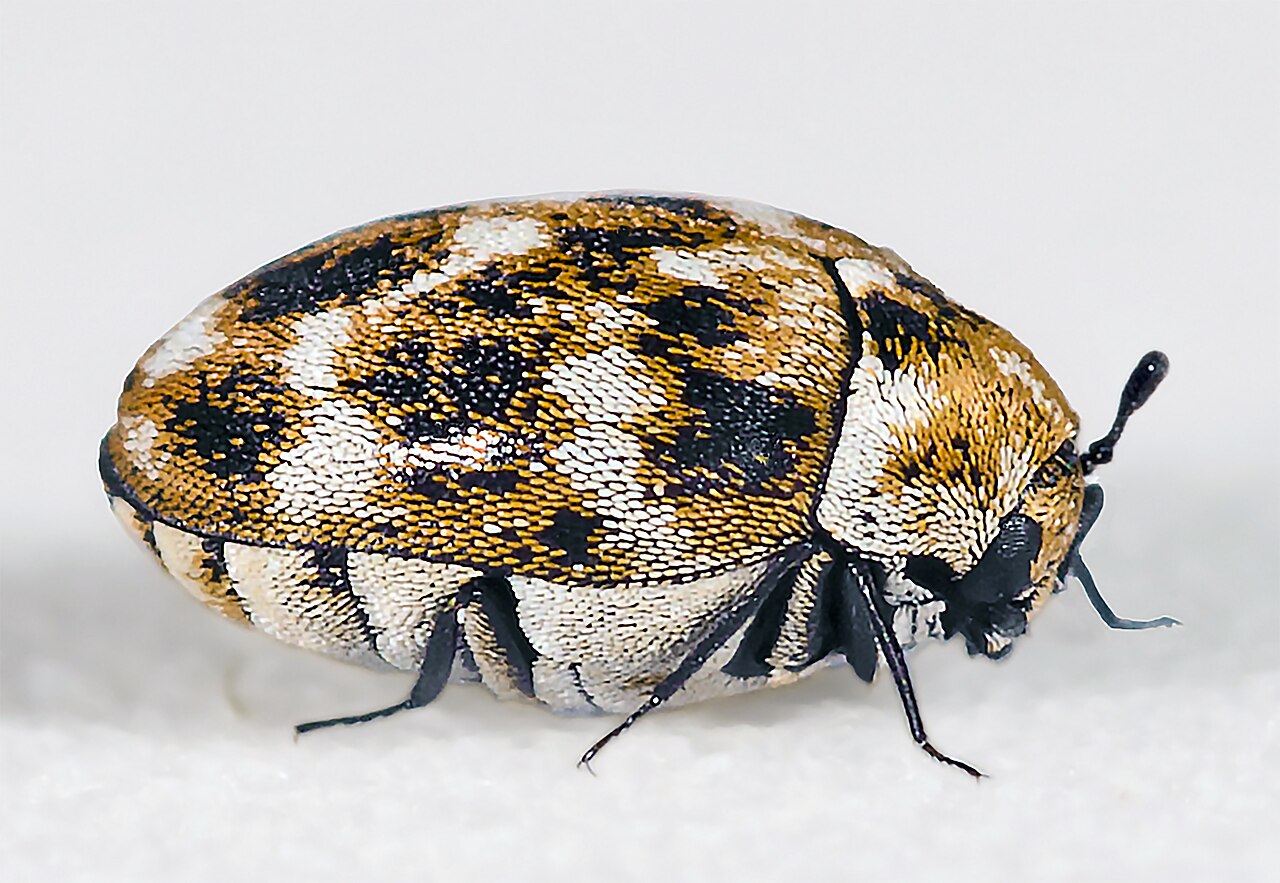
A beetle: domed, hard-shelled, mottled cream and brown and black. It eats wool, hair and dry pantry goods. It does not bite you.
The one-sentence version: look at it from the side. Flat means bed bug, domed means beetle.
If it is a bed bug, start on the bed bug page and do not throw the mattress out yet.
Both appear on a sunny wall in October, both come inside to overwinter, and both are completely harmless. We have put them side by side because this is the pair most often used to sell a quarterly contract.
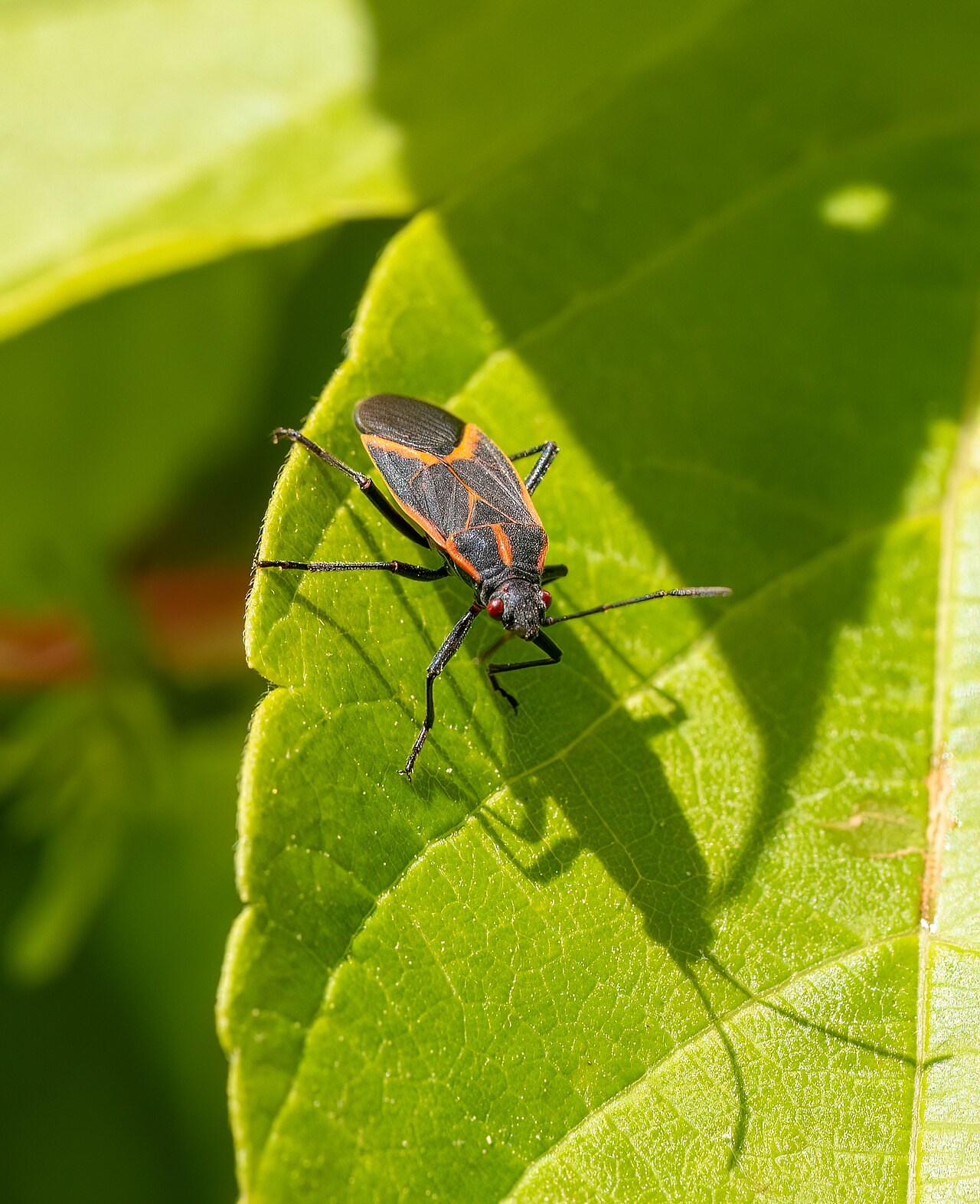
Black with red-orange lines. Feeds on boxelder and maple seeds outdoors. Indoors it does nothing at all except be present.
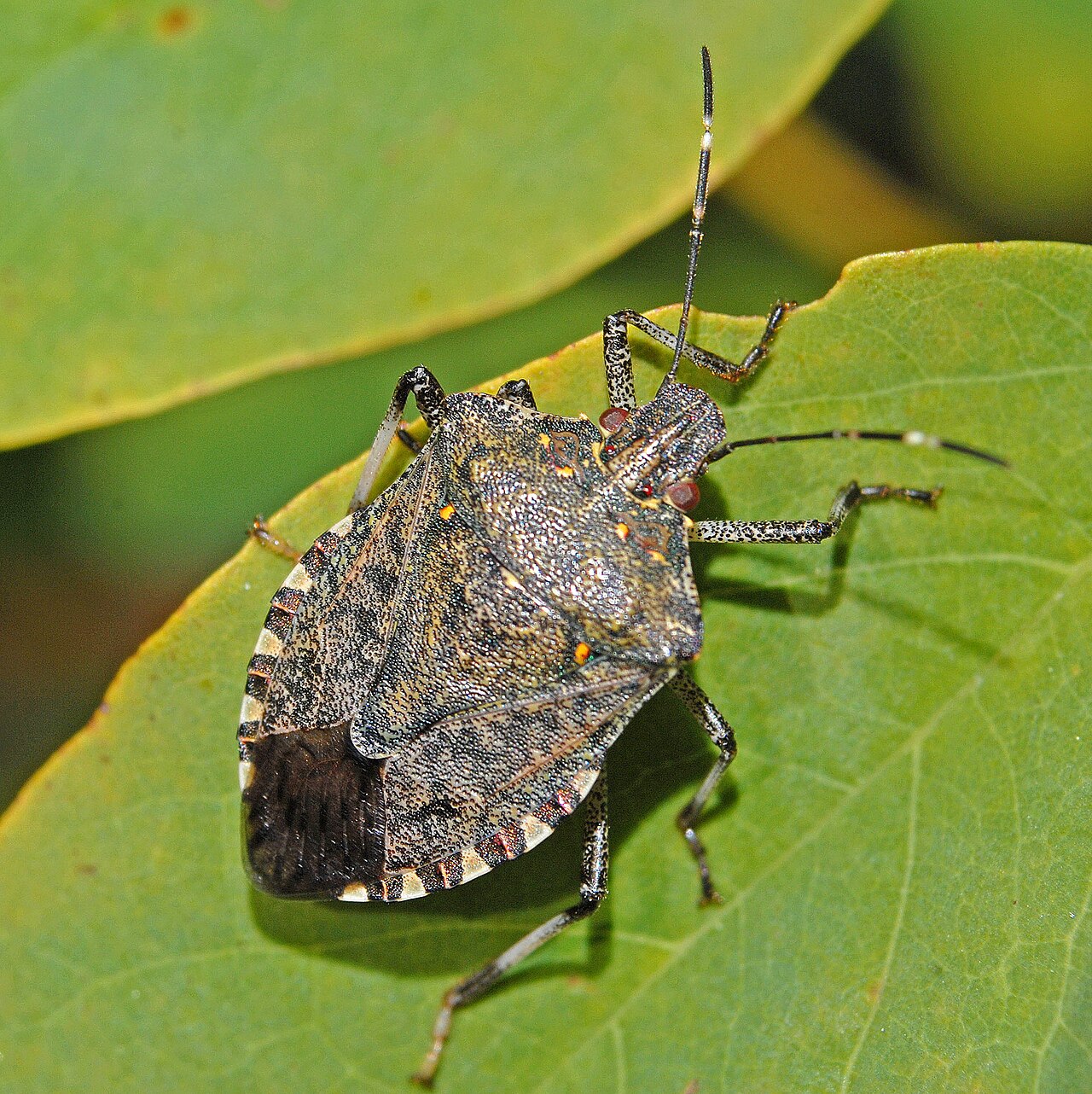
Shield-shaped, mottled brown, with pale bands on the antennae. An agricultural pest outdoors and a nuisance indoors. Does not bite, breed or feed in the house.
Why we will not sell you a treatment for these. A perimeter spray in October kills the ones it lands on and does nothing about the thousands behind the siding. The fix is sealing the gaps they use, which is a morning of work, done once, and it also keeps out the things that do matter. If somebody quotes you quarterly for boxelder bugs, that is a subscription, not a solution.