
Detroit's manufacturing and mobility sectors aren't just surviving; they're reinventing. Companies here aren't content with yesterday's solutions. Yet, many still grapple with off-the-shelf software and generic SaaS platforms that promise efficiency but deliver compromise. These tools, designed for broad appeal, often fall short of the precision, speed, and specific operational demands that define Detroit's industrial backbone.
The problem is simple: your business is unique. Your production lines, your supply chains, your customer interactions – they all have nuances born from years of hard-won experience in a competitive market. Trying to force these specialized processes into generic software is like trying to fit a square peg in a round hole. It creates friction, slows growth, and ultimately, costs you more than it saves.
Key Takeaways
- Generic software forces Detroit manufacturers and mobility providers to adapt their unique workflows, leading to inefficiency and missed opportunities.
- Custom business tools offer tailored automation, accurate data control, and specific features that directly support scaling operations in specialized industries.
- Recognizing the signs of software limitations (manual data, shadow IT, reporting gaps) is crucial for deciding when to invest in a purpose-built solution.
The Core Problem with Off-the-Shelf: Restriction, Not Release
Think about your existing software subscriptions. How many features do you actually use? How often do your teams complain about clunky interfaces, redundant data entry, or the inability to generate a critical report without exporting data to a spreadsheet first? These aren't minor inconveniences; they are growth inhibitors. Generic SaaS solutions often dictate your workflow rather than adapting to it.
For Detroit's manufacturing companies, this can mean:
- Limited Customization: Enterprise Resource Planning (ERP) or Customer Relationship Management (CRM) systems designed for a global market rarely account for the specific material sourcing, union regulations, or logistics challenges unique to Michigan.
- Forced Workarounds: When software doesn't support a specific process, employees invent manual workarounds. This introduces human error, slows operations, and creates data silos that prevent a holistic view of your business.
- Feature Overload and Underutilization: You pay for a suite of features, 80% of which you'll never touch. The cost is high, but the actual value extracted is minimal, like buying a Swiss Army knife when all you need is a screwdriver—and the screwdriver isn't even the right size.
- Integration Headaches: Getting different off-the-shelf systems to communicate is often a costly, fragile exercise in API wizardry. Data doesn't flow freely, leading to outdated information and delayed decision-making.
This isn't just about minor frustrations. It's about a fundamental mismatch between generic tools and the precise, often rapidly evolving needs of modern manufacturing and mobility. Your competitive edge often lies in those unique processes, the ones generic software ignores.
"Automation isn't just a buzzword; it's a necessity. Automation can save small business owners an average of 10+ hours per week on repetitive administrative tasks (Source: various SMB software industry surveys, 2023). Imagine what your Detroit team could accomplish with that reclaimed time."
Why Custom Software is a Strategic Investment, Not Just a Cost
Switching to custom software isn't a quick fix; it's a strategic move that fundamentally reorients your operations for efficiency and future growth. When a tool is built specifically for your business, it eliminates the compromises forced by generic solutions. The benefits extend far beyond a cleaner interface:
- Precision-Fit Workflows: Custom tools mirror your exact operational procedures, reducing training time, increasing adoption rates, and eliminating redundant steps. Data capture is precise, and every feature serves a direct purpose.
- Data Accuracy and Control: With custom applications, you dictate how data is collected, stored, and reported. This means higher data integrity, better compliance with industry standards, and the ability to generate specific insights that drive real business value.
- Scalability and Adaptability: As your Detroit business grows or pivots, your custom software grows with it. You're not limited by a vendor's update cycle or feature roadmap. New integrations, modules, or changes can be implemented directly, providing a robust platform for long-term evolution.
- Competitive Advantage: Specialized software can automate unique processes, optimize obscure logistics, or even embed proprietary algorithms. This creates an operational advantage that off-the-shelf competitors simply can't replicate.
- Cost Efficiency Over Time: While the initial investment might seem higher, consider the long-term savings from reduced manual labor, fewer software licenses for unused features, and the avoidance of costly integrations or custom patches. The operational gains often dwarf the upfront development cost.
For local manufacturing, mobility services, and related industries in Detroit, this means tools that support everything from advanced robotics and predictive maintenance schedules to complex inventory management and optimized delivery routes. These aren't features you find neatly packaged in a one-size-fits-all subscription.
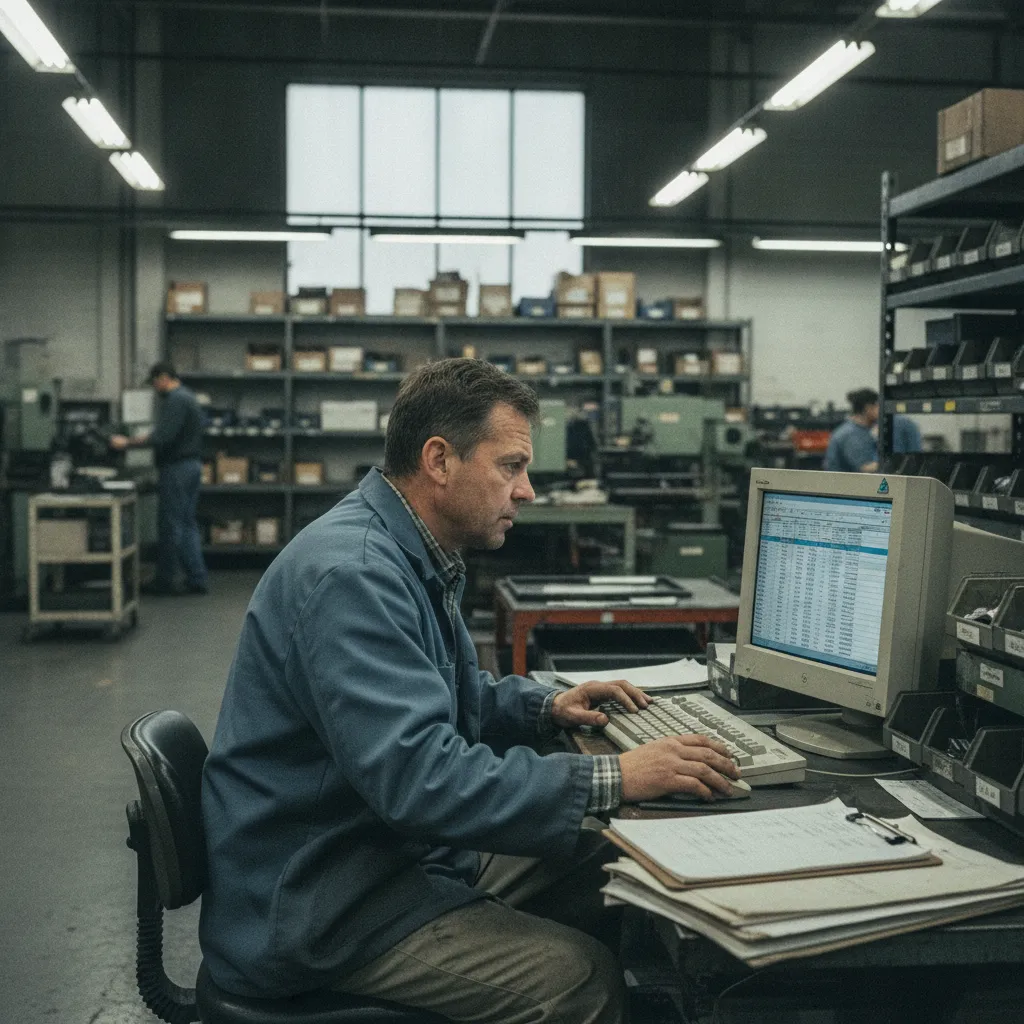
Custom tools mean full control over your operations, from precise inventory tracking to real-time production line data, all tailored to your Detroit business.
Identifying the Tipping Point: When to Ditch Generic Tools
How do you know when it's time to stop patching up your generic software and invest in a custom solution? The signs are often clear, but frequently dismissed as "just how things are." Pay attention to these indicators:
- Excessive Manual Data Entry: If your team spends hours each week manually transferring data between disparate systems, exporting to spreadsheets for analysis, or physically writing down information, your software is failing you.
- "Shadow IT" Proliferation: Are employees building their own databases in Access, complex Excel sheets, or using consumer-grade apps to compensate for software gaps? This indicates a critical need the official tools aren't meeting, and it poses significant security and data integrity risks.
- Growth Hindered by Software Capacity: You've hit a ceiling. You can't onboard more clients, scale production, or expand into new markets because your current systems can't handle the volume or complexity.
- Lack of Critical Business Insights: Generic reporting might give you basic numbers, but if you can't get granular, real-time data on your specific KPIs (e.g., machine uptime, waste reduction rates, route efficiency), you're making decisions in the dark.
- High Costs for Unused Features: Review your SaaS invoices. Are you paying for premium tiers because you need one specific feature, while 90% of the platform goes untouched? This is wasted capital.
- Frustrated Employees and High Training Overhead: If your team constantly struggles with the software, requiring extensive training on counter-intuitive workflows, or experiences high turnover due to tool frustration, your generic solution is costing you productivity and morale.
These aren't just IT issues; they are core business problems that impact profitability, employee retention, and your ability to compete. Recognizing these signals means understanding that sticking with the status quo is often more expensive than innovating.
Furthermore, consider the subtle impact of poorly designed internal tools. While a stat like "75% of users admit to judging a company's credibility based on its website design (Source: Stanford Web Credibility Research, 2002)" usually applies to external customers, the principle holds true internally. If your internal tools look and feel unprofessional, it can subtly degrade employee perception of company efficiency and their own professional capabilities.
Designing for Detroit: Local Manufacturing & Mobility Needs
Custom software for Detroit businesses means building with the local context in mind. This isn't abstract; it's tangible:
| Feature/Consideration | Generic SaaS Solution | Custom Detroit Tool |
|---|---|---|
| Inventory Management | Standard SKU tracking, basic warehouse locations. | Real-time tracking for complex parts, multi-location visibility, supplier integration for JIT delivery, scrap rate analysis. |
| Production Scheduling | Static Gantt charts, limited machine constraint modeling. | Dynamic scheduling, predictive maintenance triggers, machine learning for optimal line balancing, labor allocation rules. |
| Quality Control | Manual inspection checklists, basic defect logging. | Automated data capture from sensors, visual inspection AI integration, root cause analysis workflows, compliance reporting for specific industry standards. |
| Logistics & Delivery | Standard route optimization, basic vehicle tracking. | Dynamic route adjustment for Detroit traffic, fleet maintenance scheduling, real-time cargo monitoring, specific last-mile delivery protocols for dense urban areas. |
| Regulatory Compliance | General templates, manual updates required. | Automated compliance checks for local and industry-specific regulations, audit trail generation, document management for certification. |
For manufacturing, this could involve custom interfaces for shop floor data collection, integrations with specialized machinery, or advanced analytics for predictive maintenance. For mobility, it might mean real-time fleet management optimized for specific Detroit routes, intelligent dispatching systems, or tools for managing electric vehicle charging infrastructure.
Crucially, custom tools can incorporate environmental factors relevant to Detroit. This might include specific regulations for local industries, integration with regional weather data for logistics, or systems designed to support local workforce development programs. Understanding how Detroit's diverse neighborhoods interact with your operations allows for hyper-localized features that generic platforms simply can't provide.
Security is paramount. Protecting intellectual property, sensitive customer data, and operational secrets is easier when you control the entire software stack, rather than relying on a third-party's security protocols.
The Build Process: From Concept to Deployment
Moving from a generic system to a custom solution is a journey, not a leap. A well-defined process ensures success:
First, Discovery and Requirements Gathering. This is where our team immerses itself in your business. We learn your current workflows, identify pain points, interview key users, and document every detail. This foundational step ensures the final product solves real problems and truly enhances your operations.
Next comes Design and Prototyping. We translate requirements into tangible designs – wireframes, mockups, and interactive prototypes. This iterative stage allows you to visualize the software, provide feedback, and make adjustments before any code is written, ensuring the user experience is intuitive and efficient for your team.
The Development Phase is where the code comes to life. We work in agile sprints, delivering functional pieces of the application regularly. This iterative approach allows for flexibility and ensures you see progress continuously. Modern development practices, even when managing distributed development teams, prioritize clear communication and predictable delivery.
Testing and Quality Assurance are built into every stage. From unit tests to user acceptance testing (UAT), we ensure the software is robust, secure, and performs exactly as expected under real-world conditions. Finally, Deployment and Training. We handle the technical rollout, migration of data, and provide comprehensive training for your team, ensuring a smooth transition and rapid adoption.
Post-launch, we offer Ongoing Support and Maintenance. Software isn't a static product; it evolves. We provide continuous support, fix issues, and implement enhancements as your business needs change or new opportunities arise.
This systematic approach mitigates risk and ensures that your investment in custom software translates into a powerful, lasting asset for your Detroit operations.
Frequently Asked Questions
Is custom software only for huge Detroit corporations?
Absolutely not. While large enterprises benefit, small to medium-sized manufacturing and mobility businesses in Detroit often see the most significant ROI from custom tools. When generic software creates inefficiencies, even small teams lose valuable time and resources, making tailored solutions a smart investment for focused growth.
How long does it take to build custom software for my business?
Development timelines vary widely depending on the complexity and scope of the project. A small internal tool might take a few months, while a comprehensive enterprise system could take over a year. We use agile methodologies to deliver functional components quickly, providing value incrementally throughout the development cycle.
What happens if my business needs change after the software is built?
Custom software is designed for adaptability. Unlike off-the-shelf solutions, changes, new features, or integrations can be built directly into your application. We offer ongoing maintenance and support plans to ensure your software evolves with your business, keeping it relevant and powerful for years to come.
Can custom software integrate with my existing legacy systems?
Yes, absolutely. A primary advantage of custom software is its ability to integrate with your existing infrastructure, including older legacy systems common in Detroit's established industries. We design solutions with integration points in mind, ensuring data flows efficiently between your new custom tools and any systems you need to keep.
Building a Detroit tech company and need the digital infrastructure to back it?
From your web presence to your back-end systems, we build what Detroit businesses need to compete at the level the market is moving toward.
Design Your Custom Solution →