
Detroit's industrial landscape is in constant motion. For decades, the backbone of this city — manufacturing, logistics, and heavy industry — relied on grit, steel, and a relentless drive for efficiency. Today, that drive extends into the digital realm. Legacy web platforms, once sufficient, are now holding back progress for many Detroit firms. The shift away from clunky Content Management Systems (CMS) to modular, headless web architectures isn't just a trend; it's a strategic imperative for businesses looking to maintain their competitive edge in a global market that demands speed, security, and adaptability. This isn't about replacing the old with the new simply for technology's sake. It's about empowering traditional industrial powerhouses to operate with modern digital muscle, ensuring their online presence is as robust and reliable as their physical products.
Key Takeaways
- Legacy CMS platforms are failing Detroit's industrial sector by delivering slow performance, security risks, and rigid user experiences that deter modern B2B buyers.
- Headless web infrastructure separates content management from presentation, offering superior speed, flexibility, and the ability to distribute content across multiple digital touchpoints.
- For industrial firms, this transition directly translates to improved website speed, better SEO, higher lead conversion rates, and a professional digital brand image that attracts new business and top talent.
- Headless architecture inherently reduces security vulnerabilities, provides greater control over data, and scales efficiently to meet growing digital demands without sacrificing stability.
- Embracing headless enables Detroit manufacturers to integrate with cutting-edge technologies like IoT, AI-driven personalization, and advanced analytics, future-proofing their digital operations.
Industrial companies in Detroit, from multi-generational manufacturers to innovative logistics providers, face unique digital challenges. Their websites often serve a complex array of purposes: acting as product catalogs, sales enablement tools, customer service portals, and even recruitment platforms. When these critical functions are powered by outdated CMS, the drawbacks become significant, impacting everything from lead generation to operational efficiency. Headless architecture offers a clear path forward, delivering the agility required to thrive in a competitive industrial landscape.
The Outdated Foundation: Why Legacy CMS Falls Short for Industrial Brands
Many Detroit industrial firms operate on web platforms built years ago. These traditional CMS, while functional in their time, now struggle to meet the demands of a fast-paced digital world. Think of them as a heavy, single-purpose machine in a plant designed for modular, adaptable robotics. The core issue lies in their monolithic structure: the content management system and the front-end presentation layer are tightly bound. This "all-in-one" approach, while seemingly convenient initially, creates severe limitations:
- Sluggish Performance: Traditional CMS often come laden with plugins, bloated code, and rigid database queries. This translates directly to slow page load times. According to Google/SOASTA research from 2017, a staggering 53% of mobile site visits are abandoned if a page takes longer than 3 seconds to load. For a manufacturer showcasing complex product specifications or an equipment supplier providing detailed schematics, every millisecond counts. Slow sites frustrate potential buyers, who then move on to competitors.
- Security Risks: With an integrated front-end and back-end, a security flaw in one component can compromise the entire system. This presents an elevated risk for industrial firms often handling sensitive intellectual property, order details, or client data. Regular updates are critical, but maintaining complex CMS can be costly and prone to oversight, leaving vulnerabilities open.
- Rigid User Experience (UX): Legacy platforms impose design and functionality constraints. Trying to adapt them for mobile-first interactions, specialized calculators, or custom configurators for industrial parts can be incredibly difficult and expensive. The result is an online experience that feels dated and clunky, a far cry from the modern, intuitive interfaces buyers expect today. In fact, 75% of users admit to judging a company's credibility based on its website design, according to Stanford Web Credibility Research (2002). An outdated site erodes trust.
- Integration Headaches: Modern industrial operations rely on a web of interconnected systems: ERP, CRM, IoT devices, PIM (Product Information Management). Tying these into a traditional CMS is often an uphill battle, requiring custom coding for every new integration, leading to data silos and inefficient workflows. This complexity means that even simple content updates can trigger a chain reaction of testing and deployment, slowing down marketing and sales efforts.
These challenges are not theoretical. They impact profitability and growth for Detroit industrial companies daily. When a prospective client searches for a specialized component or a manufacturing service, their first impression is often digital. If that impression is slow, insecure, or hard to navigate, that client is already halfway out the door. The time to modernize is now.
Headless Explained: Decoupling for Digital Agility
So, what exactly is "headless" web infrastructure? Imagine a web presence where the body (the visual front-end that users interact with) is completely separated from the head (the content management system). In this setup, the CMS functions purely as a content repository and editing interface, delivering raw content via Application Programming Interfaces (APIs) to any number of "heads" or front-ends.
For a Detroit industrial firm, this means:
- Content-First Approach: Content is created and managed centrally, free from presentation constraints. Product descriptions, technical specifications, safety data sheets, and company news are all stored as pure data.
- Multiple Front-Ends: This content can then be served to your main website, a mobile app, an internal sales tool, a digital kiosk on the factory floor, a partner portal, or even IoT-connected displays. Each "head" can pull the same core content and display it optimally for its specific channel.
- Technology Flexibility: Developers are free to use the most modern, fastest front-end technologies (like React, Vue, or Next.js) without being restricted by the CMS's inherent framework. This leads to significantly faster, more responsive user interfaces.
The distinction is critical:
| Feature | Traditional CMS | Headless Architecture |
|---|---|---|
| Architecture | Monolithic (tightly coupled) | Decoupled (separate content & presentation) |
| Performance | Often slow, heavy code | Extremely fast, lean front-ends |
| Flexibility | Limited by CMS templates/plugins | Infinite customization, multi-channel support |
| Security | Larger attack surface, more vulnerabilities | Reduced attack vectors (API-only exposure) |
| Integration | Complex, custom coding often needed | API-driven, simpler integration with other tools |
For Detroit's industrial sector, this means creating a centralized content hub that feeds everything from a sophisticated product configurator on their website to real-time data displays on manufacturing equipment. It's about digital consistency and operational efficiency.
Performance as a Competitive Edge in Industrial Sales
In the industrial sector, trust and competence are paramount. A slow, unresponsive website can subconsciously erode both. When a buyer or partner is evaluating suppliers, their digital experience reflects directly on your firm's capability. A modern, lightning-fast site signals innovation and attention to detail.
Consider the impact:
- Improved SEO & Visibility: Google prioritizes fast, mobile-friendly websites. With Core Web Vitals confirmed as a Google ranking signal since 2021, headless websites naturally perform better. Faster load times, smoother interactions, and stable layouts mean higher search rankings. The #1 organic result in Google has an average click-through rate of about 27%, roughly 10x the #10 result (Source: Backlinko CTR study, 2023). Being found is the first step to closing a deal.
- Higher Conversion Rates: Industrial buyers are busy. They need information quickly. If your site makes them wait, they'll leave. Deloitte's 'Milliseconds Make Millions' report (2020) found that a 0.1 second improvement in mobile site speed increased retail conversion rates by 8.4%. While industrial sales cycles are longer, the principle holds: better experience, better outcomes. Fast sites capture attention and move visitors closer to requesting a quote or contacting sales.
- Enhanced B2B Buyer Experience: Modern industrial buyers conduct extensive online research before engaging with sales. They expect rich media, interactive tools, and instant access to detailed specifications. Headless platforms allow for these complex functionalities without sacrificing speed. This elevated experience caters to an increasingly digitally native buying committee, even in traditional industries.
- Attracting Talent: Detroit's industrial sector competes for top engineering, R&D, and skilled trades talent. A modern digital presence, including a cutting-edge website, signals a forward-thinking employer. Prospective employees often check a company's website to gauge its culture and technological sophistication. A dated site can be a deterrent.
The speed and responsiveness of a headless website aren't just technical bragging rights. They are direct contributors to market share, lead generation, and talent acquisition. For industrial firms, a slow website is a missed opportunity, costing them valuable connections and revenue.
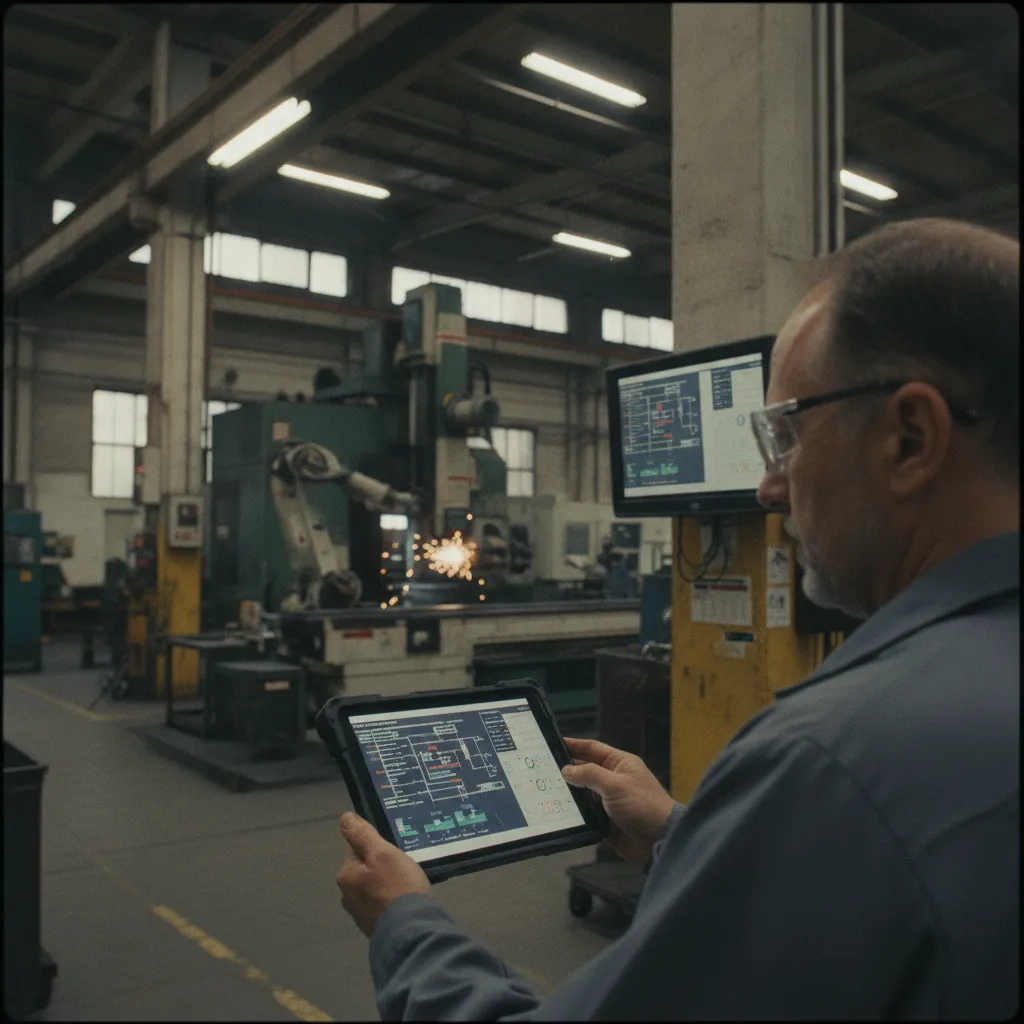
Modular architecture allows industrial sites to integrate complex data streams and interactive tools without sacrificing speed or security.
Fortifying Defenses: Enhanced Security & Scalability
Security is a paramount concern for any business, but especially for industrial firms that might be targets for intellectual property theft or operational disruption. Legacy CMS, with their tightly coupled front-end and back-end, offer a larger attack surface. A compromised plugin or theme on the presentation layer can give attackers access to the entire content database.
Headless architecture fundamentally changes this risk profile:
- Reduced Attack Surface: By decoupling, the public-facing front-end only exposes necessary information via APIs. The content management system (the "head") can be hosted separately and often behind stricter security protocols, making it much harder for attackers to reach. If the front-end is compromised, it’s much less likely the core content data is affected.
- Simplified Updates and Patches: Security vulnerabilities often arise from outdated software. In a headless setup, updating the front-end (e.g., a JavaScript framework) doesn't require updating the CMS, and vice-versa. This allows for more frequent, independent security updates, keeping each component lean and secure.
- Scalability Under Demand: Industrial firms experience varying web traffic. A new product launch, a major industry event, or a sudden surge in demand can strain traditional CMS, leading to crashes or slow performance. Headless architectures, particularly those built with modern serverless or cloud-native technologies, can scale front-end resources independently from the content database. This ensures your site remains fast and available, even under peak loads, and aligns with broader trends in digital infrastructure that are driving modern development practices.
- Data Integrity & Compliance: By centralizing content in a dedicated, secure repository, industrial firms gain greater control over data integrity and can more easily implement compliance measures relevant to their industry. This separation helps in adhering to data governance standards and maintaining audit trails.
"For Detroit's industrial future, digital security isn't an option – it's foundational. Headless architecture provides that solid ground, allowing manufacturers to innovate without constantly looking over their digital shoulder."
Detroit's Industrial Future: Why Headless is a Must-Have
Detroit's industrial companies are not just competing locally; they're vying for business on a global stage. The need to adapt, innovate, and lead with technology is more pressing than ever. Headless web infrastructure isn't just a technical upgrade; it's an enabler for the next generation of industrial operations.
Here's why Detroit manufacturers, suppliers, and logistics firms are making this move:
- Complex Product Catalogs & Configurators: Industrial products are rarely simple. They often involve countless variations, technical drawings, material options, and compliance data. Headless provides the framework to build sophisticated, interactive product configurators and rich digital catalogs that can be updated instantly from a central source. This level of detail and responsiveness is crucial for engineers, procurement specialists, and product designers.
- Global Reach with Local Agility: Many Detroit firms serve international markets. Headless platforms simplify multi-language, multi-region content management, allowing core content to be translated and adapted efficiently for different audiences without requiring entirely separate, cumbersome websites. This global capability is vital as Detroit's industries continue to expand their footprint, much like the broader revitalization happening across the city.
- IoT & Real-time Data Integration: The factory floor is increasingly digital. IoT sensors generate real-time data on machinery performance, inventory levels, and production metrics. Headless architecture can serve as the data presentation layer for this information, pulling data from various sources (e.g., ERP, SCADA systems, IoT dashboards) and displaying it on a customer portal, an internal monitoring screen, or a sales tool to showcase capabilities.
- Future-Proofing for AI & Personalization: As AI and machine learning become more prevalent, the ability to personalize experiences becomes a competitive differentiator. A headless setup allows AI models to consume content directly via APIs and dynamically present tailored content, product recommendations, or pricing specific to a B2B buyer’s profile or past interactions. This adaptive content delivery is nearly impossible with traditional CMS.
- Developer Independence & Innovation: The ability to choose the best-of-breed tools for each layer – a specialized content authoring tool for marketing, a fast JavaScript framework for the customer portal, a robust API gateway for integrations – means teams can innovate faster. This freedom attracts higher-caliber developer talent, reducing reliance on niche CMS experts and fostering a culture of continuous improvement.
The decision to adopt headless web infrastructure is a statement: it signals that a Detroit industrial firm is serious about its digital future, ready to invest in technology that drives real business outcomes, and prepared to outpace competitors with superior performance, security, and adaptability. It's about building a digital presence as resilient and innovative as the city itself.
Frequently Asked Questions
What exactly makes a headless website faster than a traditional CMS site?
Headless sites are generally faster because the front-end (what users see) is decoupled from the back-end content management. This allows developers to use lighter, more efficient front-end technologies and build highly optimized, static sites that load almost instantly, free from the database queries and server-side processing that slow down traditional CMS.
Is headless web architecture more expensive to implement for a Detroit industrial company?
Initial setup costs for headless can sometimes be higher due to the need for custom front-end development. However, the long-term benefits often outweigh this. You get reduced maintenance costs, improved scalability, enhanced security, and the flexibility to adapt to future technologies without costly rebuilds, leading to a strong return on investment.
How does headless improve security for manufacturing websites handling sensitive data?
By separating the public-facing front-end from the content backend, headless architecture significantly reduces the attack surface. If the front-end experiences an issue, the core content database remains isolated and protected. This minimizes the risk of data breaches, especially important for industrial firms with intellectual property or client information.
Can my existing content from a traditional CMS be migrated to a headless system?
Yes, content migration is a standard part of the headless transition process. Tools and strategies exist to export content from most traditional CMS platforms and import it into a headless content repository. While it requires planning, it’s a well-defined process that ensures your valuable existing content is preserved.
Is your Detroit industrial firm ready for a digital transformation?
From modernizing your web presence to integrating robust automation systems, we build the digital infrastructure Detroit businesses need to lead their industry.
Start a Project