
Updated September 23, 2026 · Editorial review by Iron Digital MI
← Back to BlogFor decades, established businesses in Michigan built their success on physical assets, tight operational execution, and deep personal networks. From the manufacturing hubs in Troy and Warren to the logistics corridors of Grand Rapids, business development occurred in conference rooms and over business lunches. But today, a significant portion of the client relationship has migrated online. When a customer wants to place an order, track a shipment, review an invoice, or upload CAD drawings, they do not pick up the phone; they log into your portal.
Unfortunately, many of Michigan’s most successful firms are running their online spaces on digital assets built a decade ago. These legacy platforms, often untouched since 2012, are filled with clunky navigation trees, confusing input fields, and slow loading times. While your team is providing first-class real-world service, your digital dashboard is delivering a second-class experience. This disconnect is more than a minor annoyance; it is a quiet, steady drain on customer trust and client retention. Modernizing your portal is not about chasing the latest aesthetic trend; it is a critical strategy to protect your hard-won relationships and accelerate your firm's growth.
Key Takeaways
- Legacy Portals Drain Trust: Clunky, slow digital interfaces make even the most reliable B2B operators look outdated, leading clients to question operational capabilities.
- Performance Directly Drives Retention: Streamlining load times and minimizing layout shifts prevents frustration, retaining high-value accounts that demand modern efficiency.
- Strategic Simplification Wins: Rather than rebuilding everything at once, firms should prioritize high-frequency tasks, clean UI hierarchies, and mobile responsiveness.
The Quiet Friction of Legacy Portals
When clients log into an outdated system, they encounter immediate friction. In the modern B2B world, clients compare your business portal to the consumer apps they use in their personal lives—like Amazon, banking tools, and shipping platforms. When they transition from those responsive platforms to a portal that looks like a database spreadsheet from 1998, their trust in your brand erodes.
The Quantitative Cost of Sluggish Portals
Portal performance is not just an aesthetic issue; it is a direct operational cost. Many business leaders view web speed as a secondary concern, assuming that B2B clients have no choice but to use the software provided to them. This is a dangerous assumption. Slow loading times create immense internal frustration and directly damage user engagement.
Legacy portals are often bogged down by heavy, outdated code, unoptimized database queries, and redundant server-side page loads. To address this, organizations must shift toward modern, lightweight frontend frameworks coupled with fast APIs. This technical transition eliminates the layout shifts and white screens that make legacy systems feel broken, turning a slow chore into a fast, productive task.
| Feature Comparison | Legacy Business Portals | Modernized Digital Portals |
|---|---|---|
| User Experience | Complex tables, nested menus, pinch-to-zoom on mobile. | Clean card-based metrics, responsive design, search-first layout. |
| Loading Performance | Full-page reloads, static queries, frequent timeouts. | Instant page changes, skeleton screens, asynchronous loading. |
| Security Framework | Basic passwords, no multi-factor support, outdated protocols. | Multi-Factor Authentication, role-based access, automated audits. |
"Your client portal is your company's virtual handshake. If it is clunky, slow, and outdated, clients will assume your internal execution matches that digital experience."
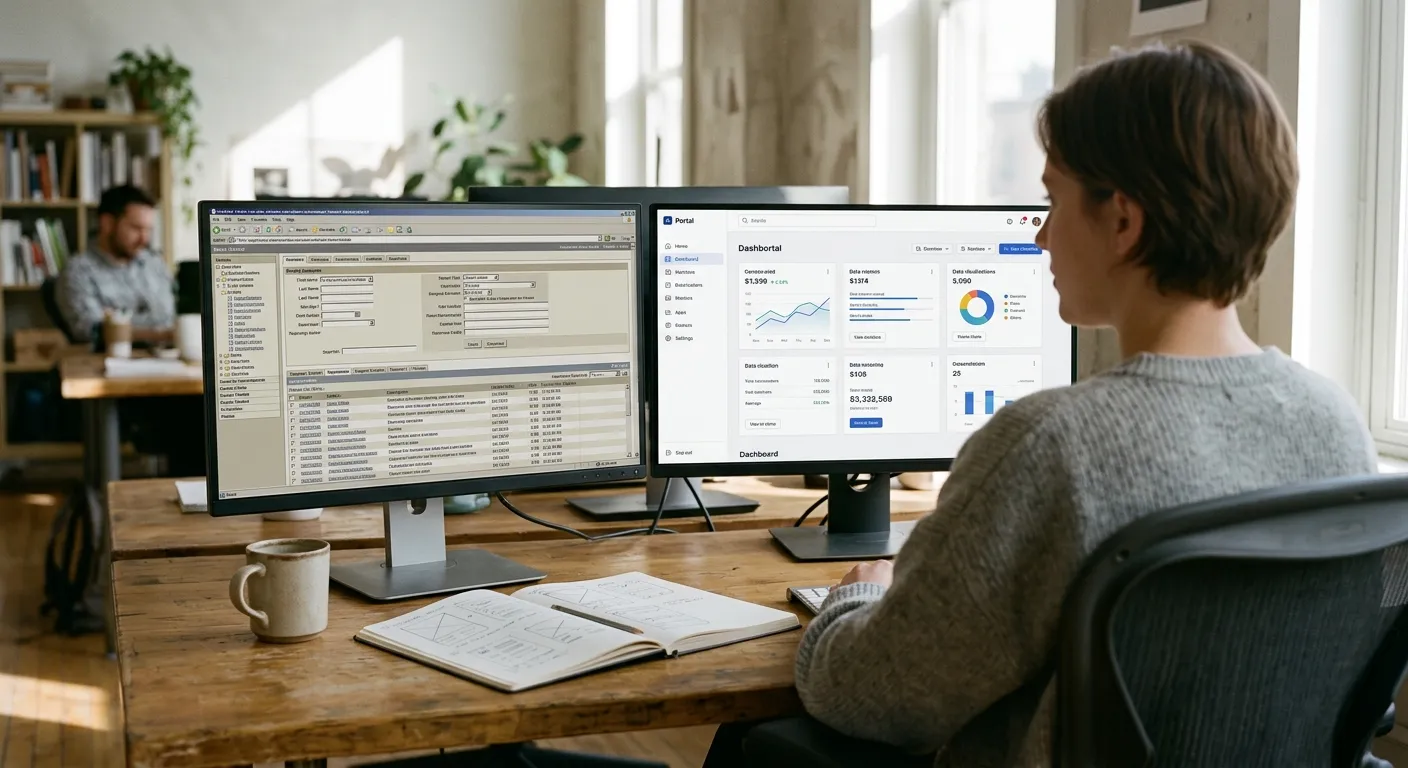
Modernized portals utilize clean card designs and optimized data frameworks to ensure rapid load times and intuitive navigation across all desktop and mobile screens.
A Tactical Approach to Decoupling Legacy Systems
The most common reason Michigan business owners delay portal modernization is fear of systemic failure. When your entire operational workflow—from inventory control to billing—runs on an old ERP system or a decades-old SQL database, rebuilding everything seems like an impossible risk.
However, modern software development offers a far better option: decoupling. You do not need to replace your entire back-end database. Instead, you can construct a modern API wrapper around your existing records and build a fast, light front-end interface on top of it. This method lets you preserve your stable, secure database back-end while completely transforming the client-facing UI.
To start this process, follow this structured roadmap:
- Identify the Vital Few Features: Run analytics on your portal to see where clients spend their time. In most cases, 80% of client logins are used to perform just two or three simple actions, such as retrieving invoices, checking order status, or submitting files. Focus your immediate development budget on modernizing these high-frequency paths.
- Design with a Clear Hierarchy: Eliminate clutter. Legacy portals tend to overwhelm users with every feature on a single screen. Modern design favors visual breathing room, search-centric navigation, and clear action buttons.
- Prioritize Mobile Responsiveness: Even in industrial and B2B sectors, a growing portion of your users are accessing information from mobile devices. Ensure that tables adapt to small screens and input buttons are large enough for touch targets.
- Incorporate Real-time Feedback: Use modern UI elements like loading skeletons and immediate success notifications. When a client submits an order or uploads a file, they should immediately see that the system has successfully registered their action.
For businesses managing this technical shift, organizing your engineering resources is essential. You can learn more about coordinating these efforts effectively by reviewing our guide on managing distributed development teams from a Detroit headquarters.
Fostering Digital Trust in Michigan’s Business Ecosystem
Modernizing your digital infrastructure is also a powerful tool for customer acquisition. When your sales team bids on a major corporate or municipal contract, they are not just pitching your physical capabilities; they are pitching your operational coordination. A high-performance, secure portal is a strong selling point. It demonstrates that your business is structured to handle scale, handle data securely, and minimize administrative overhead for your clients.
As business activity expands across our state, companies that establish strong digital authority will capture a larger share of the expanding market. For a broader look at how local firms can leverage regional growth, explore our insights on downtown Detroit's revitalization and what it means for local businesses. By upgrading your portal experience, you align your company with the tech-driven future of Michigan’s economy.
Upgrading a system built ten years ago might seem like a daunting technical hurdle, but continuing to run a slow, clunky portal is a far greater risk to your retention. By taking a strategic, decoupled approach to your development, you can deploy a responsive, highly performant front-end that keeps your high-value clients engaged and loyal for the long haul.
Frequently Asked Questions
How do I know if our company portal needs a complete rebuild or just minor updates?
If your portal relies on outdated database structures, lacks mobile responsiveness, or takes longer than three seconds to load, it requires a complete architectural modernization. You do not need to replace your entire ERP or back-end database; instead, you can construct a modern API wrapper to power a fast, highly secure front-end interface.
How long does a typical B2B portal modernization project take to implement?
A standard modernization project takes between twelve and twenty weeks, depending on system complexity. By focusing on decoupling the front-end from the back-end and targeting high-frequency actions first, firms can roll out upgrades incrementally to prevent operational disruption.
Will modernizing our customer portal disrupt our daily warehousing or accounting workflows?
No, because modern architectures allow developers to build a fast, independent user interface that connects to your existing systems via secure APIs. Your daily back-office database operations remain untouched, ensuring zero operational downtime for your staff and clients.
What security standards should we expect when upgrading our client portal?
Modern portals must incorporate advanced security protocols, including Multi-Factor Authentication, role-based access control, and complete end-to-end data encryption. Upgrading to an API-driven structure removes direct access paths to your internal servers, creating an additional layer of protection against cyber threats.
Need to modernize your legacy business portal?
From custom web applications to robust backend API integrations, we engineer secure systems that elevate trust and client retention for established firms.
Start a ProjectReady to build a better portal interface? Visit our custom web development page to see how we work.