
Updated October 29, 2026 · Editorial review by Iron Digital MI
Every evening across Metro Detroit, trade business owners sit down at kitchen tables to write estimates. Plumbers, electricians, HVAC technicians, roofers, and painters finish ten-hour field days only to start a second shift typing line items, calculating square footage, and emailing PDF proposals. The dilemma is sharp: if you take three days to send a quote, the homeowner hires another contractor who replied first. But if you rush out generic, robotic figures, you look like a faceless call center instead of a trusted local professional.
Here is the reality behind trade pricing: eighty percent of a standard estimate is repeatable arithmetic. Calculating labor baseline hours, material coverage, supply markup, and equipment rentals follows strict mathematical logic. The remaining twenty percent requires human eyes on site—spotting hidden plumbing corruption, checking electrical subpanel capacity, or evaluating structural framing. By pairing automated math with human site expertise through business automation services, trade contractors can deliver rapid estimates while keeping their local reputation intact.
Key Takeaways
- Automate formulaic pricing calculations and intake forms, while reserving on-site inspections for complex site conditions and final contract commitments.
- Use conditional digital forms to gather project measurements, clear photos, and job details upfront, filtering out unqualified leads automatically.
- Maintain your company tone in automated messaging by using dynamic text tags and personal notes rather than sterile boilerplate templates.
The Anatomy of a Trade Estimate: What Is Just Math?
To automate your estimate process safely, you must break down a proposal into fixed mathematical components and variable human decisions. Most contractors blend these elements together, which forces them to handcraft every single proposal from scratch. When you separate raw calculations from site inspection notes, automation becomes straightforward.
Consider standard residential trade pricing formulas across Michigan:
- Material Baseline Formulas: Square footage multiplied by unit cost plus an established scrap margin (for instance, adding ten percent for carpet, drywall, or roofing shingle waste).
- Labor Cost Standards: Standard job units multiplied by hourly shop rates (such as allocating four technician hours for a standard fifty-gallon tanked water heater replacement).
- Permit and Disposal Overhead: Fixed municipality filing fees and standard dumpster or haul-away fees mapped directly to project size.
- Gross Margin Calculations: Standard percentage additions calculated on total direct labor and material costs to protect net profit margins.
None of these four elements require human creative thinking. They require accurate input inputs. According to various SMB software industry surveys from 2023, automation can save small business owners an average of 10+ hours per week on repetitive administrative tasks. Eliminating late-night manual data entry directly restores hours to trade operators every week.
"Speed matters in trade contracting, but accuracy preserves margins. Automating baseline calculations gives your team speed, while holding back final approval until site verification guarantees profitability."
The table below illustrates how traditional manual quoting compares with modern hybrid automated workflows and unguided self-service portals.
| Quoting Method | Response Time | Pricing Accuracy | Customer Perception |
|---|---|---|---|
| Manual Handcrafted Quotes | 24 to 72 hours | High (if owner isn't exhausted) | Personal but slow |
| Hybrid Automated Engine | Instant range, 2 hours final | Extremely High | Professional, fast, and thorough |
| Fully Self-Service Portals | Immediate | Low (misses hidden job risks) | Transaction-focused, generic |
Which Parts of Quoting Can Be Automated Safely?
Automating your estimate system does not mean turning your business into an unmonitored e-commerce store. It means creating structured digital pathways that convert customer inquiries into accurate estimates without wasting your time on phone tag or unproductive drives across town.
The safest parts of the trade quoting process to automate include:
- Intake and Scope Gathering: Interactive intake web forms on your site can ask intelligent follow-up questions. If a homeowner selects "Deck Replacement," the system prompts for current deck dimensions, decking material choices, railing preferences, and photos of the existing footings.
- Preliminary Budget Ranges: Based on historical job data, the system instantly generates an estimated pricing bracket (for example, a hypothetical $4,500 to $6,000 range for a standard 200-amp panel upgrade) so the homeowner gets immediate feedback.
- Document Generation: Once job parameters are confirmed by your team, software compiles line items, terms of service, payment schedules, and warranty details into a clear digital proposal ready for electronic signature.
- Follow-Up Sequences: Automated text messages and emails remind prospects gently to review open proposals, answer common scheduling questions, and outline project next steps.
By automating intake and preliminary budget brackets, you qualify prospects automatically. Homeowners seeking a hypothetical $1,000 basement finish quickly learn your projects start at $15,000 before you spend an hour driving out to perform a site visit.
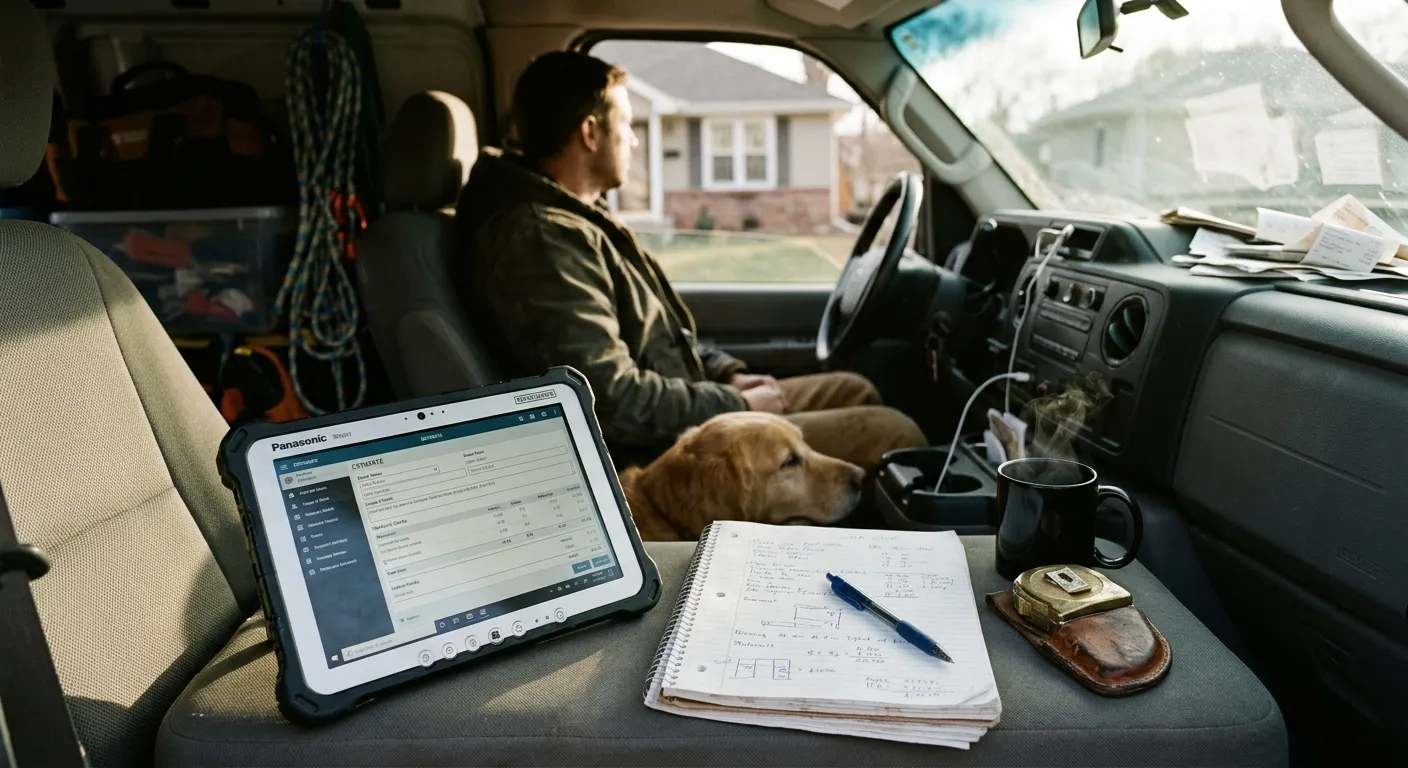
A modern trade engine pairs automated intake math with on-site professional verification before issuing a binding contract.
Where On-Site Human Judgment Is Non-Negotiable
Despite advances in digital tools, software cannot replace field trade expertise. In older communities across Metro Detroit—from historic homes in Corktown and Palmer Woods to mid-century structures in Warren or Royal Oak—unforeseen building conditions are common. Attempting to fully automate binding contract prices without physical site checks often leads to missed profits or disputes.
Human site visits remain mandatory for several critical factors:
- Sub-Surface and Structural Integrity: Assessing rotting floor joists behind tile, buried foundation cracks, soil drainage conditions, or outdated knob-and-tube electrical wiring inside closed walls.
- Access and Rigging Logistics: Determining whether a crane can fit down a narrow driveway, evaluating steep roof line pitches, or calculating physical clearances through tight basement stairwells.
- Existing Code Violations: Identifying illegal previous DIY repairs that must be brought up to modern building code before new work begins.
- Customer Relationship Building: Reading customer body language, answering unspoken safety concerns, and earning personal confidence face-to-face.
The recommended approach uses automation to generate a preliminary estimate range and qualify lead interest. Once the customer accepts the estimated budget range, an on-site technician visits to confirm structural conditions and issue the final binding scope of work.
Preserving Your Local Brand Voice in Automated Messaging
The primary concern trade owners raise regarding automation is sounding like a distant corporate franchise. A auto-responder that says "Dear Customer, Your request #84920 has been received" alienates homeowners who value working with local trade specialists.
Data from the BrightLocal Local Consumer Review Survey in 2023 revealed that 87% of consumers used Google to evaluate local businesses in 2022. Local prospects choose regional trade companies because they expect reliable service and accountable local owners. Your automated messaging must reflect that identity.
To preserve your company voice in automated communications, follow these design practices:
- Inject Specific Local References: Use field tags that pull in neighborhood names or local service details. Mentioning "our field team working in Rochester Hills this week" feels grounded and real.
- Write Conversationally: Draft message copy exactly as you speak on the job site. Replace rigid phrases like "We acknowledge receipt of your estimate submission" with "Thanks for reaching out! We received your project photos and are running the numbers now."
- Include Personal Video Intro Snippets: Embed a short fifteen-second video in your automated email proposals where the founder or master trade technician explains how your crew operates, what your warranties cover, and what happens next.
- Provide Direct Access Paths: Always include a clear option for prospects to reply directly or call your dispatcher if they have custom project requirements.
Google consumer insights from 2016 showed that 76% of people who search for something nearby on their smartphone visit a related business within a day. Rapid, friendly automated text responses ensure you connect with those high-intent local searchers immediately.
Building a Quoting Engine That Fits Your Operations
Building an automated estimate system does not require replacing your entire operating setup overnight. It begins by mapping out your recurring standard services and creating digital rules that handle baseline calculations cleanly.
Trade companies seeking tailored workflow solutions often look beyond basic off-the-shelf software packages. While simple websites can be established affordably—with web design starting at $997 for one page, $1,997 for up to five pages, and $3,997 for up to ten pages—building a dedicated trade engine with custom intake logic, CRM sync, and dynamic proposal engines involves higher complexity. For businesses ready to scale operational efficiency, direct custom web application development and custom business automation systems are quoted at a fixed price after the scope is defined, typically running $7,997 to $24,997+ depending on scope.
Here is an actionable implementation roadmap for trade business owners:
- Catalog Your Top Five Standard Jobs: Identify the high-volume services your company performs weekly (such as water heater replacements, standard roof tear-offs, 200-amp service upgrades, or residential interior repaints).
- Extract Your Baseline Pricing Formulas: Write down your exact internal unit math: labor hours per unit, material costs, standard supply markup percentages, and municipal permit fees.
- Build a Smart Intake Form: Add interactive intake logic to your website requiring project photos, dimensions, and clear preferences before issuing preliminary figures.
- Draft Conversational Message Templates: Write friendly email and text templates that sound like your actual crew, complete with personal introductions and clear expectations.
- Establish human approval checkpoints: Ensure no final contract goes out without a brief review by an estimator or master technician.
Plan the next improvement.
Tell us what your customers need to do and where the current experience gets in their way.
Start a ProjectFrequently Asked Questions
Can trade quotes really be automated without giving inaccurate pricing?
Yes, by automating preliminary budget ranges rather than final binding contracts. Your intake system calculates estimated brackets using standard unit math, giving the customer instant pricing while reserving final contract pricing until an on-site inspection verifies job conditions.
What happens if a customer submits wrong job measurements online?
Your digital estimates should explicitly state that preliminary figures depend on submitted measurements and site photos. The final binding agreement is issued only after a technician verifies physical job dimensions on site.
Will automated trade estimates make my local business sound like a generic corporate call center?
Not if you write the communication copy in your authentic company voice. Using local references, conversational language, personal greeting videos, and direct contact options keeps your automated messages friendly and rooted in your local community.
How long does it take to set up an automated estimate system for a trade company?
Basic intake form automation can be implemented within a few weeks. Dedicated custom quoting software and integrated business engines tailored to your exact operational logic typically take six to twelve weeks to scope, build, test, and deploy.