
Updated October 22, 2026 · Editorial review by Iron Digital MI
A mid-sized manufacturing supplier in Warren spent eight months and over $60,000 trying to build a custom enterprise resource planning system from scratch. They wanted a system tailored to their shop floor scheduling, but they ended up re-engineering baseline inventory tables, user login protocols, and PDF invoice generation that off-the-shelf software solves out of the box for $150 a month. On the other end of the spectrum, a logistics operator near the Ambassador Bridge ran their core fleet scheduling out of four giant, color-coded Google Sheets until a single corrupted cell stalled twelve semi-truck shipments across three states.
Software decisions are capital allocation choices, not technical dogmas. Custom engineering is not always the answer, but relying solely on rigid subscription software will eventually force your operational workflows into a box that limits business growth. To build sustainable systems, business owners must master the three paths of digital infrastructure: Buy off-the-shelf SaaS, Bend standard platforms using targeted middleware, or Build tailored software systems from scratch.
Key Takeaways
- Buy off-the-shelf software for standardized business functions like accounting, payroll, and core email marketing where custom engineering provides zero market differentiation.
- Bend existing tools by using webhooks, APIs, and custom workflow scripts to link distinct SaaS applications into an automated unit without writing entire platforms from scratch.
- Build fully custom apps when your core operational workflow is your primary competitive edge, or when monthly subscription tier limits exceed the amortized cost of a dedicated build.
1. The "Buy" Strategy: When Standard SaaS Is More Than Enough
There is zero strategic advantage in reinventing commodity operations. If a software feature does not directly generate revenue or create a distinct operational advantage for your business, buying a proven monthly subscription is almost always the correct economic decision. Accounting software like QuickBooks, payroll processors like Gusto, and customer support desks like Zendesk have millions of operational hours baked into their design. They handle complex tax regulations, security compliance updates, and third-party bank connections that would cost hundreds of thousands of dollars to maintain independently.
Off-the-shelf SaaS gives you speed to market and predictable operational expenses. A new service department can launch on Monday morning using a standard CRM subscription without waiting for custom database design or interface prototyping. The software vendor assumes all responsibility for server uptime, security patches, data backups, and feature upgrades.
However, buying off-the-shelf software requires a trade-off: your team must adapt its business processes to fit the tool. When a software platform is designed for two hundred thousand businesses, it represents the average workflow of those companies. If your sales process, customer onboarding routine, or inventory structure matches the industry average, buying is the fastest, safest, and most cost-effective path.
2. The "Bend" Strategy: Extending SaaS with Integrations and Automation
Most growing mid-market companies land in an operational middle ground. Standard software handles 80% of their operational requirements, but the remaining 20% forces staff into manual data entry, repetitive copy-pasting, and missed client follow-ups. Before taking the leap into custom application engineering, smart operators "bend" their existing software stack using structured webhooks, application programming interfaces (APIs), and custom automated workflows.
Bending software means letting established tools manage data storage while lightweight scripts or automation tools bridge the operational gaps between them. For instance, an auto parts distributor in Sterling Heights might store customer accounts in HubSpot and process orders in QuickBooks. Rather than forcing staff to manually type order details into both platforms, a custom API link syncs closed sales directly to invoice creation, triggers fulfillment notifications, and updates delivery tracking instantly.
Automation can save small business owners an average of 10+ hours per week on repetitive administrative tasks (Source: various SMB software industry surveys, 2023).
By connecting isolated subscription tools into a unified system, you eliminate manual human error while keeping software licensing costs manageable. Implementing targeted business automation allows small teams to execute enterprise-level operational output without expanding administrative headcount or abandoning their existing software investments.
The "Bend" approach gives business owners clear operational advantages:
- Preserved Familiarity: Your staff continues using the user interfaces they already know, avoiding steep learning curves and productivity dips.
- Incremental Investment: You fund targeted workflow connections as needed rather than risking capital on massive monolithic development projects.
- Data Integrity: Automated API transfers remove the operational typos, missing field entries, and duplicate records caused by manual copy-pasting.
Comparing the Three Paths
To help you decide whether your next digital initiative requires buying SaaS, bending existing systems, or engineering custom software, evaluate your options across these five core operational metrics:
| Decision Factor | Buy (Off-the-Shelf) | Bend (Integrations) | Build (Custom App) |
|---|---|---|---|
| Time to Deployment | Immediate (1 to 7 days) | Fast (1 to 3 weeks) | Planned (6 to 12 weeks) |
| Upfront Capital Investment | Very Low ($0 - $500) | Moderate ($1,500 - $5,000) | Fixed Scope ($7,997 - $24,997+) |
| Ongoing Recurring Expense | Per-User Monthly Fees | SaaS Fees + API Maintenance | Minimal Hosting & Support |
| Process Flexibility | Low (You adapt to app) | Moderate (Extends app logic) | Total (App adapts to you) |
| Competitive Edge | None (Standard tool) | Moderate (Faster workflows) | High (Proprietary asset) |
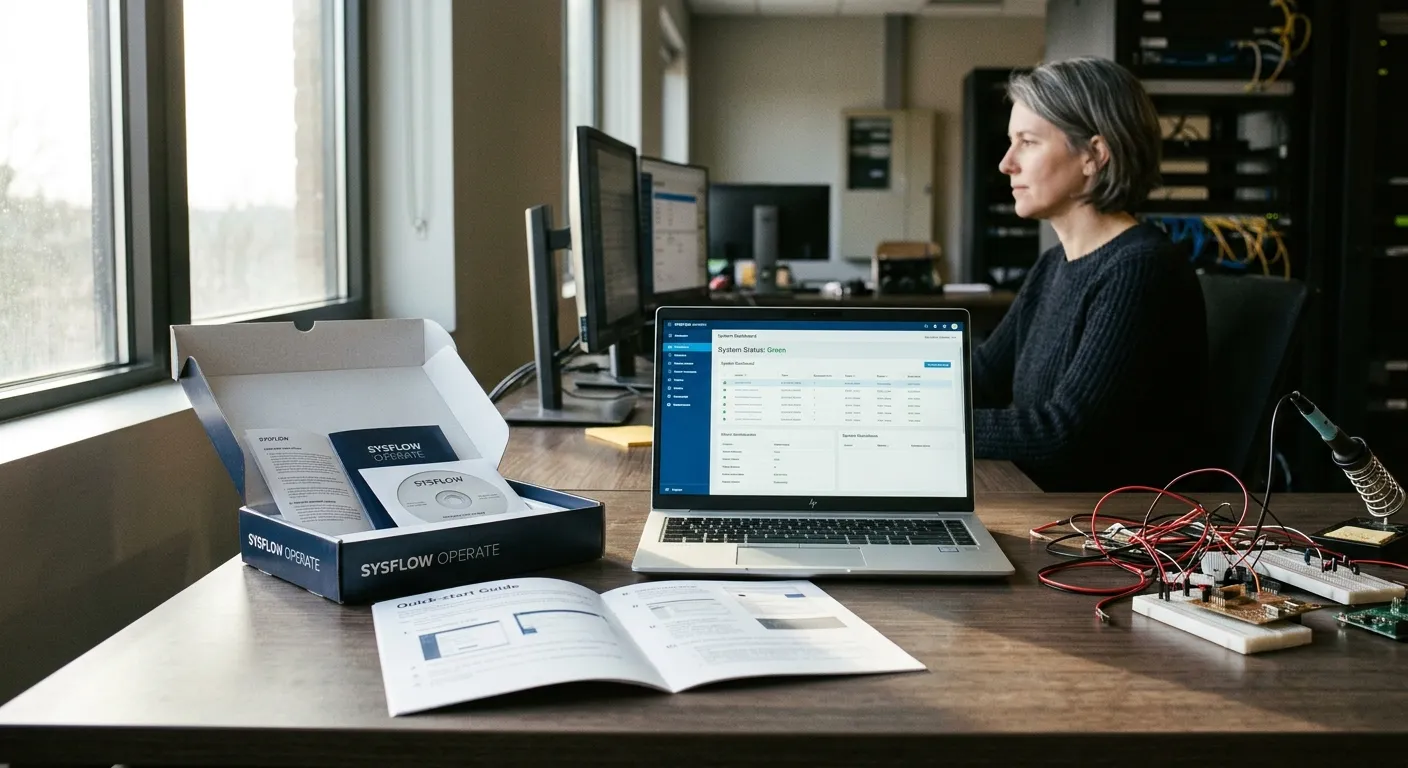
Evaluating whether to buy off-the-shelf tools, construct middleware integrations, or engineer custom platforms depends directly on your process complexity and operational scale.
3. The "Build" Strategy: Clear Signs You Have Outgrown Off-the-Shelf Tools
Custom engineering becomes the right economic call when existing software no longer supports your operational scale or actively degrades the customer experience. When you force a complex, unique operational model into software built for generic workflows, team efficiency plummets and client relationships suffer.
According to research cited by Amazon Web Services in 2019, 88% of online consumers are less likely to return to a site or portal after a bad experience. If your client interaction relies on clunky third-party forms, password-protected Google Sheets, or slow email attachments, you are leaving client retention exposed to agile competitors.
Here are four concrete indicators that your business has outgrown off-the-shelf software and needs a tailored custom application:
- The "Zapier Web" Is Falling Apart: You have linked six different software subscriptions using automated connectors, but field mapping breaks whenever a vendor updates their API. Your team spends hours hunting down broken sync logs and repairing missing records.
- SaaS Subscription Costs Are Outpacing Development Costs: Off-the-shelf software fees scale per user or per contact tier. When your company reaches 50 or 100 team members, paying $150 per seat every month across four distinct tools costs over $90,000 annually. A single custom platform built for a fixed project fee eliminates ongoing per-seat taxes.
- Your Core Workflow Is Your Competitive Advantage: If you run a custom fabrication shop, specialized logistics service, or proprietary financial consultancy, your operational methodology *is* your product. Standard software forces you to operate identical tools to your competitors, removing operational distinction.
- Client Portal Demands: Your corporate clients require real-time project status visibility, direct asset downloads, secure messaging, and online approvals within a single environment branded specifically to your firm.
When you cross these thresholds, engineered software transitions from a business cost to a long-term operational asset. Building targeted custom apps or dedicated client portals delivers total ownership of your source code, complete data governance, and exact alignment with your operational requirements. At Iron Digital, custom applications and operational automation projects are delivered on a fixed-price scope, typically ranging from $7,997 to $24,997+ depending on architecture complexity, giving you full predictability without ongoing license bloat.
4. Calculating Real ROI: When Code Pays for Itself
Before writing a single line of code or committing to a multi-year enterprise SaaS agreement, run a disciplined return-on-investment calculation. Digital projects should yield measurable productivity gains, reduced manual hours, or direct sales acceleration.
Calculate your annual waste caused by software gaps across these three metrics:
Direct Labor Recovery: Multiply the hours your staff spends on manual data transfer, double entry, or manual status reporting by their fully loaded hourly rate. If three account managers each waste five hours a week manually updating project logs, that equals 780 lost administrative hours per year. At a $45/hour loaded labor cost, your business is losing $35,100 annually to operational friction.
Error Reduction Value: Quantify the financial expense of operational errors—misquoted job estimates, delayed shipping schedules, incorrect billing parameters, or lost lead follow-ups. Reducing inventory billing errors by even 2% annually can recover thousands of dollars in lost profit margin.
Conversion Acceleration: Measure customer loss caused by slow onboarding steps or complex client portal designs. Modern web development guidelines show that seamless digital entry significantly increases retention rates. If an upgraded customer intake portal helps close two additional high-value service retainer accounts each quarter, the system pays for its initial build within months.
Frequently Asked Questions
How do I know if my business needs a custom app instead of standard SaaS?
You need custom software when your primary business process is unique to your company, off-the-shelf tools force severe operational workarounds, or your total monthly per-user subscription fees exceed the amortized investment of building a system you own outright.
What is the risk of relying too heavily on software integration connectors like Zapier?
Connector platforms are excellent for simple tasks, but complex multi-step chains can become fragile when software providers update their APIs. If a single trigger breaks silently, data gaps accumulate across your systems before your team notices the error.
How much does custom business software cost compared to subscription subscriptions?
Subscription software carries lower initial costs but scales indefinitely as your team grows. Fixed-scope custom applications from Iron Digital typically range from $7,997 to $24,997+, creating a permanent operational asset without recurring per-seat licensing fees.
Can we upgrade our existing website while keeping our current backend systems?
Yes. Modern web engineering allows custom client portals and marketing sites to connect directly into your existing backend databases or CRM tools through secure APIs without replacing your core accounting or inventory infrastructure.
Plan the next improvement.
Tell us what your team needs to achieve and where current software limitations get in their way.
Start a Project