Updated September 23, 2026 · Editorial review by Iron Digital MI
← Back to BlogThe physical transformation of Detroit's key commercial districts is impossible to ignore. Walk down Michigan Avenue in Corktown, past the towering, restored facade of Michigan Central Station, or explore the bustling streets surrounding the Fisher Building in New Center, and you will see a brick-and-mortar retail renaissance in full motion. Independent boutiques, coffee roasters, artisanal food concepts, and lifestyle brands are planting flags in these high-traffic corridors. Yet, many of these businesses fail to realize that physical real estate is only half the battle. In a landscape where consumer attention is won or lost on mobile viewports, your digital infrastructure is the true gateway to physical retention.
When a customer stands on the sidewalk in Corktown deciding where to spend their money, they do not rely solely on window displays. They pull out their smartphones. If your local retail website takes too long to load, fails to display stock instantly, or shifts layouts dynamically as images populate, that potential customer is gone before they ever cross your threshold. Physical location is highly competitive, but the digital storefront is where customer loyalty is cemented or permanently fractured.
Key Takeaways
- Corridor Competition is Mobile-First: Success in dense pedestrian zones like Corktown and New Center relies entirely on serving high-speed, localized mobile experiences to customers on the move.
- Speed Dictates Conversion Rate: Even fractional speed optimizations yield massive revenue benefits. Reducing load time by fractions of a second dramatically drops mobile bounce rates.
- Poor Experiences Equal Permanent Defection: Slow-loading, inaccessible sites create friction that permanently deters consumers from visiting your brick-and-mortar locations.
The Realities of Detroit's High-Traffic Corridors
Corktown and New Center represent two distinct archetypes of Detroit’s economic expansion. Corktown is fueled by heavy tech-commuter foot traffic, creative professionals, and tourists exploring the historic district. New Center operates as a dense urban core populated by health system workers, university students, and office professionals. Despite their unique personalities, both areas share a common variable: high-intent, mobile-dependent pedestrian traffic.
A consumer searching for a retail destination while walking past local landmarks isn't sitting at a desktop with a fiber-optic connection. They are on a cellular network, often navigating spotty coverage amidst concrete structures. In these exact moments, the physical and digital realities collide. If a new boutique relies on a heavy, template-bloated Shopify theme loaded with oversized uncompressed imagery and unnecessary tracking pixels, the digital experience breaks down. This digital breakdown has direct financial consequences. To understand how the digital evolution of Detroit’s neighborhoods is pacing with brick-and-mortar growth, we have to look closely at the underlying technical mechanics.
"Your mobile website is not a passive catalog; it is an active engine for brick-and-mortar foot traffic. If it falters on the sidewalk, your physical investment suffers."
The Performance Tax: Core Web Vitals and Mobile Abandonment
This is where Core Web Vitals become the ultimate survival metric. Google has explicitly made these user-experience thresholds a confirmed ranking factor. For a new retailer, your local organic search engine visibility is heavily dictated by three core pillars:
- Largest Contentful Paint (LCP): How quickly does the main product image or hero banner render on a mobile viewport? If it takes longer than 2.5 seconds, users perceive your site as broken.
- Interaction to Next Paint (INP): When a user taps your "View Store Hours" or "Check Inventory" button on their phone, does the site respond instantly, or is there a noticeable delay while bloated scripts run in the background?
- Cumulative Layout Shift (CLS): Do your elements jump around while loading, causing users to accidentally tap the wrong link? This layout shifting is one of the quickest ways to frustrate a mobile user and prompt immediate abandonment.
For retailers navigating downtown Detroit's rapid physical revitalization, these metrics are directly linked to customer acquisition. If you are competing with established brands, a slow, frustrating digital experience acts as an invisible tax on your marketing budget. Conversely, a highly optimized, lightweight site serves as a massive competitive advantage.
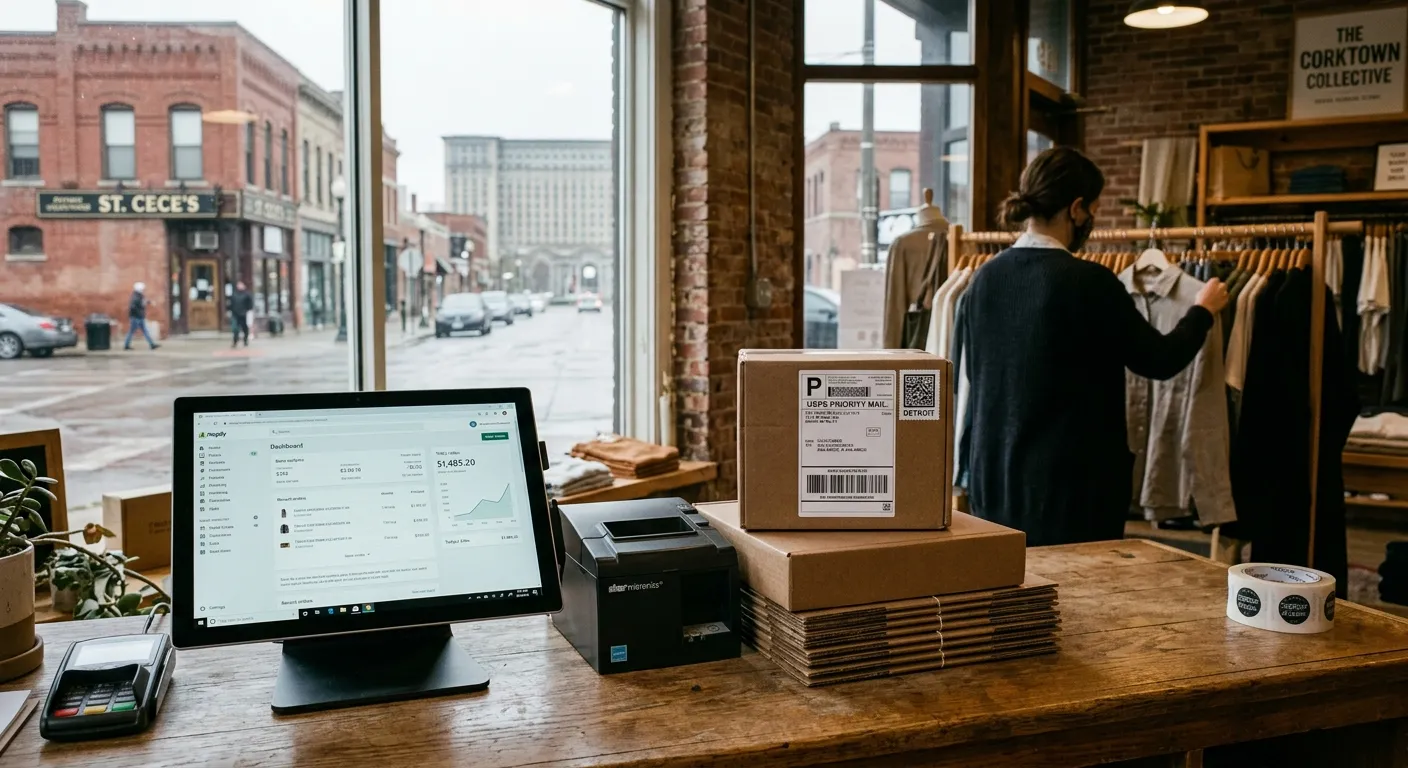
A highly responsive, mobile-optimized digital presence captures local intent on the streets of Corktown, bridging the gap between digital discoverability and physical foot traffic.
Mobile Accessibility as a Retention Engine
In high-density commercial corridors, accessibility means ensuring a customer can easily find your physical address, current inventory, and operating hours in under five seconds with a single hand. Let’s look at how an optimized corridor-ready digital setup compares to a legacy retail approach:
| Digital Element | Optimized Corridor Standard | Legacy Retail Baseline |
|---|---|---|
| First Contentful Paint (FCP) | Under 1.2 Seconds (Edge CDN Cached) | Over 3.5 Seconds (Unoptimized Scripts) |
| Mobile Layout Shift (CLS) | CLS under 0.1 (Zero jumping elements) | CLS over 0.25 (Delayed banner loads) |
| Local Search Latency | Instant menu & local schema integration | Heavy PDF downloads, lack of structured data |
When you build a mobile-first framework, you aren't just making Google happy; you are accommodating the user's physical environment. For instance, a customer walking down Woodward Avenue in the winter might be wearing gloves, relying on larger tap targets. A tourist in Corktown on a bright summer afternoon needs high text-to-background contrast to read your menu through screen glare. Ignoring these environmental elements is a fast track to lost revenue.
The Actionable Performance Playbook for Detroit Retailers
If you are planning to open a retail space in Corktown, New Center, or any adjacent Detroit commercial district, you must treat your digital performance as a critical pre-launch checklist. Here is an actionable roadmap to ensure your platform is engineered to convert foot traffic:
- Optimize and Compress Every Visual Asset: Never upload raw product images directly to your CMS. Convert all image files to modern web formats like WebP or AVIF, and use responsive image tags to serve smaller images to mobile screens.
- Implement an Aggressive Local CDN Strategy: Use a Content Delivery Network like Cloudflare or Fastly to cache your site's static assets on edge servers physically located in or near Detroit. This ensures data travels the shortest distance possible to reach a user's phone on the sidewalk.
- De-bloat Your JavaScript Payload: Auditing your scripts is crucial. Disable unused Shopify applications, clean up legacy tracking pixels, and defer non-critical JavaScript so that the actual visual interface of your site loads first.
- Prioritize Accessibility Standards (WCAG 2.2): Ensure contrast ratios meet strict readability standards. Set all tap targets (buttons, links, form inputs) to a minimum size of 48x48 pixels with ample spacing around them to prevent misclicks on mobile devices.
By shifting your perspective and treating your website as an extension of your physical store, you build a resilient, modern retail brand. Physical spaces in Detroit’s high-traffic corridors are limited and expensive, but the digital space is yours to optimize, control, and leverage to outpace the competition.
Frequently Asked Questions
How does page speed impact retail sales in Corktown and New Center?
In fast-paced corridors like Corktown and New Center, a massive portion of web traffic comes from mobile users walking along Michigan Avenue or Grand Boulevard. Even fractional delays cause immediate bounces. Improving your mobile speed directly increases conversion rates, turning casual digital browsers into physical, in-store foot traffic.
Why is mobile accessibility so critical for new Detroit brick-and-mortar storefronts?
Detroit's high-traffic commercial zones rely heavily on localized smartphone searches from pedestrians. If a storefront’s digital platform fails to render correctly, loads dynamic elements with high layout shifts, or features unclickable touch targets on mobile viewports, the consumer will instantly patronize a competitor down the street. Mobile-first design is no longer optional; it is your actual front door.
What can a local retailer do today to fix slow load times?
Start by compressing all hero and product images using modern formats like WebP or AVIF. Next, minimize render-blocking JavaScript and leverage a globally distributed Content Delivery Network (CDN) to serve assets from local edge servers closer to Detroit. Finally, eliminate heavy, unoptimized third-party Shopify apps or WordPress plugins that degrade your initial page rendering.
Does site speed affect my Google ranking for local Detroit searches?
Yes, Core Web Vitals are a confirmed ranking signal within Google's algorithm. A faster, more responsive mobile site will systematically outrank slower competitors in local map packs and organic search results. This directly impacts your visibility when tourists, commuters, and residents search for retail options in Corktown or New Center.
Ready to dominate Detroit’s high-traffic commercial corridors?
From blistering site speed to robust mobile optimization, we build high-performance digital systems that keep Detroit retail brands ahead of the curve.
Start a ProjectReady to put this into practice? Visit our custom web development page to see how we work.