
Updated September 23, 2026 · Editorial review by Iron Digital MI
← Back to BlogIf you run a plumbing, HVAC, or electrical company, you are fighting a daily street fight for screen space. When a homeowner's basement floods or an AC unit dies, they do not research. They search, they click, and they call the first business that looks reliable. Who gets that call depends entirely on how you play Google's search engine results page.
Google offers two main weapons for local trades: Local Services Ads (LSA) and standard search-based Google Ads (PPC). While both aim to win the same customer, they operate under completely different rules. They compete for different parts of the screen, run on different pricing models, and require distinct operational setups to work properly. Understanding these differences determines whether you build a highly profitable acquisition engine or simply burn cash.
Key Takeaways
- Pricing Models Differ: Local Services Ads charge you per actual lead (phone call or direct message), while Google Ads charge per click, regardless of whether that user calls you.
- Trust Indicators: LSAs display the "Google Guaranteed" badge, which instantly establishes credibility but requires strict, ongoing licensing and background checks.
- Control and Customization: Standard Google Ads allow you to control your messaging, target specific keyword variations, and send traffic to high-converting landing pages. LSAs offer almost zero landing page customization.
The Real Estate Battle: Anatomy of the Search Page
At the absolute top of the screen sit Local Services Ads. These appear as clean, rectangular cards displaying your business name, star rating, service hours, and that green "Google Guaranteed" checkmark. They dominate the mobile viewport, often pushing all other content below the fold. Because they sit at the very peak, they capture the most immediate, high-intent emergency clicks.
Directly beneath the LSAs sit standard Google search ads. These are text-based ads that you can customize with specific headlines, promotions, and direct links to specialized pages on your website. Underneath those text ads is the local map pack, followed finally by organic search results. It is a visual hierarchy designed to reward paid visibility. If you are not playing in the top two tiers, you are fighting over leftovers.
The Cost of Entry: Google Guaranteed Requirements
You cannot simply throw money at Google to get your Local Services Ads to show up. LSA relies on trust. To earn the green "Google Guaranteed" badge, your business must pass Google's rigorous screening process. This is not a quick application; it is an audit of your business legitimacy.
To qualify for the Google Guaranteed program, you must provide:
- Business Licensing: Verification of your trade license at the state and local level. Google verifies that your licenses are active, valid, and free of outstanding disciplinary actions.
- Insurance Verification: Proof of general liability insurance meeting Google’s minimum coverage requirements (typically $250,000 for most trades, though many carry more).
- Background Checks: A third-party background check (managed by Google's partners like Pinkerton) for the business owner and every employee who performs work in customers' homes.
- Review Minimums: A minimum Google Business Profile rating (usually 3.0 stars or higher) with a healthy volume of organic reviews.
If your business cannot pass these checks, LSA is off the table. Standard Google Ads, on the other hand, do not require business background checks or license verifications. You can write an ad, link it to your website, set up a billing profile, and begin showing up on the search page within a single afternoon. While standard ads lack the trust badge, they offer immediate entry without administrative friction.
Pay-Per-Lead vs. Pay-Per-Click: The Financial Reality
The most fundamental difference between these two ad platforms is how Google bills your account. This single factor dictates your customer acquisition cost (CAC) and how you manage your daily marketing budget.
Local Services Ads operate on a pay-per-lead (PPL) model. You do not pay when someone looks at your ad, and you do not pay when they click your profile to read your reviews. You only pay when a prospect takes a direct, trackable action—such as calling your business phone number or sending a message request through the LSA platform. If they call you and the conversation lasts longer than a few seconds, you are charged. Furthermore, Google allows you to dispute unqualified leads (like wrong numbers, spam, or out-of-boundary service requests) for a refund. This makes LSA highly efficient, as you only pay for actual opportunities.
Standard Google Ads operate on a pay-per-click (PPC) model. You are charged every single time a user clicks your headline and lands on your website. It does not matter if they call you, fill out a form, or immediately leave your site within two seconds because they clicked by mistake. You pay for the visit, not the outcome. If your website is slow, poorly designed, or confusing, you will burn through your budget with zero leads to show for it.
| Feature | Local Services Ads (LSA) | Standard Google Ads (PPC) |
|---|---|---|
| Billing Metric | Pay-per-lead (calls, messages) | Pay-per-click (website visits) |
| Disputes & Refunds | Yes (for spam, wrong location, wrong trade) | No (clicks are non-refundable) |
| Landing Page Required | No (uses standard Google profile) | Yes (needs custom, high-converting page) |
| Setup Timeline | 2 to 5 weeks (due to background checks) | Immediate (can launch same-day) |
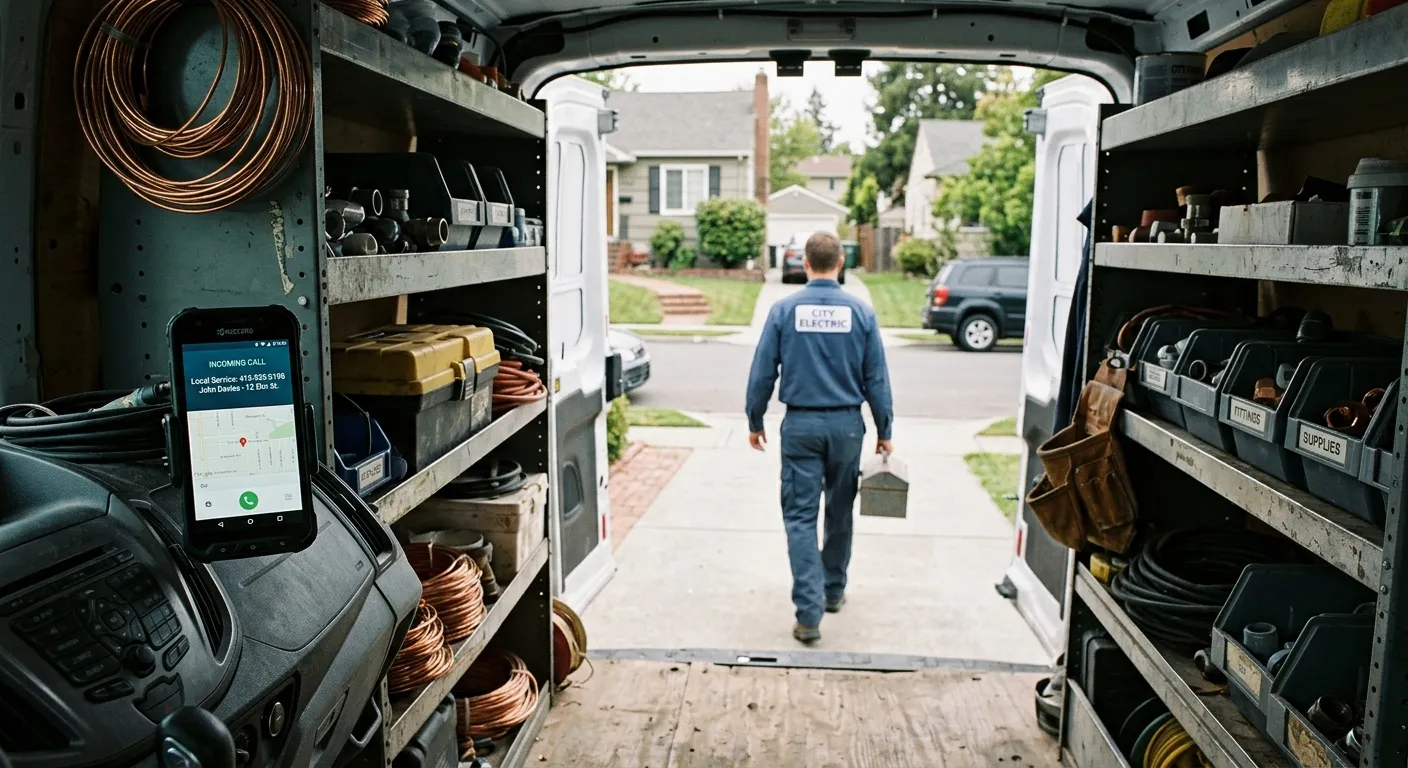
Comparing the performance of Local Services Ads and standard Pay-Per-Click campaigns reveals distinct advantages in lead tracking and cost control.
The Landing Page Factor: Control vs. Convenience
Because standard Google Ads charge you per click, your conversion rate depends entirely on where that click lands. If you send paid traffic to your homepage, you are likely wasting money. A standard homepage contains distractions: your company history, links to social media, blog posts, and multiple service pages. To make standard Google Ads profitable, you must build optimized landing pages designed to do one thing: get the user to call or fill out a form immediately.
LSA strips this control away completely. There are no landing pages. When a user clicks your Local Services Ad, they are taken to a standardized Google profile page. They see your reviews, your hours, your service areas, and a call button. You cannot customize the layout, you cannot offer custom promotional banners, and you cannot run conversion rate optimization tests. While highly convenient because it requires no web design on your part, LSA limits your ability to differentiate your business from the five other plumbers listed right next to you.
When Running Both Products Is the Ultimate Power Move
Many trades businesses treat LSA and standard Google Ads as an either-or choice. This is a mistake. The highest-performing home service companies use both platforms simultaneously to monopolize the search engine results page. If you have the budget, dominating both ad units creates a massive competitive barrier.
When you run both campaigns, a prospect searching for "emergency AC repair near me" will see your brand in the Google Guaranteed section at the very top, see your customized text ad immediately below it, and potentially see your organic local map listing right after. This level of brand saturation builds immense psychological trust before they even visit your website. It also blocks your competitors from claiming those valuable positions.
To run this double-dipping strategy effectively without exhausting your budget, you must coordinate your targeting. Consider the following structural approach:
- Emergency vs. Standard Services: Use Local Services Ads specifically for high-urgency, immediate-booking services (e.g., drain clearing, emergency furnace repair, electrical failures). Use standard Google Ads to target planned, high-ticket services (e.g., full system installs, panel upgrades, bathroom remodeling) where you need space to explain your financing options and company value. This aligns with targeting high-value locations, just as local marketing tactics dictate when analyzing Detroit's neighborhood micro-markets.
- Budget Distribution: Allocate your baseline budget to LSAs first, as they guarantee a fixed cost-per-lead. Once your LSA leads are saturated or your weekly cap is reached, use standard Google Ads to capture broader search terms and scale your reach. This helps capture the rising commercial demand, driven heavily by ongoing local infrastructure changes like Downtown Detroit's commercial revitalization.
- Review Management: Because LSAs rely heavily on your review count and rating to rank in the top three slots, implement a strict post-job review acquisition process. The strength of your Google profile directly impacts the cost-efficiency of both your LSA and organic local map listings.
The Hidden Disadvantages of LSA
While the pay-per-lead model sounds perfect on paper, LSA has distinct strategic limitations that can hinder a growing trade business if relied on exclusively. First, the platform is a black box. Google decides when and where your ad shows up based on algorithms that favor proximity, response time, and review velocity. You cannot bid higher on specific, highly lucrative keywords like "tankless water heater installation." You simply opt into "plumbing" as a general category and accept whatever leads Google's system passes your way.
Second, LSA can lead to booking friction. Because anyone can click the phone link with a single tap, you will receive a higher percentage of tire-kickers, people looking for cheap estimates, or homeowners seeking DIY advice. While you can dispute completely invalid leads, the administrative burden of listening to recorded calls, cataloging bad leads, and submitting disputes within Google's strict 30-day window can overwhelm small back-office teams.
Finally, your business is highly vulnerable to algorithm updates. If Google changes the weight of proximity in LSA rankings overnight, your lead volume could drop to zero with no explanation. Standard Google Ads insulate you from this risk. Because standard campaigns allow you to set specific bids, negative keywords, and exact audience segments, you maintain precise control over your lead flow regardless of sudden algorithmic changes.
Making the Final Decision for Your Shop
The choice between Local Services Ads and standard Google Ads comes down to your current business phase, administrative capacity, and digital infrastructure. If you are a solo operator or a small team with no dedicated marketing manager and a basic website, start with Local Services Ads. The predictable pay-per-lead cost, coupled with the trust of the Google Guaranteed badge, provides a safe, simple environment to generate steady work while you build your business foundation.
If you have a growing team, a sales dispatcher, and a professionally designed, fast-loading website, standard Google Ads are essential. They allow you to scale your call volume on demand, target premium, high-margin installation work, and build brand equity that you own—not just a profile rented from Google. For maximum growth, combine both to claim total authority over your service territory and keep your trucks moving year-round.
Frequently Asked Questions
What is the primary difference between Google Local Services Ads and standard Google Ads?
Local Services Ads charge on a pay-per-lead model, meaning you only pay when a customer calls or messages you directly through the ad. Standard Google Ads operate on a pay-per-click model, where you are charged every time someone clicks your ad link to visit your website, regardless of whether they contact you.
How long does it take to get Google Guaranteed for my home service business?
The verification process typically takes anywhere from two to five weeks. It requires submitting your business license, proof of general liability insurance, and passing background checks for your owners and field employees through Google's third-party background check partners.
Can I dispute and get refunds for bad leads on Google Local Services Ads?
Yes, Google allows you to dispute irrelevant or non-serviceable leads, such as wrong numbers, spam, sales calls, or requests for work outside of your designated service area. Approved disputes result in a credit back to your account, a key benefit not found in standard pay-per-click campaigns.
Is it smart to run both LSA and standard Google Ads at the same time?
Yes, running both simultaneously allows your trades business to occupy maximum real estate at the very top of Google search results. This strategy is ideal during high-demand peak seasons when capturing immediate emergency service calls is crucial for maximizing local market share.
Ready to dominate your local market with highly-optimized campaigns?
From high-converting landing pages to custom lead-tracking integrations, we build the digital infrastructure your trades business needs to convert searchers into lifetime customers.
Start a ProjectWant to maximize your local advertising spend? Visit our custom web development page to see how we help businesses win online.