
Updated September 23, 2026 · Editorial review by Iron Digital MI
← Back to BlogFor years, local service providers in Michigan relied on basic keyword matching to dominate their target markets. Plumbers in Troy, roofers in Grand Rapids, and HVAC contractors in Ann Arbor could buy an exact-match domain, write a few location-targeted city pages, and comfortably sit at the top of Google. That era has ended. Google's algorithmic evolution has shifted the digital battlefield from surface-level keyword insertion to deep web engineering. Today, the speed, cleanliness, and localized latency of your web infrastructure directly dictate whether your business captures high-value local calls or disappears from the search landscape entirely.
Google's infrastructure is built to crawl millions of sites as efficiently as possible. When a site relies on bloated, outdated structural frameworks, it forces Google's crawling systems to waste server resources parsing unnecessary code. In highly competitive regional environments, this structural inefficiency acts as an anchor on your search visibility. Today, local organic supremacy requires a fast, lean digital platform engineered for high-speed performance.
Key Takeaways
- Inspect loading, interaction, structure and content on the actual page. A CMS, template or HTML element count does not by itself establish a ranking penalty.
- Core Web Vitals Drive Local Positioning: Speed and layout stability metrics are confirmed ranking components that decide Map Pack and organic rankings.
- Server Location Matters: Selecting physical host nodes close to your Michigan customer base reduces latency and secures maximum search engine visibility.
The Core Web Vitals Reality for Local Service Providers
Google made its performance requirements official by integrating physical site speed into its search core. Specifically,
"Core Web Vitals are a confirmed Google ranking signal as part of the page experience update" (Source: Google Search Central, 2021).For a business competing in regional zones, this isn't abstract developer theory. It is a critical performance baseline. If your site requires three seconds of execution time before a user can click a button, Google will demote your listing in favor of a faster local competitor. oking form takes longer than 2.5 seconds to paint, your ranking starts to degrade.
The Code Bloat Trap: Bloated Visual Builders vs. Semantic HTML
Many local business owners purchase pre-made templates built on heavy frameworks like Elementor, Divi, or standard visual builders. While these tools allow rapid assembly, they generate massive structural code bloat. A visual page builder often wraps a basic paragraph tag inside ten nested division nodes. This excessive code is known as "DOM bloat," and it directly impairs how search spiders read your page.
When Google crawls a site, it assigns a specific execution timeframe known as a crawl budget. If your site code is heavy with unused CSS, duplicate JavaScript scripts, and thousands of nested lines of markup, Googlebot exhausts its crawl allotment before indexing your critical service pages. Clean, hand-written semantic HTML bypasses this issue entirely. By utilizing lightweight structural classes, you can reduce absolute page size from several megabytes down to a few dozen kilobytes, allowing instant indexing.
Minimizing this asset weight ensures your platform is fast and highly visible. This engineering approach is critical when expanding your business into competitive local service zones, a trend we detail in our analysis of Detroit's Neighborhoods Are the Next Digital Frontier, where modern businesses rely on clean technology stacks to capture rising local demand.
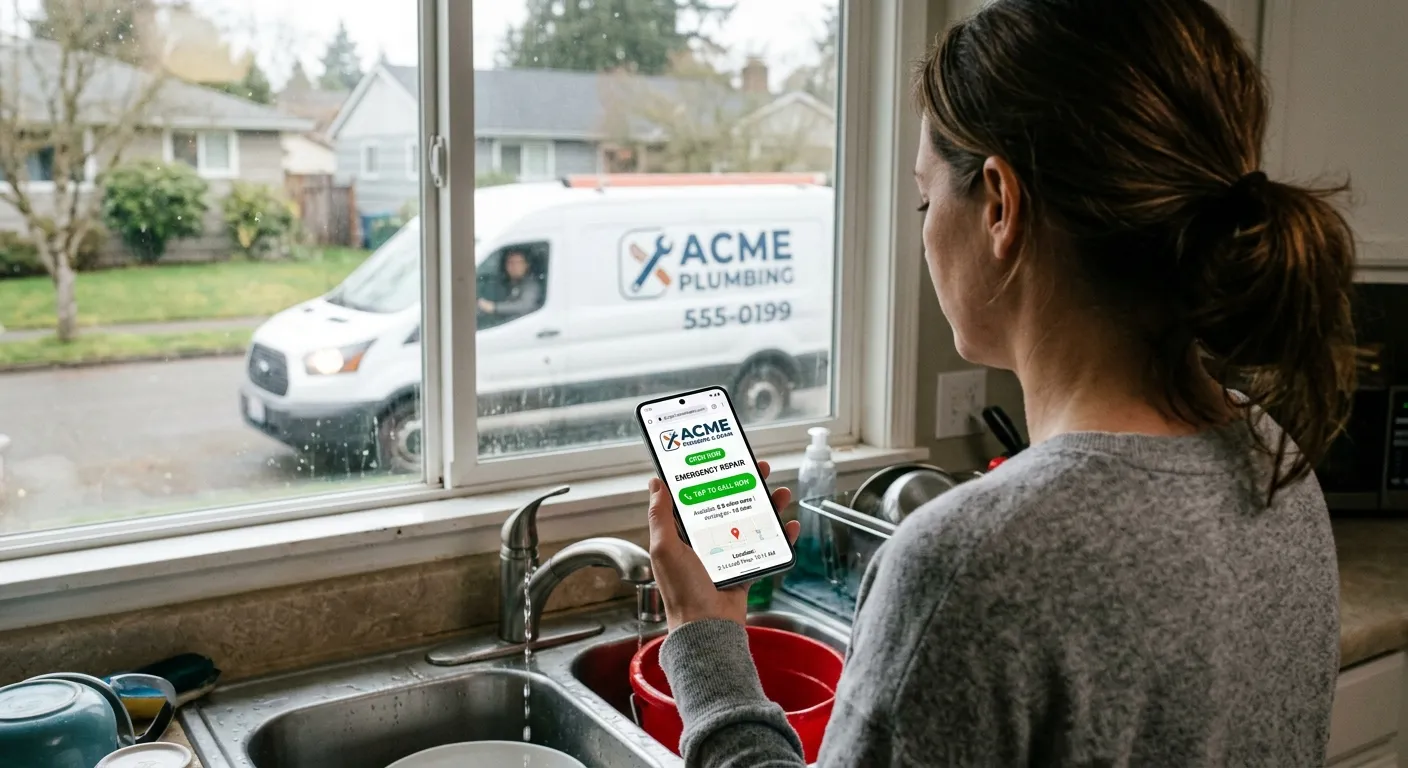
Achieving high Lighthouse scores requires eliminating visual builder bloat and prioritizing semantic, lightweight structural elements.
Comparing Structural Web Architectures for Local Businesses
To understand why modern web architecture outperforms traditional designs, we must examine the physical hosting and development methodologies. Most local business sites are hosted on cheap, shared-hosting platforms using heavy dynamic frameworks. Every time a user visits the page, the database has to rebuild the site from scratch. Modern static and headless architectures compile these pages beforehand, delivering instant static files from edge servers.
| Performance Metric | Visual Page Builders (WordPress/Divi) | Custom Static Decoupled Code |
|---|---|---|
| Time to First Byte (TTFB) | 400ms – 1200ms (Heavy database processing) | < 50ms (Cached static delivery) |
| Total Resource Weight | 1.8MB – 4.5MB (Bloated plugins and scripts) | 120KB – 350KB (Highly optimized core code) |
| Crawl Budget Utilization | Inefficient (Spiders crawl structural waste) | Optimal (Spiders instantly scan core content) |
Transitioning from complex dynamic setups to clean static builds is the single most effective way to improve your local search rankings. While your competitors are stuck managing slow platforms, lightweight architecture lets you quickly secure the top positions. This digital optimization aligns with the broader modernization trends explored in our guide to Downtown Detroit's Revitalization and What It Means for Local Businesses, where technological upgrades are essential for brands aiming to stand out in a growing market.
The Local Latency Factor: Server Proximity and Time to First Byte
Many business owners focus entirely on local keywords while ignoring where their website files are physically hosted. If your home contracting business is located in Metro Detroit, but your hosting server is situated in Oregon or Dublin, you are introducing network transit delays. Time to First Byte (TTFB)—the physical duration between a user's browser request and the server's response—is highly dependent on geographic distance.
When a prospective client in Michigan searches for emergency home services, they are often on mobile devices with inconsistent cellular connections. If your server is hosted thousands of miles away, those network delays compound. By choosing regional hosting servers in the US Midwest (such as Chicago or Ohio) and pairing them with a global Content Delivery Network (CDN) to cache static assets, you ensure your site loads instantly for local leads.
An Actionable Architectural Audit for Michigan Providers
If you want to optimize your site for maximum local search performance, you must resolve your technical code issues. Follow this tactical optimization blueprint to clean up your digital foundation:
- Implement Edge Caching: Connect your site to a CDN like Cloudflare to serve cached files from network edge locations nearest to your prospective clients.
- Eliminate Render-Blocking Scripts: Defer non-critical JavaScript files, such as tracking pixels and review widgets, so they do not block the initial page render.
- Compress Visual Assets: Convert standard JPEG and PNG files to modern WebP or AVIF image formats, compressing their file sizes by up to 80% without losing visual quality.
- Purge Unused CSS Frameworks: Ensure your layout files only load the styles actually used on the page, avoiding massive, unused CSS libraries.
This technical optimization ensures your web presence operates at peak efficiency. When you clean up your underlying code and host your site on local servers, you secure a strong ranking advantage that local competitors relying on slow, outdated systems cannot match.
Frequently Asked Questions
Why is my Detroit plumbing website dropping in rankings despite having great customer reviews?
Your site is likely failing Google's Core Web Vitals metrics due to structural code issues. Bloated page builders, slow database queries, and delayed mobile rendering are technical barriers that cause Google to favor faster, lighter competitor sites.
How does page speed impact my Google Map Pack visibility in Grand Rapids?
Google uses website speed as a direct ranking factor for organic results, which heavily influences your Map Pack positioning. If your mobile site causes users to bounce quickly, Google views your business as less reliable and drops your map ranking.
Do I have to completely rebuild my site from scratch to get faster loading times?
Not necessarily, but you must eliminate heavy page builders. Moving to custom, lightweight HTML/CSS or utilizing a headless architecture with static generation will immediately clean up the codebase and deliver the sub-second load times Google rewards.
What hosting server location should I select for my Michigan-based contracting business?
Choose a server physically located in the US Midwest, such as Chicago or Ohio. Keeping the server close to your target Michigan audience minimizes Time to First Byte (TTFB) latency, ensuring near-instant page loads for local prospects.
Building a Michigan service business and need the digital infrastructure to back it?
From custom web architecture to high-speed hosting solutions, we build the clean digital platforms local service providers need to dominate the search rankings.
Start a ProjectReady to put this into practice? Visit our custom web development page to see how we work.