Updated September 23, 2026 · Editorial review by Iron Digital MI
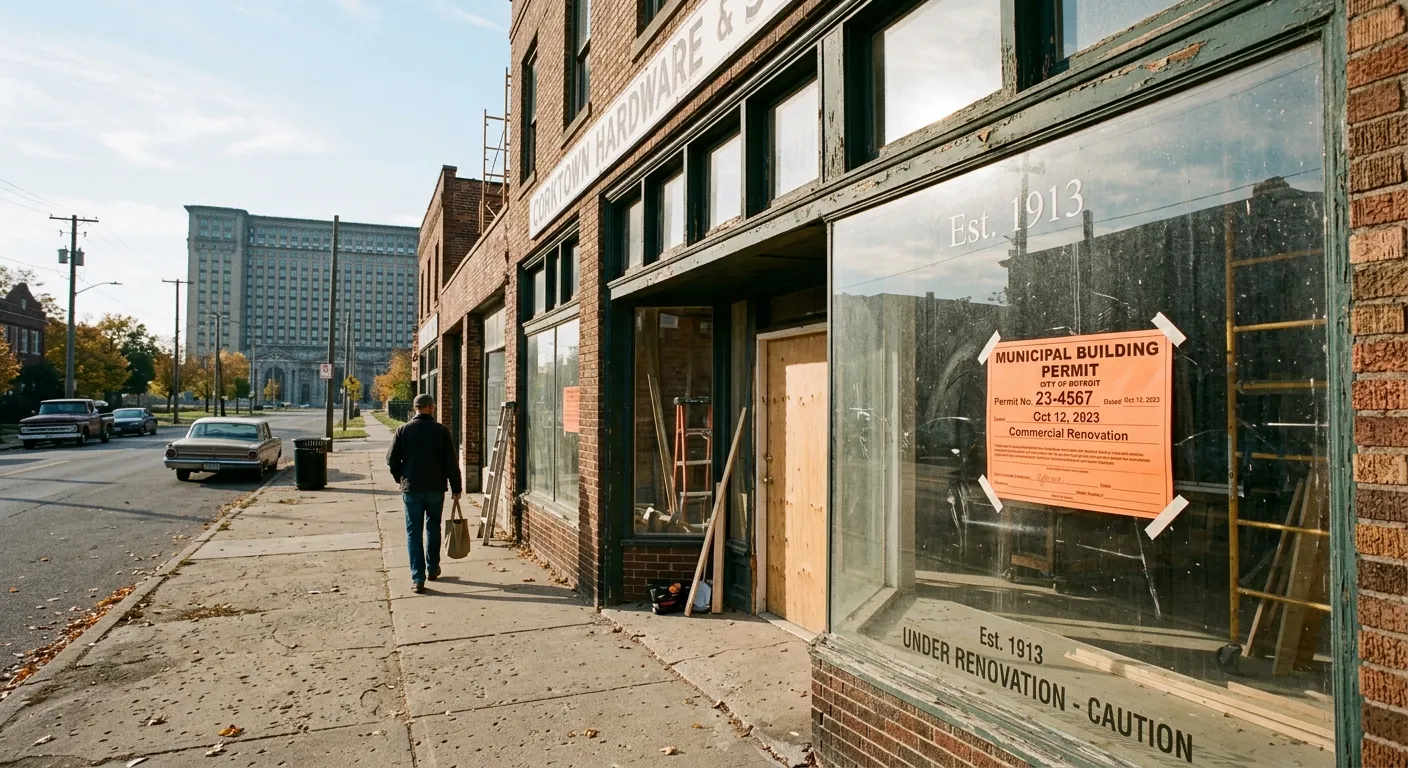
← Back to BlogIf you run a contracting, construction, or commercial service business in metro Detroit, you probably think you know where your competitors are working. You see their wrapped trucks rolling down Woodward Avenue, down Jefferson, or parked outside active commercial renovations in Corktown. But waiting to spot a truck means you are already too late. The job has been bid, won, and started.
The real competitive intelligence in Detroit does not live on the streets. It lives in the public registry of building, electrical, mechanical, and plumbing permits managed by Detroit’s Buildings, Safety Engineering, and Environmental Department (BSEED). This data is public, searchable, and filled with highly precise signals about exactly who is working where, which neighborhoods are starved for licensed trades, and where your direct competitors are overextending their crews.
Key Takeaways
- Detroit BSEED permit logs act as a leading operational indicator, showing you where commercial and residential builders are investing before physical work begins.
- Analyzing structural and trade permit patterns allows local service businesses to pinpoint underserved neighborhoods, optimizing marketing budgets for maximum localized conversion.
- By matching competitive permit volumes with localized search trends, trade contractors can align their digital marketing and service pages with real-world infrastructure growth.
The Raw Value of BSEED Records
Every commercial buildout, historic renovation, and major electrical upgrade in Detroit requires a permit. When a trade firm files a permit application, they hand the city a comprehensive breakdown of their operations on a silver platter. They state the address of the project, the contractor of record, the estimated valuation of the physical work, and a specific description of what they are building.
By monitoring these filings, you get to bypass the marketing noise. Your competitors can claim they are the dominant players in the city all they want on social media, but the BSEED ledger does not lie. It tells you exactly how many active jobs they have running, the actual scale of those jobs, and where they are concentrated.
To systematically reverse-engineer this data, focus on collecting these core data points:
- Contractor License Holder: Track the specific legal entities filing the work. This exposes sub-contractor partnerships that commercial developers try to keep private.
- Estimated Valuations: Identify high-margin contracts. If a competitor has multiple active projects valued over $150,000 clustered in a single zip code, that neighborhood is highly lucrative.
- Detailed Scope Descriptions: Read the technical summaries. If mechanical permits for high-efficiency HVAC retrofits are surging in a specific corridor, it signals a localized upgrade trend.
- Application Dates: Build a predictive timeline. The delta between permit approval and physical ground-breaking is your window to run hyper-targeted local campaigns in the surrounding blocks.
Spotting Spatial Gaps in Detroit Neighborhoods
Many contractors default to chasing projects where the buzz is loudest. They spend thousands trying to capture a sliver of the market in areas undergoing heavy commercial development. But if you look at the geographic distribution of permits, you will quickly spot massive pockets of demand where licensed trade presence is thin.
For example, while big-name firms fight over structural work in Mid-Town, hundreds of residential plumbing and electrical upgrades are quietly being approved in Detroit's key neighborhoods like East English Village, Green Acres, and Grandmont Rosedale. Property owners in these stabilizing corridors often struggle to find licensed, responsive contractors because local marketing is concentrated elsewhere.
| Detroit Corridor / Region | Permit Types Dominating | Competitive Clutter | Strategic Play |
|---|---|---|---|
| Woodward / Corktown | Commercial alterations, massive electrical grid expansions, multi-family mechanical | High | Target enterprise-level subcontracting packages. |
| East English Village / Morningside | Historic residential plumbing, panel upgrades, slate and clay shingle roofing repairs | Low to Moderate | Build landing pages explicitly targeting historic home preservation standards. |
| Livernois / Avenue of Fashion | Retail storefront fit-outs, commercial mechanical units, lighting retrofits | Moderate | Promote commercial quick-turn services for brick-and-mortar storefronts. |
Using this geographical intelligence allows you to deploy your field teams with massive efficiency. Instead of driving crews across the entire tri-county area, you can identify high-density permit clusters and systematically acquire neighborhood dominance. This concentrated presence keeps your travel times low and your brand visibility high.
Mapping Permit Velocities to Predict Seasonal Surges
Contractors often fall into a defensive operational posture during seasonal shifts, ramping up marketing only when their phone stops ringing. Permit data turns your business model from reactive to predictive. By looking at historical BSEED filings, you can spot the precise month trade applications spike before the weather shifts.
For example, mechanical permits for commercial cooling systems do not start in June. The applications begin hitting the city's desk in late February and March as commercial property managers prepare for spring buildouts. If your digital infrastructure is not prepared to capture those early-stage search queries, your competitors will lock up those commercial maintenance agreements before your campaign even launches.
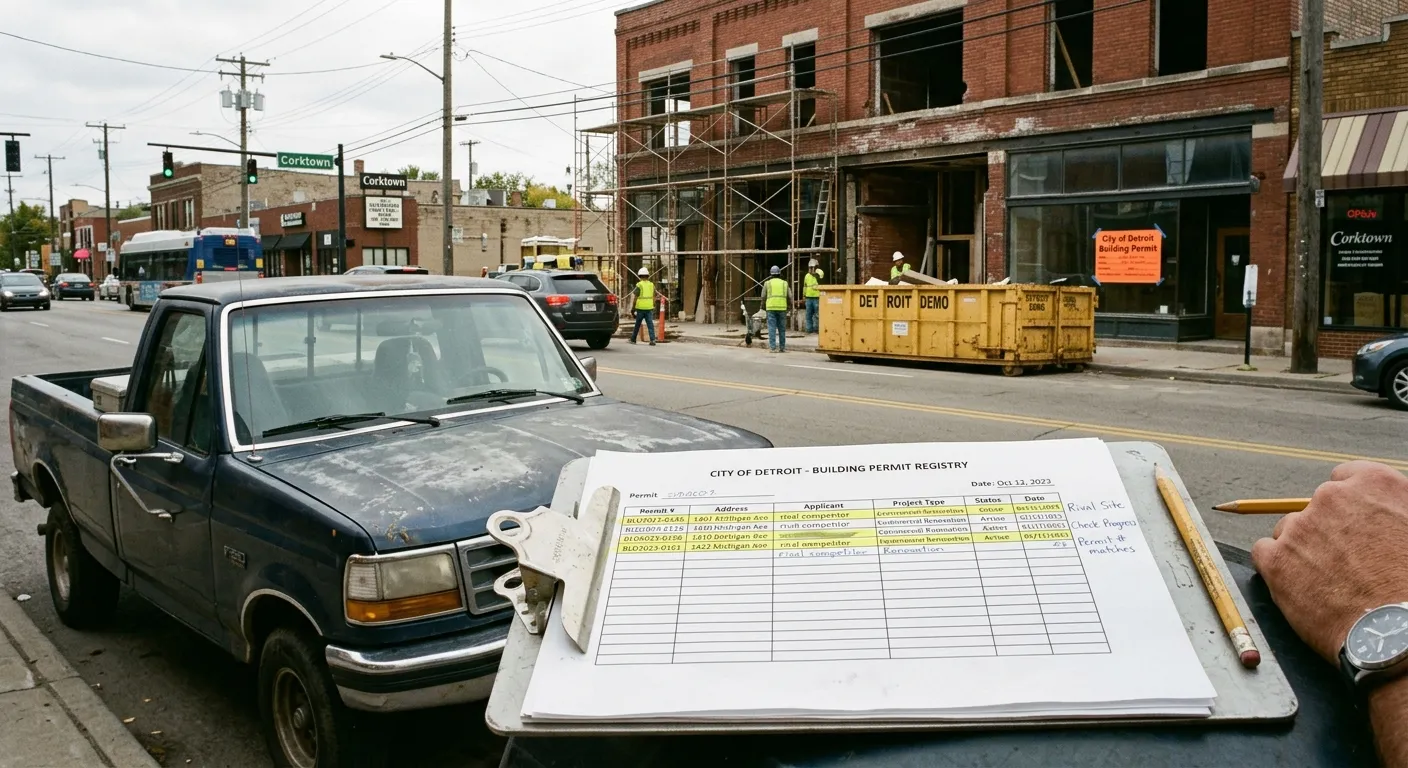
Analyzing spatial permit logs reveals precisely where trade crews are concentrated and which Detroit neighborhoods remain open for digital capture.
Tracking historical velocities over a multi-year period reveals the steady, recurring patterns of local demand. You can easily predict when municipal inspections will peak, when plumbing upgrades will hit residential areas, and when institutional properties along the Jefferson corridor start filing major structural permits. This foresight gives your business a multi-week head start to adjust your digital systems, warm up your outreach, and recruit necessary labor.
Fueling Your Digital Engine with Local Permit Data
This is where the physical world connects with your digital growth strategy. Having permit insights is valuable, but they only yield revenue if you translate those insights into a dominant local search presence. When someone needs an active, certified local specialist, they turn to search engines to verify credibility and speed.
To systematically convert permit intelligence into digital revenue, implement this local campaign framework:
- Deploy Neighborhood-Specific Landing Pages: Do not just list "Detroit" as your service area. Create optimized sub-pages for areas like the Avenue of Fashion or Woodbridge, highlighting recent permits, historic building compliance expertise, and local structural nuances.
- Publish project locations only when accurate and appropriate to disclose. Explain the work in visible text and obtain permission for photos; embedded location metadata is not proof of a ranking improvement.
- Synchronize Paid Campaigns with Permit Approval Windows: When you see a spike in residential alterations or commercial approvals in a specific district, concentrate your local search ads directly on those zip codes. You will target property owners who have active needs and validated budgets.
- Refine Your Service Messaging: If BSEED filings reveal a massive wave of historic brick masonry permits in Indian Village, adjust your site copy to address historic district commission compliance. This immediately positions you as the low-risk expert.
This localized method is particularly powerful during downtown Detroit revitalization efforts, where complex historical preservation guidelines and zoning laws can instantly shut down a project if a contractor is inexperienced. Highlighting your past compliant permits directly on your service pages immediately eliminates that operational anxiety for potential commercial clients.
Monitoring Competitor Exhaust to Win Talent and Contracts
Permit logs also expose competitor vulnerabilities. When a competitor's permit filings double over a sixty-day period, their project pipeline is bursting. While this looks like they are winning, it often indicates they are hitting their capacity limits. Crews are stretched thin, timelines are slipping, and their customer service quality is vulnerable to dropping.
This operational overload creates two massive opportunities for your business. First, you can target your local ad spend directly to their primary service areas, capturing frustrated property owners looking for more responsive crews. Second, you can identify which specialized trade subcontractors they are relying on, exposing potential gaps in their labor supply chain.
By treating public permit data as real-time competitive intelligence, you stop guessing where your market is heading. You see the physical blueprints of Detroit's construction and service pipeline before a single hammer swings, allowing you to position your digital authority exactly where the next dollar will be spent.
Frequently Asked Questions
How can a small Detroit contractor access BSEED permit data for free?
Any business owner can access the city's active permit database directly through the Detroit Open Data Portal. By navigating to the Buildings, Safety Engineering, and Environmental Department (BSEED) dataset, you can filter, search, and export real-time trade and building permit records without paying any fees.
Which types of Detroit trade permits provide the strongest competitive signal?
Electrical, mechanical, and commercial alteration permits hold the most business intelligence. These trade filings indicate high-budget physical builds, system updates, and commercial retrofits weeks before physical work actually begins on the site.
How does local permit data help improve my business's search engine ranking?
Permit trends show you exactly which neighborhoods have high construction activity. By creating dedicated landing pages focused on these active regions and optimizing your Google Business Profile for those specific service areas, you align your digital presence with real, localized market demand.
How often is Detroit's open permit dataset updated by the city?
The Detroit Open Data Portal updates its BSEED active permit records on a daily or weekly schedule. This rapid publishing cycle lets local business operators pull fresh data and spot new commercial buildouts or residential renovations before the competitive field even realizes the opportunity exists.
Building a Detroit tech company and need the digital infrastructure to back it?
From your web presence to your back-end systems, we build what Detroit businesses need to compete at the level the market is moving toward.
Start a ProjectReady to put this into practice? Visit our custom web development page to see how we work.