Night-out planner · Client build
Tonight’s Plans: Turn a vague mood into somewhere to go.
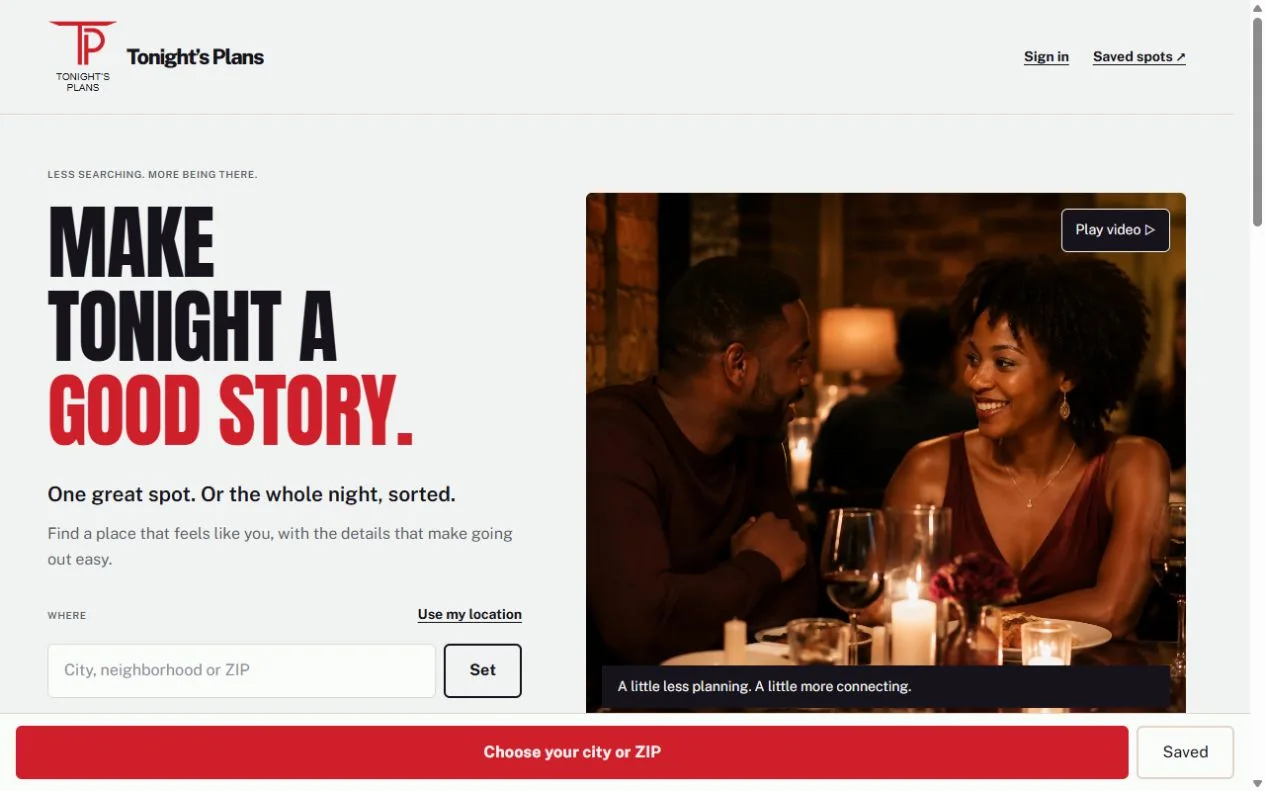
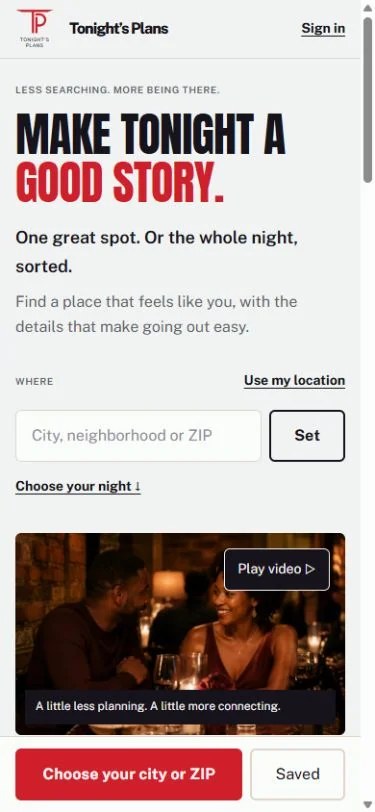
Deciding where to go out stalls on a vague feeling, not a shortage of options. The interface has to turn “somewhere low-key, four of us, not too far” into specific places.
By Ron Green, Iron Digital MI · Updated September 6, 2026
Decisions behind the design
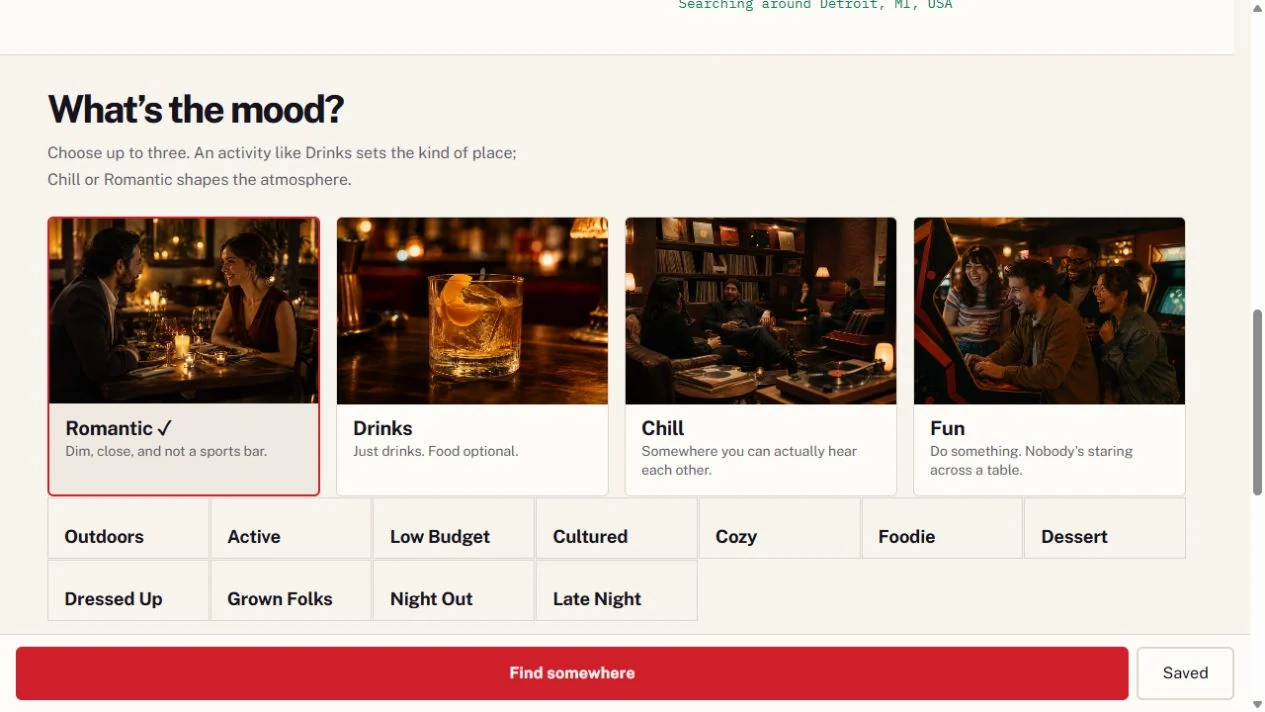
Ask for the mood, in plain language
Moods are written the way people describe a night to a friend — Romantic reads “dim, close, and not a sports bar.” Up to three can be combined, and the interface separates an activity from an atmosphere: Drinks sets the kind of place, while Chill or Romantic shapes how it feels.
Offer one place or the whole evening
The first choice is scope. One place returns a single spot; a day or night out returns a three-stop evening with arrival times and a running budget, previewed as an example before any details are entered.
Expose the constraints that change the answer
Distance, group size, who the night is for, a spending cap and whether somewhere is open right now are all set before results appear — because each one genuinely changes which places belong on the list.
What the build delivers
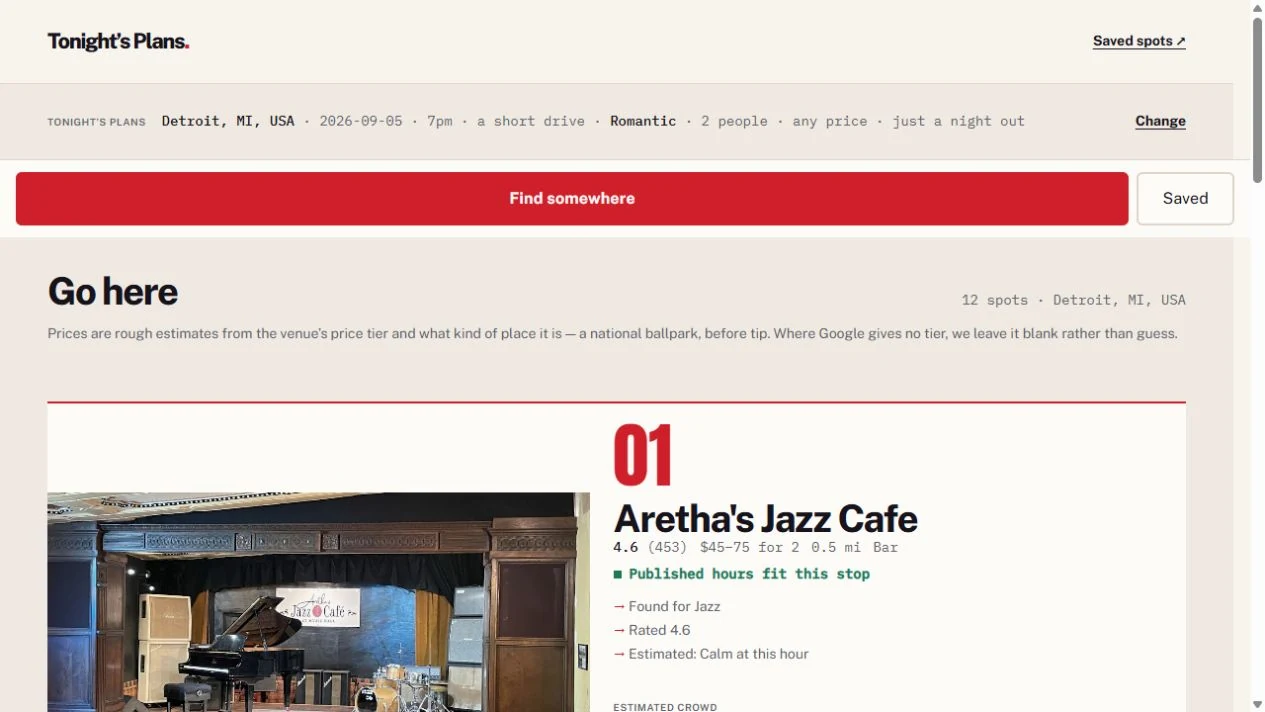
The planner turns a mood and a few constraints into named places, with arrival times and an estimate of what the evening will cost. Preferences can be saved and carried across devices.
It also shows its working. Dedicated pages explain where the numbers come from, what a night costs and how busyness is estimated; venue information is credited to Google, times use the destination’s local clock, and distances are labelled as a search radius rather than route lengths. Telling visitors what an estimate is worth is part of making it usable.
For your own project, start from the decision a visitor is stuck on rather than the catalogue you hold. The examples above show how that shapes the first question a page asks.