Medical spa · Concept build
Medical-spa website design with room to decide.
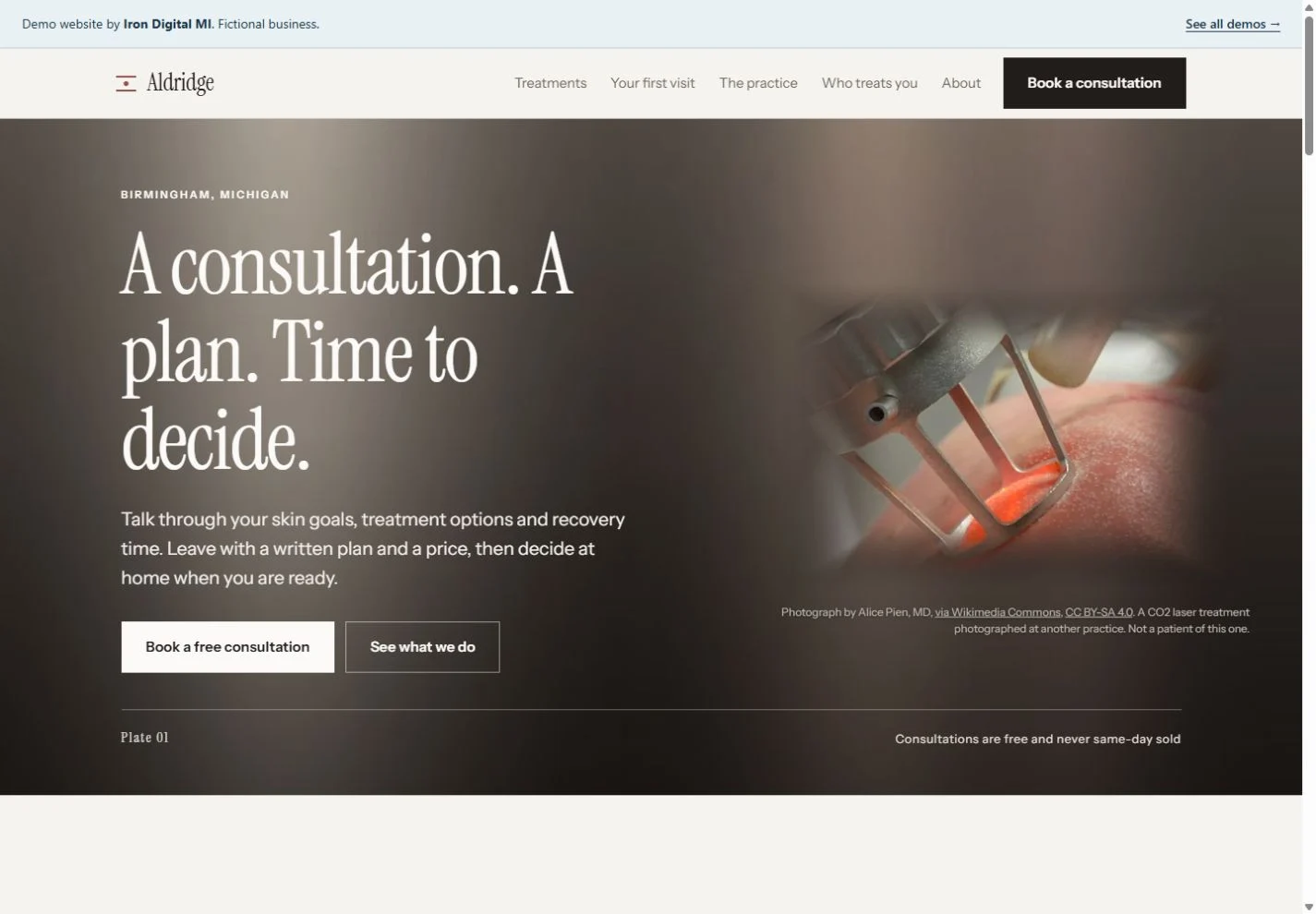
A consultation is easier to consider when the next step is clear. Aldridge pairs a faded treatment image with a short introduction, then gives visitors separate routes to treatments, the first visit and practitioner information.
By Ron Green, Iron Digital MI · Published September 8, 2026 · Updated September 23, 2026
Aldridge Aesthetics is a fictional practice built as a design demonstration. Its staff, prices and practice details are placeholders. The treatment photograph is credited to its source and is not evidence of an Aldridge patient or result.
What the design makes easier
Use the image to support the introduction
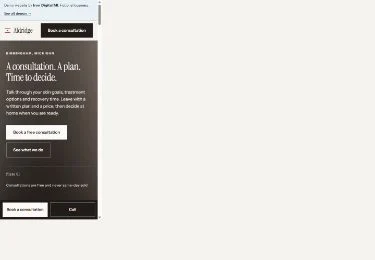
The original feathered photograph blends into the hero background, leaving space for the consultation message. The mobile layout moves the image below the text and keeps generous reading margins.
Separate interest from commitment
A consultation action sits beside a route to the treatments page. The first-visit page explains the sample consultation process so a visitor can understand the next step before making contact.
Give practical questions dedicated pages
Treatment details, the practice gallery and practitioner information each have their own page. This provides a structure for a real practice to explain treatment options, recovery expectations and who performs the work.
Explain the consultation before asking for one
Aldridge gives the first visit its own page. It separates the conversation, assessment, explanation and written-plan stages, then offers practical preparation information and a consultation link. The faded homepage photograph stays part of the design; the guide now also shows the page that explains what follows the initial interest.

A real clinic should have qualified staff approve descriptions of treatment suitability, preparation, risks and recovery. The website should distinguish a consultation request from a confirmed appointment, explain who receives it and avoid asking for a medical history through a general marketing form. Clinical workflows require their own scope and review.
For your own business
For your clinic, replace sample details with clinician-approved information, verified credentials and photography you are entitled to use. Explain consultation and booking policies clearly. Any treatment claims or patient results need evidence and appropriate permission; this demo supplies neither.
Scope the public website separately from any booking or practice-system integration. Page count, content preparation and the operational connection all affect the quote. See current pricing and running costs.
What should a medical-spa website show before a consultation?
Give visitors a clear consultation route and accessible information about treatment options, the visit process and practitioner credentials. A real clinic should approve clinical content and explain the limits of any results shown.
Explore the working pages
Explore the consultation page ↗
See the treatment-information layout ↗
These pages demonstrate the interface and content structure. They do not establish booking results, traffic growth or search rankings.
Questions before you build
Should treatment information sit on its own page?
Yes, when visitors need enough detail to compare options and prepare questions. Keep the content clinician-approved, describe the consultation process clearly and avoid presenting illustrative photographs as patient outcomes.
Does the photograph show an Aldridge patient?
No. Aldridge is fictional. Its treatment images are credited photographs from other practices and must not be presented as results achieved by this concept business.